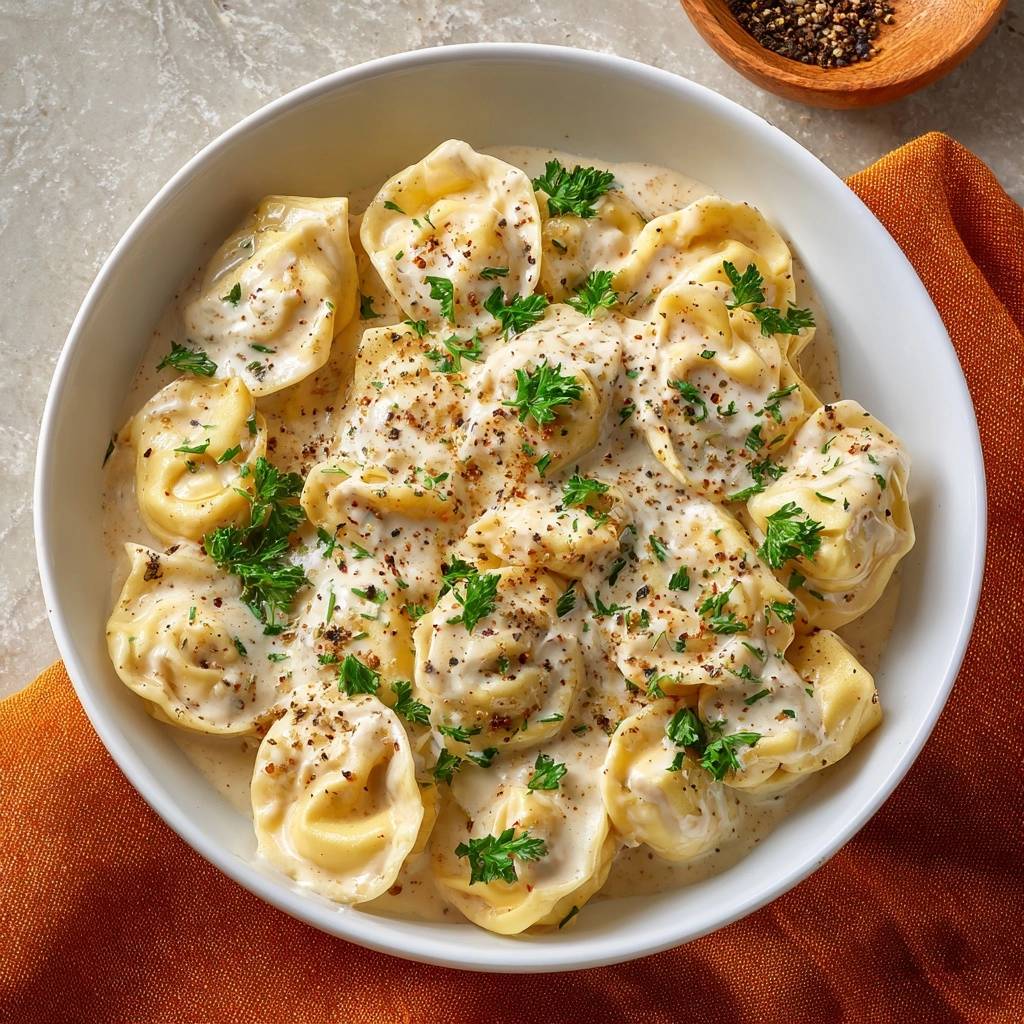
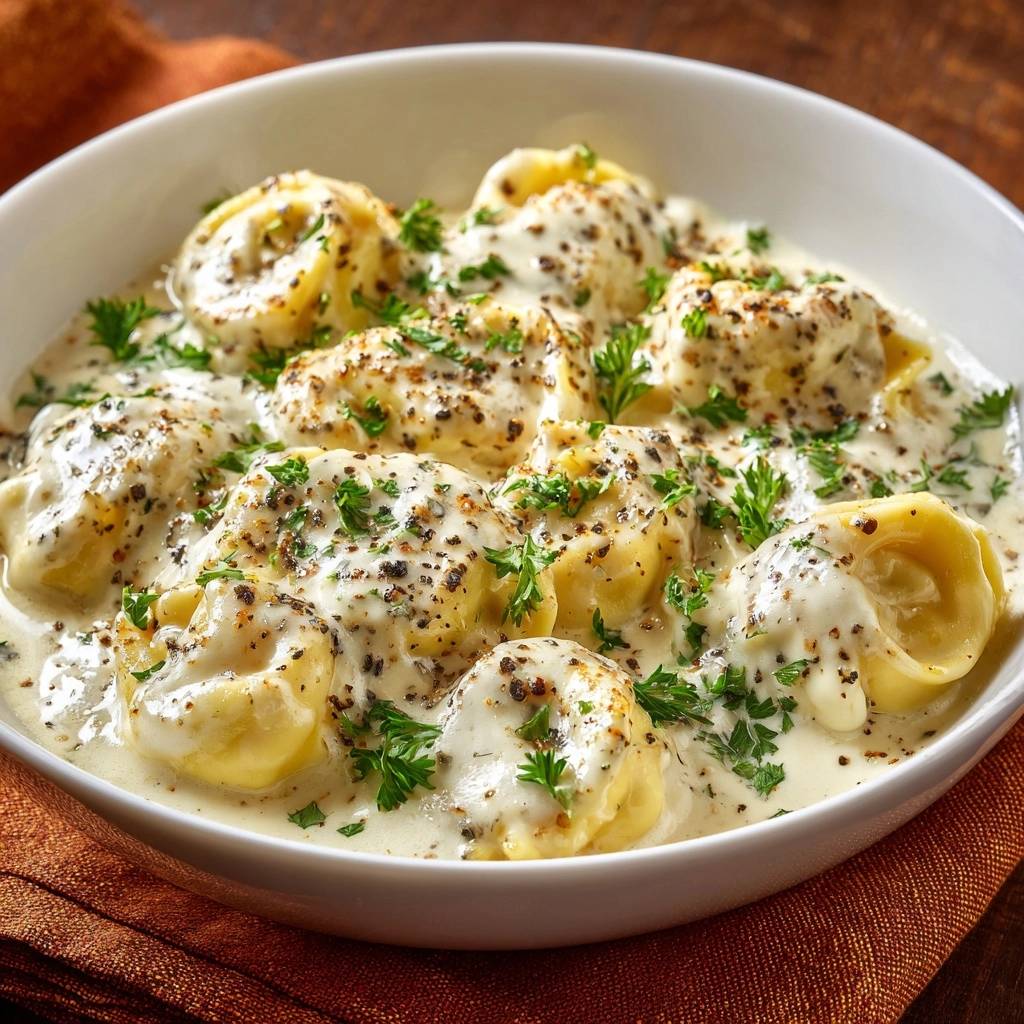
Imagine a plate of pasta where every single fold of the tortellini is hugged by a thick, velvety sauce that actually stays on the noodle. Most home cooks struggle with cream sauces that look beautiful in the pan but turn into a watery, broken mess the moment they hit the plate. This isn’t just about mixing cream and cheese; it’s about mastering a specific culinary emulsion that creates a professional finish every time.
The secret to this restaurant-quality Creamy Garlic Parmesan Tortellini lies in the marriage of reduction and starch. By simmering the cream to concentrate its proteins and using starchy pasta water as a natural binder, you create a sauce that is structurally sound. You won’t find any thin puddles at the bottom of your bowl here, just a rich, glossy coating that feels incredibly indulgent.
I’ve found that the biggest mistake people make is rushing the heat. If you boil the cream too hard or dump the cheese in all at once, the fats will separate, leaving you with a greasy texture. The trick is a gentle simmer and a gradual whisking technique. Once you see how the sauce clings to the back of your spoon, you’ll never go back to the jarred stuff again.
The Science of a Non-Watery Cream Sauce
Creating a stable cream sauce is a lesson in chemistry. Heavy cream is an emulsion of milk fat and water, held together by proteins. When you simmer the cream, you’re evaporating the excess water, which concentrates those fats and proteins. This process, known as reduction, naturally thickens the liquid without the need for flour or cornstarch, which can sometimes dull the vibrant flavors of garlic and Parmesan.
However, even a reduced sauce can “break” or separate if the temperature fluctuates too wildly. When you add cheese, you’re introducing more fat into the mix. If the heat is too high, the proteins in the cheese tighten up and squeeze out the fat, resulting in an oily, grainy texture. By keeping the heat at a medium-low simmer, you allow the cheese to melt into the cream slowly, creating a cohesive and smooth bond.
Why Starchy Pasta Water is Liquid Gold
Never pour your pasta water down the drain! As the tortellini cooks, it releases amylose and amylopectin starches into the water. This cloudy liquid acts as a powerful emulsifier. When you add a splash of this “liquid gold” to your cream base, the starch molecules act as a bridge between the fats in the cream and the moisture in the pasta. This ensures the sauce becomes a unified, glossy coating rather than a separate liquid that slides right off the tortellini.
Essential Components for Garlic Parmesan Tortellini
Quality ingredients are the backbone of this dish because there are so few of them. I always recommend using refrigerated tortellini found in the deli section rather than the dried, shelf-stable variety. Refrigerated pasta has a higher moisture content and a tender, pillowy texture that absorbs the sauce much better. It cooks faster and provides a much more authentic “fresh pasta” mouthfeel that elevates the entire meal.
Garlic is the other star here, and freshness is non-negotiable. Jarred minced garlic often sits in a citric acid preservative that adds a sour, metallic tang to the sauce. Fresh cloves have natural oils that release a sweet, pungent aroma when they hit the warm butter. When you mince it yourself, you control the size, ensuring the garlic melts into the sauce rather than leaving you with crunchy, bitter bits.
Selecting the Right Parmesan Cheese
If you want a smooth sauce, step away from the green shaker bottle and the pre-shredded bags. Bagged cheese is coated in potato starch or cellulose to prevent clumping in the package. Unfortunately, those anti-caking agents also prevent the cheese from melting smoothly into your sauce, often leading to a gritty or sandy texture. For the best results, buy a wedge of Parmesan and use a microplane to create a fine, snow-like grate that dissolves instantly upon contact with the warm cream.
The Role of High-Fat Heavy Cream
This is not the time for half-and-half or whole milk. Heavy cream, which contains at least 36% milkfat, is essential for this specific reduction technique. The high fat content makes the cream stable enough to withstand the heat and the salt from the cheese without curdling. Lower-fat dairy lacks the structural integrity to thicken properly through reduction alone, and it often breaks when it meets the acidity of the garlic.
Step-by-Step: Achieving the Perfect Emulsion
Achieving the perfect sauce is all about timing and temperature control. You want to move with purpose but never rush the ingredients. Start by setting your station so everything is ready to go, as the final “marriage” of the pasta and sauce happens quickly. Your goal is a sauce that looks like liquid velvet, shimmering under the kitchen lights and smelling intensely of toasted garlic and aged cheese.
As you work through the phases, pay close attention to the bubbles in the pan. Small, gentle bubbles indicate a safe simmer, while large, aggressive bubbles mean your heat is too high. If the cream starts to climb the sides of the skillet, turn the heat down immediately. Consistency is key, and maintaining a steady, low temperature will guarantee that your emulsion stays intact from the pan to the plate.
Phase 1: The Under-Cooked Pasta Secret
The package might say to cook the tortellini for seven minutes, but you should pull them out at five. This “par-boiling” technique is vital because the pasta will finish its cooking process directly in the sauce. By leaving the tortellini slightly underdone, you allow the pasta to absorb the flavorful cream sauce into its outer layer. This creates a deep flavor profile where the sauce and pasta become one, rather than the sauce just sitting on top like a blanket.
Phase 2: Sautéing Garlic Without Bitterness
When you add your minced garlic to the melted butter, stay focused. You only need about 60 seconds of heat. You are looking for the garlic to become translucent and fragrant, not brown. If the garlic turns golden or dark brown, it becomes acrid and bitter, which will ruin the delicate balance of the cream. If you accidentally burn the garlic, it’s honestly better to wipe the pan and start over than to try and save the sauce.
Phase 3: Reducing the Cream Base
Once the cream is in the pan, let it simmer until it reaches the “nappe” stage. This is a French culinary term meaning the sauce is thick enough to coat the back of a spoon. If you run your finger through the sauce on the spoon, the line should stay clean and not fill back in. This reduction ensures the sauce has enough body to stand up to the heavy tortellini without thinning out once the pasta is added.
Phase 4: The Gradual Cheese Integration
Turn your heat to the lowest setting before adding the Parmesan. Add the cheese one small handful at a time, whisking constantly until it is completely melted before adding the next batch. This prevents “thermal shock,” where a large amount of cold cheese hits the hot liquid and clumps together. This slow integration is the final step in ensuring your sauce is perfectly smooth and professional.
Troubleshooting Common Creamy Pasta Issues
Even the best cooks run into trouble sometimes. If your sauce looks too thick or sticky after adding the cheese, don’t panic. This is exactly why we reserved that starchy pasta water. Add it one tablespoon at a time, whisking vigorously, until the sauce thins out to your desired consistency. The starch in the water will help keep the emulsion stable even as you adjust the thickness.
If the sauce looks grainy, it usually means the cheese didn’t melt properly or the heat was too high. You can sometimes save this by removing the pan from the heat entirely and adding a tiny splash of room-temperature cream. Whisk it fast and hard off the heat to try and bring the fats back together. However, the best cure is prevention: keep that heat low and grate your cheese as finely as possible.
Flavor Variations and Ingredient Swaps
This garlic parmesan base is incredibly versatile and acts as a blank canvas for your favorite additions. If you want to add protein, pan-seared chicken breast or sautéed shrimp are fantastic choices. I recommend cooking the protein separately and slicing it on top at the end to keep the sauce clean. For a bit of acidity to cut through the richness, try stirring in some chopped sun-dried tomatoes or a handful of capers.
For a richer taste, consider adding shrimp to your creamy garlic tortellini, just like in this creamy garlic shrimp tortellini.
Vegetables can also be easily integrated into this dish. A few handfuls of baby spinach can be folded into the sauce during the last minute of cooking; the heat from the cream will wilt the leaves perfectly without overcooking them. Sautéed mushrooms or roasted broccoli also pair beautifully with the garlic and parmesan flavors, adding texture and earthy notes to the pillowy tortellini.
For a similar experience with vegetables, try this creamy chicken and carrot penne bake.
Vegetarian-Friendly Substitutions
While this recipe is meat-free, strict vegetarians should check the label on their Parmesan cheese. Traditional Parmesan uses animal rennet, but many brands now offer versions made with microbial rennet. You can also swap the parsley for fresh basil or chives if you want a different herbal finish. Chives, in particular, add a lovely mild onion note that complements the garlic without overpowering the cream.
Optimal Pairings for Rich Tortellini
Because this dish is so rich and decadent, you want side dishes that provide a sharp contrast. A crisp green salad with a high-acid vinaigrette, like a lemon or balsamic dressing, is the perfect palate cleanser. The acidity cuts through the heavy cream and cheese, making every bite of pasta feel as fresh as the first. Roasted vegetables with a bit of char, like balsamic Brussels sprouts, also provide a nice textural contrast.
What Else to Try
Round out your meal with these complementary dishes.
- For a touch of savory sweetness, serve alongside this golden skillet cornbread, which uses a special method to ensure a great texture.
- Consider adding a crisp vegetable with these bacon-wrapped asparagus bundles, prepared for a satisfying crunch.
Don’t forget the bread! A crusty sourdough or a warm baguette is essential for mopping up every last drop of that garlic cream sauce. Since the sauce is so stable, it won’t soak into the bread and make it soggy immediately, allowing you to enjoy the crunch of the crust alongside the velvety emulsion. It’s the best way to make sure none of that “liquid gold” goes to waste.
Storage and Reheating Without Separation
Cream sauces are notorious for “seizing” or turning into a solid block of grease in the fridge. This happens because the fats solidify as they cool. To store leftovers, place them in an airtight container for up to three days. I do not recommend freezing this dish, as the cream and cheese emulsion will almost certainly break upon thawing, leaving you with a grainy, watery mess that is very difficult to fix.
When it comes to reheating, avoid the microwave at all costs. The uneven, high heat of a microwave will cause the oil to separate from the cream instantly. Instead, place the leftovers in a small skillet over low heat. Add a splash of milk or cream and stir gently as it warms up. This extra moisture helps the sauce re-emulsify, returning it to its original creamy glory without the grease.
Expert Tips for Professional Presentation
Presentation is the final step in creating a restaurant-style experience at home. Use a coarse grinder for your black pepper rather than fine table pepper. The larger cracks of pepper provide little bursts of heat and a beautiful visual contrast against the white sauce. Fresh curly parsley isn’t just a garnish; it adds a bright, peppery freshness that lightens the heavy flavors of the dish.
Another pro tip is to warm your serving bowls. If you put a hot, emulsified cream sauce into a cold ceramic bowl, the sauce will begin to thicken and set immediately. By running your bowls under hot water or putting them in a low oven for a few minutes, you ensure the sauce stays at its peak viscosity throughout the entire meal. It’s a small detail that makes a massive difference in the dining experience.
The Importance of Immediate Service
This dish is at its absolute best the second it leaves the pan. The “peak emulsion” window is relatively short, as the sauce will continue to thicken as it cools. You want to move from the skillet to the table in under 60 seconds. Have your family or guests seated and ready before you toss the pasta with the sauce. When served immediately, the sauce is at its most fluid and glossy, providing that signature mouthfeel.
Frequently Asked Questions
Can I use frozen tortellini instead of refrigerated?
Yes, you can use frozen tortellini, but you will need to adjust the cooking time. Frozen pasta usually takes a few minutes longer to reach that “al dente” stage. Make sure to still pull it out two minutes early so it can finish cooking in the sauce. Be extra careful when draining, as frozen tortellini can sometimes be more delicate and prone to tearing than refrigerated versions.
Why did my sauce turn oily?
An oily sauce is a sign that the emulsion has broken. This usually happens because the heat was too high when the cheese was added, or the cream was boiled too vigorously. To prevent this, always lower the heat to the minimum setting before whisking in your Parmesan. If it happens, try whisking in a teaspoon of warm water or cream off the heat to see if you can pull the fats back into the sauce.
Can I add lemon juice to this recipe?
Be very careful with lemon juice. The acid in the lemon can cause the heavy cream to curdle, especially if the sauce is very hot. If you want a citrus note, it is much safer to use lemon zest. The zest contains the fragrant oils without the curdling acidity. If you must use juice, whisk it in at the very end after the pan has been removed from the heat.
How do I scale this for a large dinner party?
When doubling or tripling this recipe, use a very large, wide skillet or a Dutch oven. The surface area is important for the reduction process. You may find that the cream takes a few extra minutes to reduce when there is more volume in the pan. Work in batches when adding the cheese to ensure it all melts evenly, and make sure you have a large enough colander to handle the extra pasta water.
Is there a substitute for heavy cream?
For this specific technique, there isn’t a great substitute for heavy cream. Milk and half-and-half lack the fat content to thicken through reduction and will likely result in the watery sauce we are trying to avoid. If you must use a lower-fat dairy, you would need to create a roux (butter and flour) first to provide structural thickness, but that will change the flavor and texture of the dish significantly.
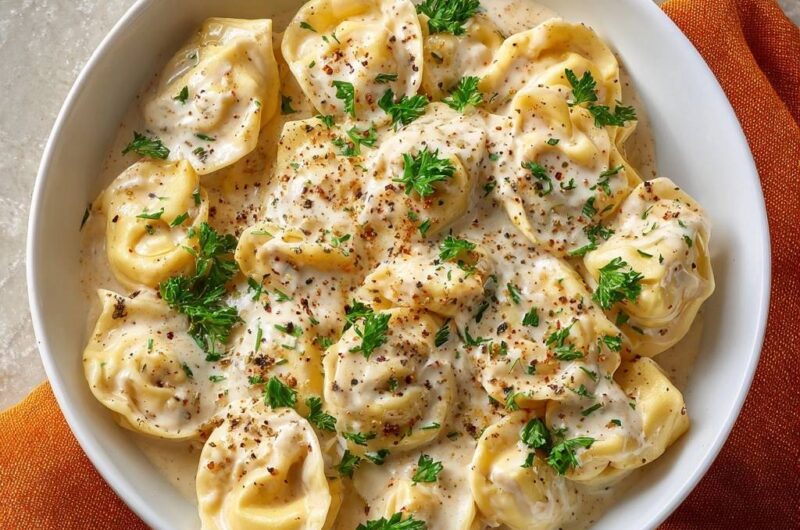
Creamy Garlic Parmesan Tortellini
Course: Main CourseCuisine: AmericanDifficulty: easy4
servings5
minutes15
minutes520
kcal20
MinutesA rich and decadent pasta dish featuring refrigerated cheese tortellini tossed in a garlic-infused heavy cream and Parmesan sauce. The recipe utilizes starchy pasta water and a specific reduction method to ensure a perfect emulsion that clings to the pasta.
Ingredients
20 ounces refrigerated cheese tortellini
1.5 cups heavy cream
1 cup freshly grated Parmesan cheese (finely grated for better melting)
4 cloves garlic, minced
2 tablespoons unsalted butter
1 teaspoon coarsely cracked black pepper (plus extra for garnish)
1/2 teaspoon salt (adjust to taste)
1/4 cup fresh curly parsley, roughly chopped
1/2 cup reserved starchy pasta cooking water
Directions
- Bring a large pot of heavily salted water to a boil. Add the tortellini and cook for 2 minutes less than the package directions specify. The pasta must remain “al dente” as it will finish cooking in the sauce.
- Before draining, scoop out 1/2 cup of the cloudy, starchy pasta water. Drain the tortellini and set aside.
- In a large skillet over medium heat, melt the butter. Add the minced garlic and sauté for 1 minute until fragrant. Do not let the garlic brown, as it will turn bitter.
- Pour in the heavy cream and bring to a gentle simmer. Reduce the heat to medium-low and let the cream simmer for 4-5 minutes, stirring occasionally. The cream should reduce in volume and thicken enough to coat the back of a spoon.
- Lower the heat to low. Gradually whisk in the Parmesan cheese one handful at a time, ensuring each batch is fully melted before adding more. This prevents the sauce from becoming grainy.
- Stir in the salt and half of the cracked black pepper.
- Add the cooked tortellini to the skillet along with 1/4 cup of the reserved pasta water. Toss gently for 2 minutes over low heat. The starch in the water will emulsify with the fats in the cream and cheese, creating a glossy coating that sticks to the pasta. If the sauce is too thick, add the remaining pasta water a tablespoon at a time.
- Remove from heat immediately. Transfer to a bowl and garnish generously with the remaining cracked black pepper and fresh curly parsley to match the visual presentation. Serve immediately while the emulsion is at its peak.
Notes
- To prevent a grainy texture, ensure the Parmesan cheese is finely grated and added over low heat. Always reserve your pasta water before draining to help emulsify the sauce.