We’ve all been there. You’re craving a vibrant, savory skillet meal, but you end up with a pile of gummy, mushy rice that feels more like porridge than a restaurant-quality dinner. It’s frustrating when the flavors are spot on, but the texture just doesn’t deliver that satisfying bite. This One-Pan Mediterranean Chicken and Rice is designed to end that struggle forever.
The Mediterranean flavor profile is all about balance. You get the earthy warmth of turmeric and smoked paprika paired with the bright, zesty pop of fresh lemon and parsley. It’s a meal that feels light yet incredibly filling, bringing those sunny, coastal vibes right to your kitchen table in about 40 minutes.
The secret to this recipe’s success lies in the “toast.” By treating the rice like a star ingredient rather than an afterthought, we ensure every single grain stays distinct and fluffy. I’m going to show you how a simple change in technique creates a professional result that will have everyone asking for seconds.
The Science of Non-Mushy Mediterranean Rice
Rice is packed with starch, specifically amylopectin, which is the culprit behind that sticky, clumping texture we want to avoid. When rice hits hot liquid immediately, those starches swell and burst, creating a glue-like consistency. However, we can manipulate this chemistry by using the pilaf technique.
By sautéing the dry rice in olive oil first, you’re essentially “tanning” the grains. This creates a thin, hydrophobic barrier around each kernel. This barrier slows down the absorption of liquid, allowing the rice to cook through without the exterior disintegrating into a mess. Therefore, you get that perfect al dente texture every time.
The choice of cookware also plays a massive role in your success. A wide, deep skillet is superior to a tall pot because it offers more surface area. This allows for better heat distribution and more efficient moisture evaporation, which is exactly what you need for fluffy grains rather than a soggy heap.
Why We Skip Rinsing for This Specific Recipe
While you might be used to rinsing basmati or jasmine rice to remove excess starch, we’re doing things differently here. For this one-pan method, we need the surface of the rice to be bone-dry when it hits the hot oil. If the rice is damp, it will steam instead of toast, defeating the purpose of the oil barrier.
Furthermore, that dry surface is what allows the rice to interact immediately with the olive oil and spices. This creates a deep, nutty flavor profile that you simply can’t achieve with wet grains. Trust the process and keep the water away until it’s time for the broth!
Essential Components for the Mediterranean Skillet
Quality ingredients are the backbone of any great Mediterranean dish. Since we’re simmering everything together, the flavors will concentrate. I always recommend using a high-quality, low-sodium chicken broth. This gives you total control over the salt levels, ensuring the dish is seasoned but not overwhelming.
Uniformity is your best friend when it comes to the red bell peppers. Dicing them finely ensures they soften at the same rate the rice toasts. In addition, using frozen peas and corn is a smart move here. Unlike canned versions, frozen vegetables retain their structural integrity and vibrant color, providing a beautiful contrast against the golden rice.
The Golden Trio: Paprika, Garlic, and Turmeric
The spice blend is where the personality of this dish truly shines. Turmeric is the heavy lifter for aesthetics, providing that iconic “yellow rice” glow that looks so appetizing on the plate. It also adds a very subtle, earthy undertone that grounds the other flavors.
Smoked paprika brings a layer of complexity and a hint of woodsy depth without adding heat. Finally, we use garlic powder instead of fresh minced garlic during the toasting phase. Fresh garlic can easily burn at the high temperatures needed to toast rice, whereas the powder distributes evenly and provides a consistent savory base.
Selecting and Prepping the Chicken Protein
This recipe is a fantastic way to use up precooked chicken. Whether you have leftovers from a roasted bird, a store-bought rotisserie chicken, or some simple poached breasts, shredding the meat is the way to go. Shredded chicken has more surface area to soak up the savory broth and spices.
For another flavorful chicken dish, consider this crispy chicken thighs recipe.
The timing of the chicken is critical. Since the meat is already cooked, adding it at the very beginning would turn it rubbery and dry. By layering it on top at the end, we use the residual steam to gently warm it through, keeping it tender and juicy while preserving its natural flavor.
Step-by-Step: Executing the Perfect One-Pan Sear
Start by heating your olive oil until it shimmers. When you drop in the red peppers, you should hear a distinct sizzle. Sauté them for just a few minutes until they start to blister slightly and smell sweet. This builds the first layer of flavor in your pan.
Now, pour in your dry rice. You’ll need to stir constantly for about 3 to 4 minutes. Watch the grains closely; they will transition from a solid white to a slightly translucent look at the edges. Once you catch a whiff of a nutty, toasted aroma, you’ve hit the sweet spot.
The Simmer Phase: Why the Lid Stays On
Once the broth is in and you’ve reached a rolling boil, turn the heat down to low and clamp that lid on tight. This is the most important part of the process. The lid creates a pressurized steam chamber that cooks the rice evenly from the outside in.
For a different take on fluffy grains, check out this chicken fried rice recipe.
For perfectly fluffy rice, consider trying Arroz con Pollo for another flavorful option.
Every time you lift the lid to “check” on the rice, you release that precious steam and drop the internal temperature. This leads to uneven cooking and often results in rice that is crunchy in some spots and mushy in others. Be patient and let the steam do the hard work for you.
The Residual Heat Steam Method
After 15 minutes, the liquid should be mostly gone, but the rice isn’t quite finished. This is when you quickly scatter your chicken, chickpeas, and frozen veggies over the top. Do not stir them in yet! We want them to sit on top like a blanket.
Cover the pan again and take it off the heat. Letting it sit for 5 to 8 minutes allows the rice to finish absorbing the last bits of moisture while the steam gently hydrates the chicken and vegetables. This “carry-over” cooking is the secret to that perfect, fluffy texture.
Troubleshooting Common Rice Texture Issues
If you find the middle of your rice is still a bit crunchy but the liquid is gone, don’t panic. Simply drizzle two tablespoons of boiling water over the top, replace the lid, and let it sit for another five minutes. The extra steam usually fixes the problem without making the bottom soggy.
On the flip side, if the rice seems a bit too wet when you open the lid, try the “towel trick.” Place a clean kitchen towel over the pan, then put the lid back on top of the towel. The fabric will absorb the excess rising steam, helping the grains firm up as they rest.
Flavor Variations and Regional Swaps
This recipe is a wonderful canvas for different regional flavors. For a Greek-inspired twist, fold in some crumbled feta cheese, sliced kalamata olives, and a teaspoon of dried oregano right before serving. The salty feta melts slightly into the warm rice for a creamy finish.
If you want a Levantine feel, add a pinch of cinnamon to the spice mix and garnish with toasted pine nuts. For those who enjoy a bit of a kick, stirring in a spoonful of harissa paste with the broth adds a beautiful North African heat that pairs perfectly with the chickpeas.
Round Out Your Meal
To complement your one-pan chicken and rice, consider these fresh and flavorful dishes.
- For a vibrant grain accompaniment, try this easy couscous salad, featuring bright Mediterranean flavors.
- If you enjoy pasta salads, this Mediterranean bow-tie pasta salad offers a delightful blend of textures and tastes.
What to Serve with Mediterranean Chicken and Rice
Because this dish is rich and savory, it pairs best with high-acid sides. A simple cucumber and mint yogurt sauce is a classic choice. The cool, creamy yogurt cuts through the spices and provides a refreshing contrast to the warm rice.
A crisp, shaved fennel salad or even some charred broccolini with a squeeze of lemon also works beautifully. Speaking of lemon, don’t skip the garnish! That final squeeze of fresh lemon juice acts as a functional ingredient that “wakes up” all the earthy spices in the dish.
Storage, Reheating, and Meal Prep Strategy
This is a premier candidate for meal prep because the flavors actually deepen the next day. Store leftovers in an airtight container in the refrigerator for up to 4 days. It’s a sturdy dish that holds up well to being transported for office lunches.
When reheating, the microwave can sometimes dry out rice. To prevent this, place a damp paper towel over your bowl before heating. Alternatively, you can toss it back into a skillet with a tiny splash of broth or water over medium-low heat until it’s warmed through and fluffy again.
Expert Tips for Skillet Success
- Always use a heavy-bottomed skillet. Thin pans have hot spots that can scorch the rice before it has a chance to cook through.
- Low-sodium broth is non-negotiable. As the liquid reduces, the salt concentrates. Starting with low-sodium ensures the final dish isn’t a salt bomb.
- Fresh parsley makes a huge difference. While dried herbs are fine in the simmer, the fresh garnish at the end provides a necessary aromatic lift.
- Make sure your lid is tight-fitting. If steam is escaping from the sides, your rice will likely end up undercooked.
- Don’t skip the resting period. Those final 8 minutes off the heat are when the magic happens for the grain separation.
Can I Use Brown Rice or Quinoa?
You can certainly use other grains, but you’ll need to adjust your liquid and timing. Brown rice requires significantly more liquid (usually a 2:1 ratio) and takes about 45 minutes to simmer. If you go this route, wait to add the peppers and spices so they don’t overcook.
Quinoa is a faster option and works well with the toasting method. However, it absorbs liquid differently than long-grain rice. If using quinoa, reduce the simmering time to about 12-15 minutes and use slightly less broth to ensure it doesn’t become waterlogged.
Is This Recipe Freezer Friendly?
Yes, you can freeze this dish, though the texture of the rice will change slightly. Rice tends to lose a bit of its “bite” after being frozen and thawed. To get the best results, let the dish cool completely before transferring it to freezer-safe bags or containers.
It will stay fresh in the freezer for up to 3 months. When you’re ready to eat, thaw it in the fridge overnight. Reheat it in a pan with a splash of water to help re-hydrate the grains and bring back some of that original fluffiness.
How to Scale This for a Crowd
If you’re cooking for a large group, be careful about simply doubling the recipe in one pan. If the layer of rice is too deep, the weight of the top grains can crush the bottom ones, leading to a mushy texture. The heat also won’t distribute as evenly.
For the best results when doubling, use two separate large skillets. This ensures that every grain has enough space to toast properly and that the steam can circulate effectively. It’s a bit more cleanup, but the quality of the meal is worth the extra effort.
Adjusting Salt Levels Without Losing Flavor
If you’re watching your sodium intake, you can still have a very flavorful meal. Start by using a very low-sodium or even a salt-free vegetable stock. To compensate for the lack of salt, double the amount of smoked paprika and add a bit of extra garlic powder.
You can also increase the amount of fresh lemon juice and parsley at the end. Acidity often mimics the “brightness” that salt provides, tricking your palate into feeling satisfied without the extra sodium. Adding a pinch of red pepper flakes can also provide a distraction for your taste buds.
How do I store leftovers and does it freeze well?
Store your leftovers in an airtight container in the refrigerator for up to 4 days. This dish is excellent for meal prep as the flavors meld over time. While you can freeze it for up to 3 months, be aware that rice can become slightly softer upon thawing. For the best texture, reheat it in a skillet with a tablespoon of broth to help separate the grains.
Why is my rice still crunchy after the cook time?
Crunchy rice usually happens if the heat was too high, causing the liquid to evaporate before the rice could absorb it, or if the lid wasn’t tight enough. To fix this, add 2-3 tablespoons of boiling water to the pan, cover it tightly, and let it sit on the lowest heat setting for another 5 minutes. The extra steam will finish the softening process without ruining the texture.
Can I use a different type of rice for this recipe?
This recipe is optimized for long-grain white rice. If you substitute Basmati, it will work well but may cook slightly faster. Avoid using short-grain or arborio rice, as these are naturally starchier and are designed to be creamy (like risotto), which will result in the mushy texture we are trying to avoid here. Brown rice requires much more liquid and a longer cook time.
What can I use if I don’t have chicken broth?
If you’re out of chicken broth, you can use vegetable broth or even water mixed with a bit of bouillon. If you use plain water, you will need to significantly increase the salt, paprika, and garlic powder to ensure the rice isn’t bland. Adding a splash of lemon juice to the water can also help mimic the complexity of a good broth.
How do I prevent the chicken from getting dry?
The key is adding the shredded chicken at the very end during the “resting” phase. Since the chicken is already cooked, it only needs to be warmed through. By placing it on top of the hot rice and covering the pan off the heat, the residual steam gently heats the meat without cooking it further, which preserves its moisture and tenderness.
Can I add other vegetables to this one-pan meal?
Absolutely! This dish is very versatile. You can add diced zucchini or yellow squash along with the bell peppers. If you want to add leafy greens like spinach, fold them in at the very end when you are fluffing the rice with a fork. The heat from the rice will be enough to wilt the spinach perfectly without making it slimy.
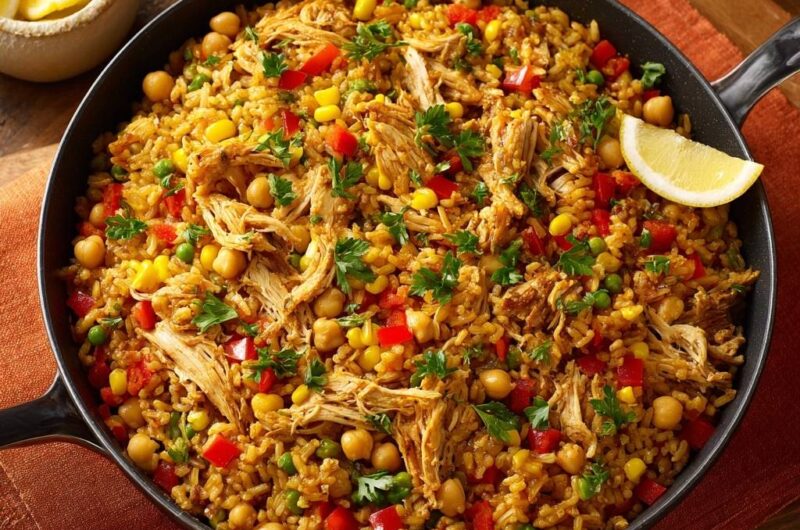
Chicken and Rice
Course: Main CourseCuisine: MediterraneanDifficulty: easy4
servings15
minutes25
minutes485
kcal40
MinutesA vibrant and savory one-pan meal featuring shredded chicken, chickpeas, and vegetables. The recipe uses a specific rice-toasting method to achieve a restaurant-quality texture and golden color.
Ingredients
1.5 lbs chicken breast, precooked and shredded
2 cups long-grain white rice, unwashed
1 can (15 oz) chickpeas, drained and rinsed
1/2 cup frozen peas
1/2 cup frozen corn
1 large red bell pepper, finely diced
3.5 cups low-sodium chicken broth
2 tablespoons olive oil
1 tablespoon smoked paprika
1 teaspoon garlic powder
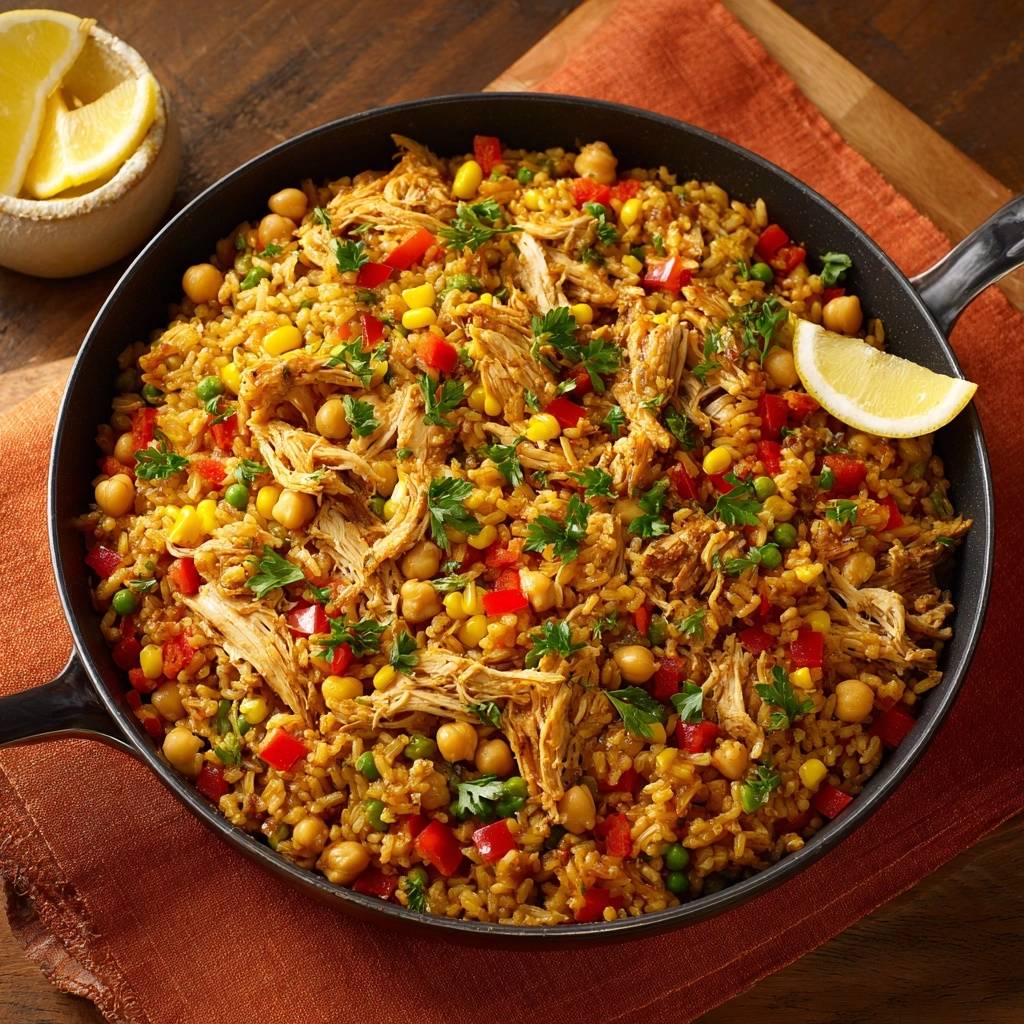
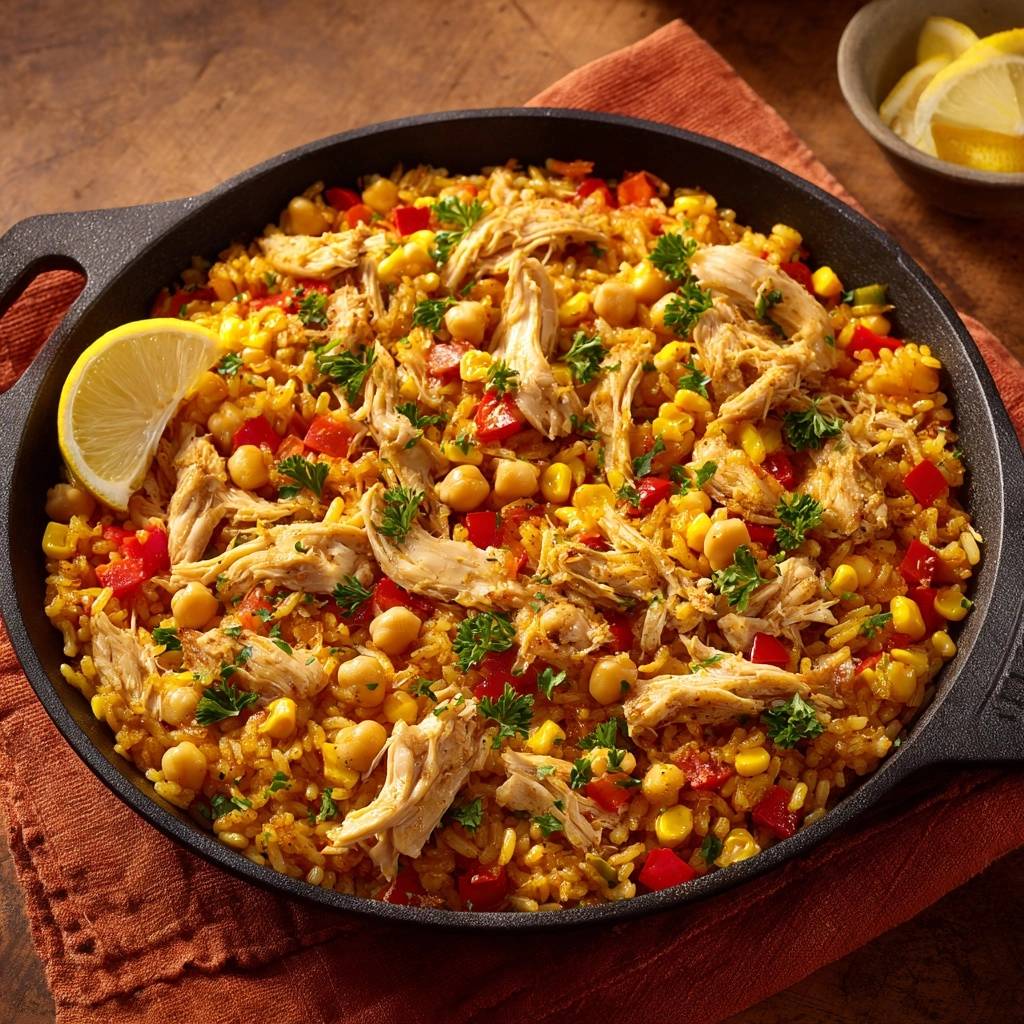
1/2 teaspoon turmeric (for the golden color shown in the image)
Salt and black pepper to taste
Fresh parsley and lemon wedges for garnish
Directions
- Heat the olive oil in a large, deep skillet over medium-high heat. Add the diced red bell pepper and sauté for 2-3 minutes until slightly softened and fragrant.
- Add the dry rice directly to the pan with the peppers. This is the critical step: stir the rice constantly for 3 to 4 minutes until the edges of the grains look translucent and you smell a nutty aroma. This toasting process is what prevents a mushy result.
- Stir in the smoked paprika, garlic powder, and turmeric, coating the toasted rice evenly until the rice takes on a vibrant golden-orange hue.
- Pour in the chicken broth and bring the mixture to a rolling boil. Once boiling, turn the heat down to low and cover the skillet with a tight-fitting lid.
- Simmer undisturbed for 15 minutes. Do not lift the lid, as the trapped steam is essential for even cooking and grain separation.
- Remove the lid. The liquid should be mostly absorbed. Quickly scatter the shredded chicken, chickpeas, peas, and corn over the top of the rice. Do not stir yet. Cover again and let sit off the heat for 5 to 8 minutes. This allows the added ingredients to steam through using the residual heat of the rice.
- Remove the lid and gently fold the ingredients together with a fork to distribute the chicken and vegetables evenly. Season with salt and pepper to taste.
- Garnish with plenty of fresh chopped parsley and serve with lemon wedges to provide the bright acidity shown in the image.
Notes
- The secret to non-mushy rice is toasting the dry grains in oil for 3 to 4 minutes before adding liquid. Do not lift the lid during the simmering process to ensure even steaming.