The “superfood salad” has undergone a massive evolution over the last decade. We’ve moved past the days of sad, wilted greens and entered an era where texture and vibrancy take center stage. However, many home cooks still struggle with the most common grievance: bitter, sandpaper-like kale that feels more like a chore than a meal.
This Rainbow Quinoa Kale Salad is the definitive bridge between “health food” and “craveable comfort food.” By focusing on a specific set of preparation techniques, we can transform these sturdy ingredients into a dish that feels indulgent. You aren’t just eating a bowl of vegetables; you’re experiencing a masterclass in pH balance, plant-based protein layering, and textural contrast.
The secret to success lies in the cellular breakdown of the greens. Most people toss raw kale into a bowl and wonder why it’s difficult to chew. I’ve found that treating the kale with a specific “massage” technique before adding any other ingredients is the only way to achieve a professional-grade result. This one small step changes everything about the mouthfeel and flavor profile.
The Science of Softening Fibrous Greens
To understand why this salad works, we have to look at the cellular biology of the kale leaf. Kale is packed with cellulose and lignin, which are tough structural components that give the plant its rigidity. Unlike delicate spinach or butter lettuce, kale doesn’t naturally collapse when it hits a dressing. It stands its ground, which often results in a tough, fibrous texture that many find off-putting.
The massage technique is a mechanical and chemical intervention. When you rub the leaves with sea salt and lime juice, the salt acts as a gentle abrasive, physically breaking down those tough cell walls. Simultaneously, the citric acid in the lime juice begins to denature the proteins and soften the fibers. This process is essentially a “pre-digestion” step that makes the nutrients more bioavailable and the leaves significantly more tender.
You will notice a dramatic transformation within just three minutes. Raw kale is a dull, forest green with a matte finish and a stiff structure. Massaged kale, however, turns a vibrant, translucent emerald. It shrinks in volume by nearly half and takes on a silky, supple texture. This step is non-negotiable if you want a salad that tastes like it came from a high-end bistro rather than a grocery store salad bar.
Essential Components for the Rainbow Base
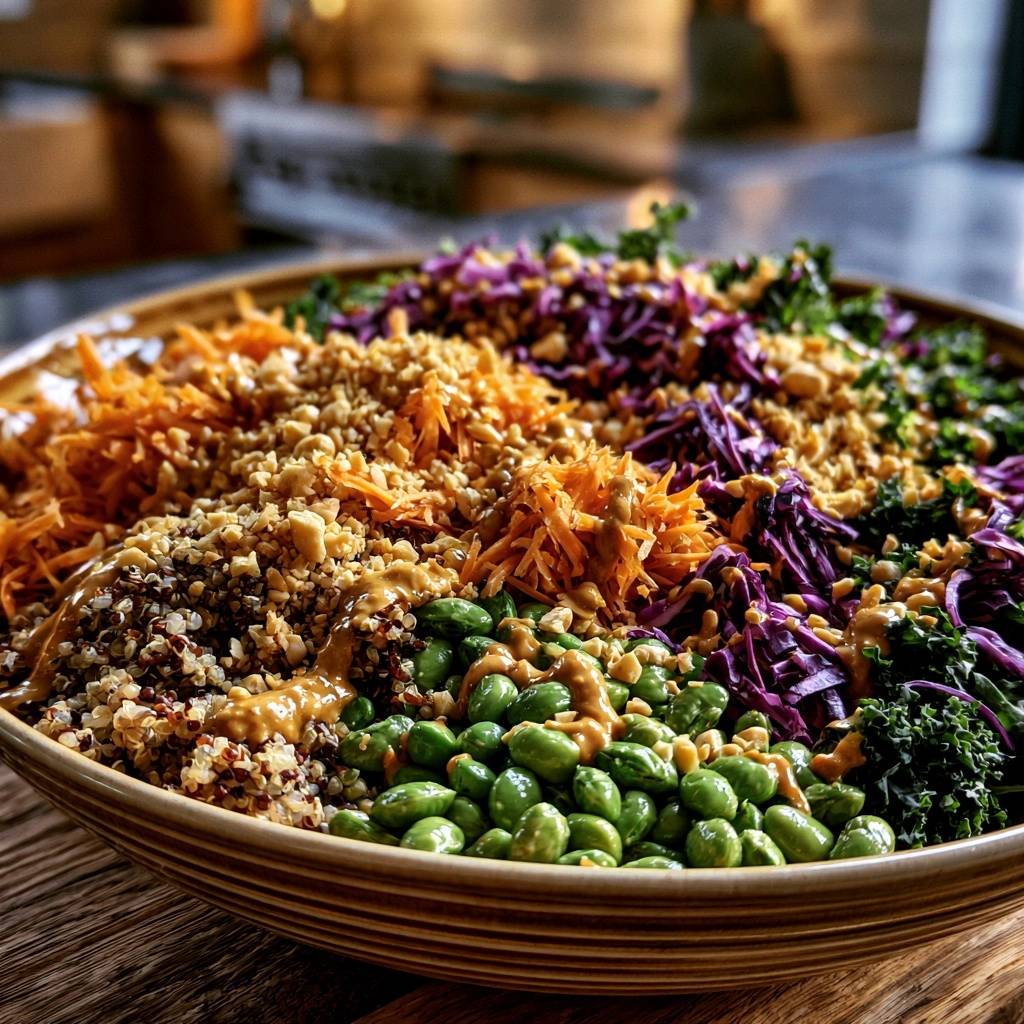
A true “rainbow” salad isn’t just about aesthetics; it’s about a diversity of phytonutrients and textures. Every ingredient in this base serves a specific purpose. The tri-color quinoa provides a nutty, earthy foundation, while the purple cabbage offers a sharp, peppery crunch. Carrots bring a natural sweetness that balances the earthy notes of the greens.
Texture is just as important as flavor in a large-format salad. This is why I specify that carrots should be finely shredded and cabbage should be minced. When the vegetables are cut into small, uniform pieces, they integrate better with the quinoa. This ensures that every single forkful contains a bit of everything, creating a cohesive mouthfeel rather than a disjointed pile of vegetables.
Selecting the Right Quinoa Variety
While you can use plain white quinoa, a tri-color blend is superior for this specific recipe. White quinoa tends to be the softest and can sometimes become mushy if overcooked. Red and black quinoa have a thicker outer hull, which means they maintain their “pop” and structural integrity even after being tossed with a heavy dressing. The blend gives you the best of both worlds: fluffiness and a satisfying bite.
Before cooking, always rinse your quinoa thoroughly in a fine-mesh strainer. Quinoa is coated in saponins, which are natural compounds that can taste soapy or bitter. A quick 30-second rinse under cold water removes this coating, ensuring your salad has a clean, nutty flavor profile without any unwanted aftertaste.
Sourcing and Prepping Curly Kale
For this recipe, I recommend curly kale over Lacinato (Dino) kale. While Lacinato is wonderful for chips, the tight ruffles of curly kale are perfect for “trapping” the creamy peanut dressing. These crevices act like little flavor pockets, ensuring the dressing doesn’t just slide off to the bottom of the bowl.
Preparation is key to avoiding woody, inedible bites. Always remove the center rib of the kale leaf. You can do this easily by holding the stem with one hand and sliding your other hand along the rib to strip the leaves off. Discard the stems or save them for a morning smoothie, but keep them out of your salad to maintain a consistent, tender texture.
Step-by-Step: Preparing the Fluffiest Quinoa
The most common mistake in grain-based salads is clumpy, gummy quinoa. To avoid this, use a strict 1:2 ratio of quinoa to water. Bring the water to a boil, add the rinsed quinoa, and then immediately drop the heat to the lowest setting. Covering the pot is essential to trap the steam, which gently swells the grains until they are perfectly tender.
Once the water is absorbed, don’t just leave the quinoa in the hot pot. Use the “Baking Sheet Method” favored by professional chefs. Spread the fluffed quinoa out in a thin layer on a large baking sheet. This stops the residual cooking process instantly and allows the steam to escape. This ensures the grains stay separate and fluffy rather than sticking together in a warm mass.
The Massage Technique: Transforming Texture
Place your chopped kale in a large bowl and sprinkle it with sea salt and half of your lime juice. Now, get in there with your hands. You want to firmly squeeze and rub the leaves together, much like you would knead bread dough. It might feel strange at first, but you are physically changing the structure of the vegetable.
Watch for the sensory cues. Within sixty seconds, the kale will start to release moisture and the volume will drop. The aroma will shift from a raw, “grassy” smell to something much brighter and sweeter. Once the leaves feel soft and look like dark emerald silk, you’ve reached the perfect consistency. This usually takes about two to three minutes of active work.
Emulsifying the Creamy Ginger Peanut Dressing
The dressing is the soul of this salad, and it relies on a stable emulsion. Peanut butter acts as the fat base, providing a rich, creamy mouthfeel. When you whisk in the soy sauce, lime juice, and honey, the mixture might look like it’s separating or “breaking” at first. This is normal as the fats and liquids struggle to bond.
If your dressing is too thick or looks curdled, simply whisk in a teaspoon of warm water at a time. The heat helps the peanut butter fats loosen up and incorporate the other liquids. The goal is a pourable consistency that coats the back of a spoon. The fresh ginger is the final touch, providing a sharp, spicy heat that cuts through the richness of the peanuts.
Strategic Layering for Visual Impact
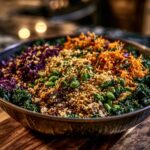
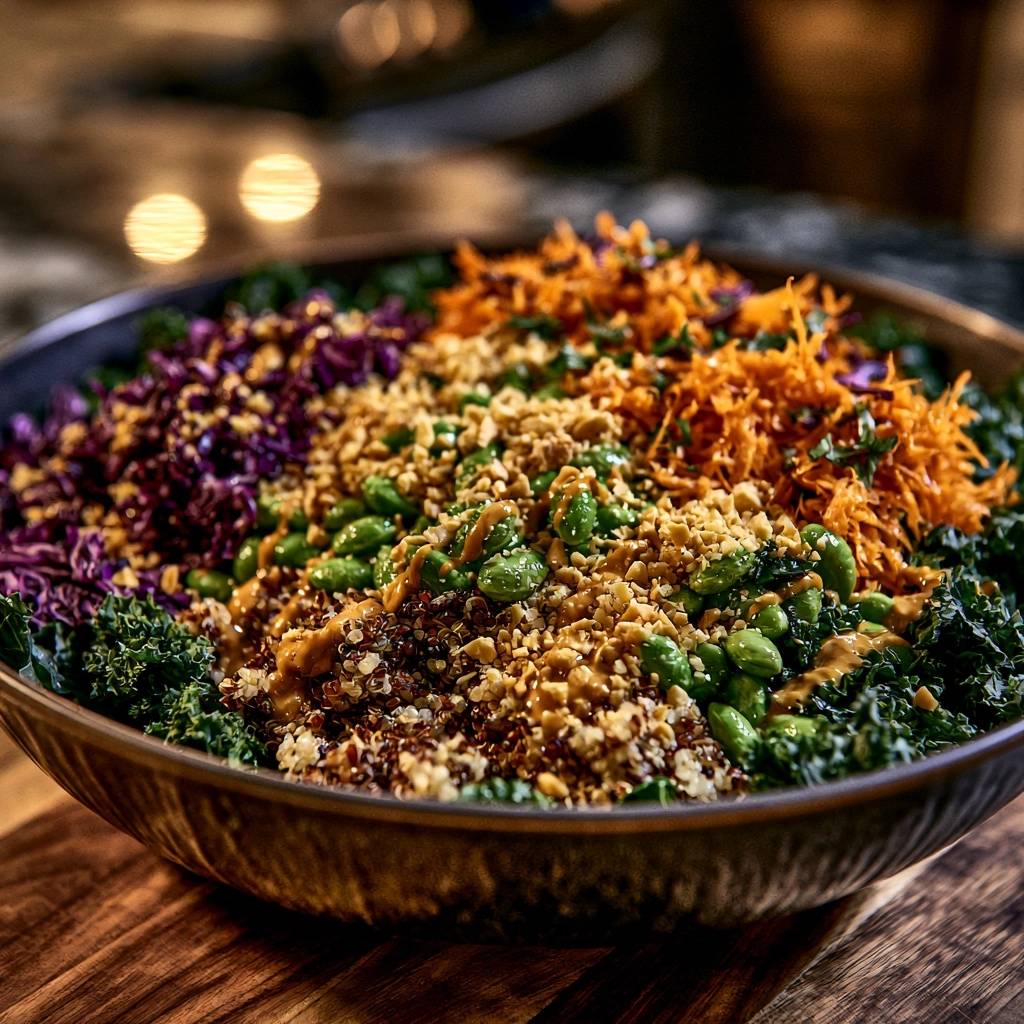
We eat with our eyes first, so the presentation of a rainbow salad matters. Instead of tossing everything immediately, try the “Skyscraper” approach. Use the massaged kale as a lush green base, then arrange the other ingredients in distinct sections on top. The orange carrots next to the purple cabbage and green edamame create a high-contrast visual that looks stunning on a dinner table.
Wait to toss the salad until you are ready to serve. This keeps the colors distinct and prevents the purple cabbage from bleeding its pigment into the light-colored quinoa. When you finally do toss it, the dressing will act as a glue, bringing all those disparate textures together into one harmonious bite.
Flavor Variations and Protein Swaps
This recipe is incredibly versatile. If you want to add more density, baked tofu cubes or chickpeas are excellent additions that soak up the peanut dressing beautifully. For those who prefer a different nut profile, toasted cashews or sunflower seeds can replace the peanuts, offering a different kind of buttery crunch.
If you find yourself without lime juice, rice vinegar is a fantastic substitute that maintains the Asian-inspired flavor profile. You can also add a pinch of red pepper flakes to the dressing if you want a bit of a kick. The beauty of this salad is that the sturdy kale base can handle almost any addition without becoming soggy.
Avoiding Common Kale Salad Mistakes
The biggest pitfall is “Soggy Salad Syndrome.” This happens when the kale isn’t dried properly after washing. If water remains on the leaves, the dressing won’t adhere, and you’ll end up with a watery mess at the bottom of the bowl. Use a salad spinner or pat the leaves thoroughly with a clean kitchen towel before you begin the massage process.
Another common error is over-salting. Remember that the soy sauce in the dressing is salty, and you’ve already used salt to massage the kale. Start with a small pinch during the massage phase and taste as you go. You can always add more salt at the end, but you can’t take it away once it’s in the leaves.
Meal Prep and Storage Longevity
Unlike lettuce-based salads that wilt within hours, this Rainbow Quinoa Kale Salad is a meal prep champion. In fact, it often tastes better on day two. The sturdy kale and cabbage act like a light pickle, absorbing the flavors of the ginger and lime without losing their structural integrity.
Store the salad in an airtight container in the refrigerator for up to three days. If you are making this specifically for meal prep, you might want to keep the roasted peanuts in a separate small container and add them just before eating. This ensures you get that maximum salty crunch every time you sit down for lunch.
Expert Tips for Maximum Crunch
The garnish is what takes this from a standard salad to something special. Always use roasted peanuts rather than raw ones; the roasting process develops deep, savory oils that are essential for the flavor profile. Chopping them finely ensures that you get a bit of crunch in every single bite rather than a few whole nuts scattered around.
Additionally, don’t skip the toasted sesame oil. While it’s only a small amount, it provides an aromatic finish that raw oils simply cannot match. It hits the nose before the salad even hits your tongue, signaling to your brain that this is a rich, savory meal.
Troubleshooting Bitter Notes
Sometimes, despite your best efforts, a particular bunch of kale might be extra stubborn and bitter. If you taste the salad and it still has a sharp, alkaline bite, don’t panic. Add a tiny extra drizzle of honey or maple syrup. The sugar neutralizes the perception of bitterness on the tongue, balancing the flavors instantly.
Optimal Serving Temperatures
While it’s tempting to pull this straight from the fridge, it is best served at room temperature. When the salad is ice-cold, the fats in the peanut butter tighten up, and the aromatics in the ginger and sesame oil become muted. Letting it sit on the counter for 15 minutes before serving allows the flavors to “wake up” and become fully perceived by your taste buds.
Frequently Asked Questions
How long does this salad stay fresh in the fridge?
This salad is incredibly durable and will stay fresh and crisp in an airtight container for up to 3 days. Unlike traditional salads, the kale and cabbage are sturdy enough to handle being dressed ahead of time. In fact, the flavors often meld and improve after a few hours of chilling.
Why is my kale still tough after massaging it?
If the kale is still tough, you likely didn’t massage it long enough or didn’t use enough “force.” You really need to squeeze the leaves firmly to break the fibers. Additionally, ensure you used enough lime juice and salt, as these chemical agents are necessary to help the mechanical process of softening the leaves.
Can I use a different grain instead of quinoa?
Absolutely. While quinoa offers a great protein boost, you can substitute it with farro, pearled barley, or even brown rice. Keep in mind that farro and barley contain gluten, so choose your grain based on your dietary needs. Just ensure the grain is cooled completely before adding it to the greens.
Is there a substitute for peanut butter if I have an allergy?
Yes, almond butter or cashew butter are excellent direct substitutes that maintain the creamy texture. For a nut-free version, sunflower seed butter (sunbutter) works well, though it has a slightly more earthy taste. You can also use tahini, which will give the salad a more Mediterranean-Middle Eastern flair.
Can I freeze this salad?
I do not recommend freezing this salad. While the quinoa and edamame freeze well on their own, the fresh kale, cabbage, and carrots will lose their crisp texture and become mushy once thawed. This dish is best enjoyed fresh or within a few days of refrigeration.
What can I do if my dressing is too thick?
Peanut butter varies in consistency by brand. If your dressing is too thick to drizzle, simply whisk in warm water one teaspoon at a time. The warmth helps emulsify the fats in the peanut butter, creating a smooth, pourable sauce without diluting the flavor too much.
Rainbow Quinoa Kale Salad
Course: SaladCuisine: AmericanDifficulty: easy4
servings20
minutes15
minutes35
Minutes360
kcalAmerican
Ingredients
1 large bunch curly kale, stems removed and finely chopped
1 cup tri-color quinoa, rinsed
2 cups water
1 ½ cups shredded carrots (grated finely to match visual texture)
1 ½ cups finely minced purple cabbage
1 cup shelled edamame, steamed
½ cup roasted peanuts, finely chopped
¼ cup creamy peanut butter
2 tablespoons soy sauce
1 tablespoon honey or maple syrup
2 tablespoons fresh lime juice (divided)
1 teaspoon toasted sesame oil
1 teaspoon fresh ginger, grated
½ teaspoon sea salt
Directions
- Combine quinoa and water in a small pot. Bring to a boil, then reduce heat to low, cover, and simmer for 15 minutes until water is absorbed. Fluff with a fork and spread on a baking sheet to cool completely; this ensures the quinoa stays fluffy and doesn’t clump.
- Place the chopped kale in a large mixing bowl. Sprinkle with sea salt and 1 tablespoon of the lime juice.
- Use your clean hands to firmly massage the kale for 2 to 3 minutes. You will feel the leaves soften and see them turn a darker, vibrant green. This step is essential to remove the bitterness and ensure a tender texture.
- In a small bowl, whisk together the peanut butter, soy sauce, honey, the remaining 1 tablespoon of lime juice, sesame oil, and grated ginger. If the dressing is too thick to drizzle, whisk in 1-2 teaspoons of warm water until it reaches a pourable consistency.
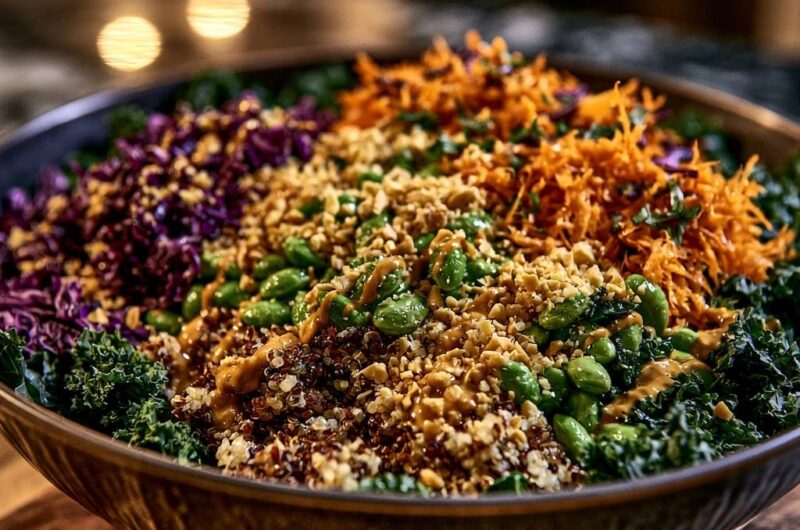
- To assemble as shown in the image: Use the massaged kale as a base. Arrange the cooled quinoa, shredded carrots, minced purple cabbage, and steamed edamame in distinct sections or layers on top of the kale.
- Drizzle the peanut dressing over the center of the ingredients.
- Top generously with the finely chopped peanuts for a salty crunch.
- Toss thoroughly just before serving to ensure every leaf is coated. This salad is hearty enough to stay fresh and crisp in the fridge for up to 3 days.
Notes
- Massaging the kale with salt and lime juice is essential to break down the cellulose for a tender texture. This salad stays fresh and crisp in the refrigerator for up to 3 days.