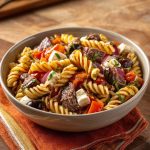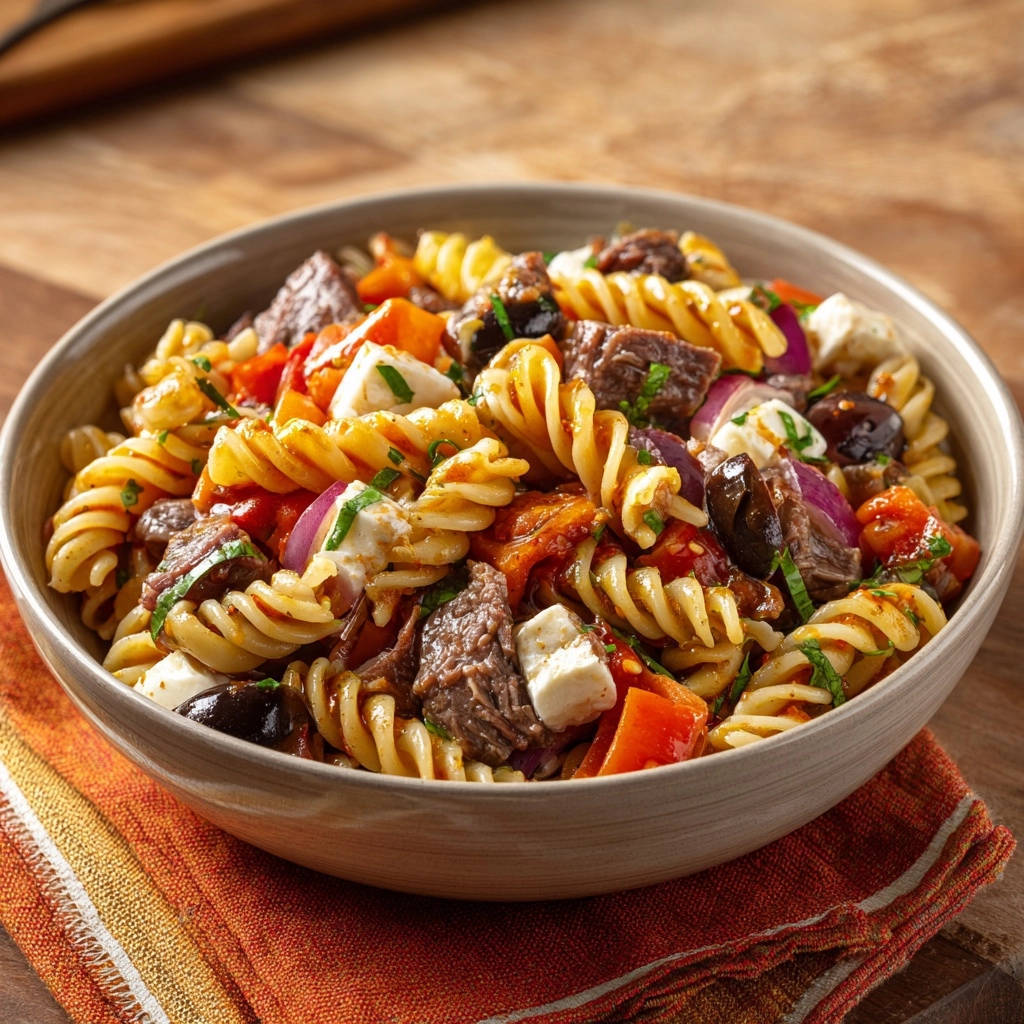
I spent years avoiding chilled steak pasta salad because the meat always turned into tough, dry nuggets straight from the fridge-a huge disappointment when meal prepping. With one simple, expert technique, I finally cracked the code, ensuring every bite of this Mediterranean Steak and Pasta Salad remains perfectly juicy and tender, even days later.
This approach leverages the warm protein to absorb seasoning and moisture, transforming the dish into the ultimate, reliable summer meal prep that tastes phenomenal chilled.
The Secret Weapon: Why Our Steak Stays Perfectly Tender When Chilled
The core philosophy of this recipe centers on maximizing moisture retention and actively preventing the meat fibers from seizing up during the cooling process.
This is the single most important technique differentiating a great, flavor-packed meal prep salad from a tough, mediocre one.
Understanding the “Moisture Lock” Technique
When beef is cubed immediately after cooking, its internal muscle fibers are still hot, expanded, and highly receptive to flavor infusion.
Pouring a measured amount of the cool, oil-based vinaigrette directly over the hot meat causes a rapid, protective interaction.
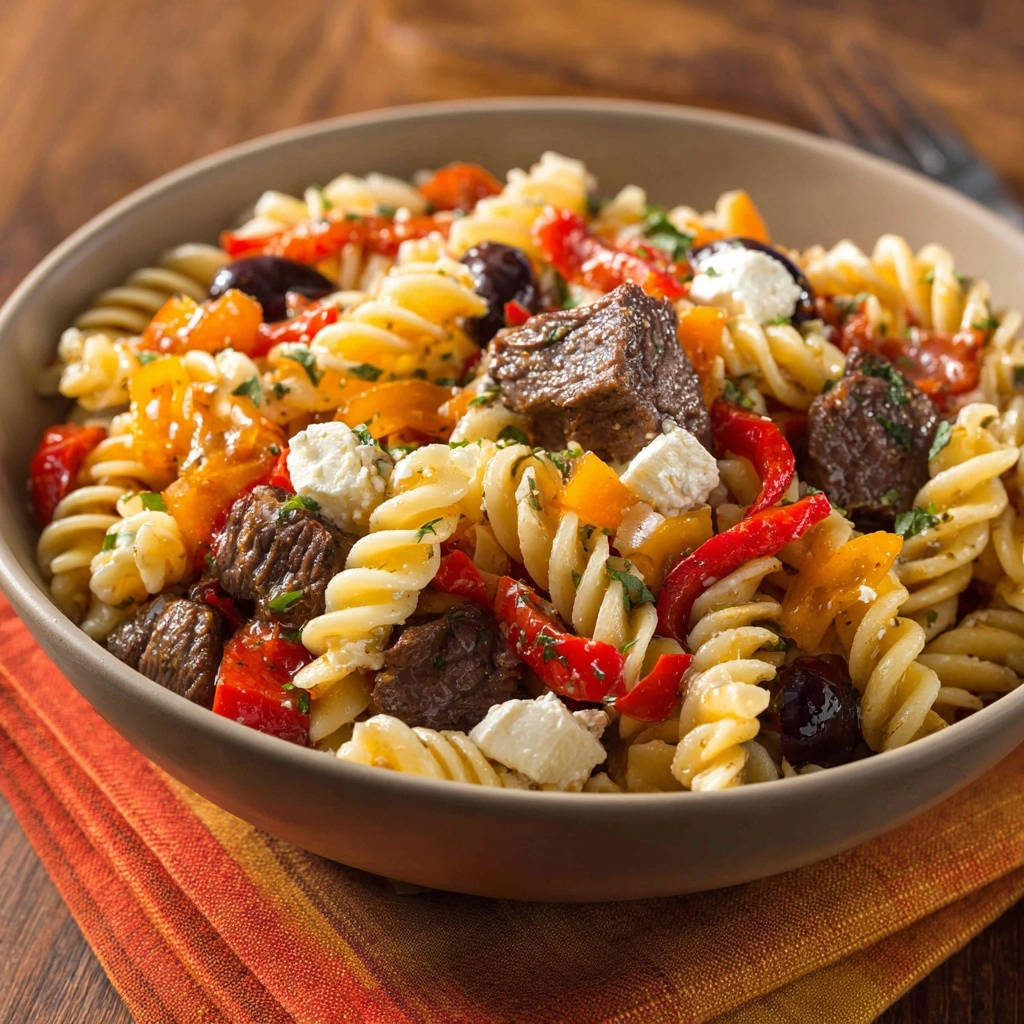
The beef instantly absorbs the seasoned oil, creating a rich barrier that halts the rapid loss of internal moisture as the protein cools, which stops the muscle fibers from drying out and contracting.
Solving the Leftover Dilemma
Traditional chilled steak recipes suffer because the meat continues to release internal moisture into the open air as it cools, quickly leading to a chewy, flavorless texture.
Our pre-dressing method solves this critical issue preemptively by saturating the steak with a flavorful liquid before it can fully cool down.
This ensures the beef retains its succulence and bold flavor profile, making this the best possible recipe for highly flavorful, cold Mediterranean Steak and Pasta Salad leftovers.
Building a Mediterranean Feast: Essential Ingredients for the Best Salad
The Star Protein: Choosing and Preparing Your Beef Cut
While the recipe calls for sirloin for its excellent balance of flavor and ease of quick searing, you can use any lean cut that responds well to medium-rare cooking.
For a different take on pasta salad, explore the satisfying crunch in cheeseburger pasta salad.
Always cube the beef into uniform, bite-sized pieces immediately after cooking while it is still piping hot to ensure maximum absorption of the dressing.
Aiming for an internal temperature of medium-rare to medium is crucial, as this provides the optimal texture for the cold, chilled serving state.
Perfect Pasta Choice: Why Rotini or Fusilli Works Best
The success of any chilled pasta salad relies heavily on the pasta shape’s ability to trap and hold the dressing effectively.
Rotini and fusilli are ideal because their deep spirals capture the thick vinaigrette perfectly, ensuring the flavor reaches every component.
They also provide essential pockets where the minced aromatics, like garlic and fresh herbs, can cling, ensuring a burst of flavor in every bite.
Vinaigrette Foundation: Olive Oil, Vinegar, and Herb Power
Opt for a high-quality extra virgin olive oil, which contributes a crucial fruity, slightly peppery depth that defines the authentic Mediterranean flavor profile.
Red wine vinegar provides the essential acidity and tang needed to cut through the richness of the steak and emulsify the oil into a thick, clingy dressing.
The combination of garlic and dried oregano serves as the classic herbaceous backbone of this powerful vinaigrette.
Mediterranean Staples: The Olives, Cheese, and Aromatics
Fresh mozzarella, ideally small pearls or bocconcini, adds creamy pockets of flavor and a necessary soft texture contrast to the al dente pasta.
Red onion provides essential crunch and bite; if the raw flavor is too strong, you can soak the chopped onion in cold water for 10 minutes before draining and using.
Sliced black olives bring necessary salinity, while the fresh basil and parsley mixture brightens the final dish and adds essential aromatics.
Essential Tools for Seamless Salad Preparation
Large Pasta Pot: Necessary for boiling water with sufficient room, ensuring the pasta cooks evenly without clumping.
Sharp Knife and Cutting Board: Crucial for uniform cubing of the steak; inconsistent pieces will absorb the dressing unevenly.
Large Mixing Bowl: You need ample room to toss the final assembly gently without crushing the delicate mozzarella or spirals.
Whisk: Essential for quickly and thoroughly emulsifying the olive oil and red wine vinegar into a cohesive, stable vinaigrette.
Crafting Your Mediterranean Steak and Pasta Salad: Step-by-Step Guide
- Prepare and Cook the Steak:
Whether searing or grilling a lean cut, ensure the steak is cooked just to medium-rare or medium for optimal tenderness in the cold salad.
If using a tougher cut like chuck, braise it until completely fork-tender. The key here is speed; cube the meat into uniform, bite-sized pieces while it is still piping hot.
For perfectly tender layers in your next oven bake, check out this spinach beef lasagna.
- Perfecting the Vinaigrette Base:
Whisk together the olive oil, red wine vinegar, minced garlic, dried oregano, salt, and pepper vigorously until slightly emulsified and uniform.
Taste the dressing and adjust the seasoning immediately, ensuring the balance of sharp acidity and rich oil is potent, as it must heavily season the pasta.
- The Crucial Tenderizing Technique: Dressing the Warm Beef:
Pour exactly 1/4 cup of the finished vinaigrette directly over the warm cubed steak and toss gently to coat every piece.
Set the beef aside immediately and allow it to cool naturally. This simple act seals the fibers and guarantees your steak remains juicy and flavorful, even hours later.
- Achieving the Ideal Texture: Al Dente Pasta Preparation:
Cook the rotini or fusilli pasta exactly according to package directions, aiming for a true al dente bite; pasta salad should never be soft or mushy!
Immediately drain the pasta and rinse thoroughly with cold water to halt the cooking process, remove excess starch, and cool the pasta quickly for assembly.
- Final Assembly and Flavor Melding:
In your largest bowl, combine the cooled pasta, the pre-dressed steak, diced tomatoes, crisp red onion, black olives, mozzarella cubes, and the fresh basil and parsley mixture.
Pour the remaining vinaigrette over the salad and toss gently until every piece is evenly coated, but be careful not to crush the delicate fresh mozzarella or break the pasta spirals.
- Chill and Serve:
While the salad can technically be served immediately, chilling it for at least 30 minutes allows the individual flavors to deepen and fully meld together.
Beyond the Recipe Card: Pro Tips for Optimal Flavor and Texture
Optimal Herb Strategy: Maximize Freshness and Impact
Don’t Premix Basil Too Soon: If making the salad more than four hours ahead for meal preparation, hold back the fresh basil and parsley.
Stir in the delicate fresh herbs just 10 minutes before serving to prevent the leaves from wilting, bruising, and turning black, ensuring maximum fresh aroma.
The Essential Difference Between Braising and Searing
Match Technique to Cut: Leaner, high-quality cuts like sirloin require quick searing to medium-rare before dressing to achieve the best texture when cold.
Tougher, connective tissue-rich cuts (like chuck or round) benefit only from low-and-slow braising until they are fork-tender before cubing, maximizing tenderness for the cold dish.
Boosting the Mediterranean Umami: Optional Flavor Additions
Add a Salty Punch: Incorporate oil-packed, drained sun-dried tomatoes for intense sweetness and chewiness that complements the steak.
Alternatively, adding a small spoonful of briny capers or finely chopped marinated artichoke hearts provides a great salty, acidic layer of complexity.
Dietary Swaps and Troubleshooting Common Pasta Salad Issues
Swapping the Protein: Chicken, Shrimp, or Chickpeas
For a leaner poultry option, grill or pan-sear chicken breast until fully cooked, then cube it while warm and use the exact same moisture lock technique for tender chicken salad.
Shrimp can be quickly sautéed and dressed warm, but avoid overcooking. It should be added closer to assembly time.
For a hearty vegetarian alternative, substitute the steak with roasted chickpeas tossed in a light layer of the vinaigrette for added protein and crisp texture.
Fixing a Salty or Overly Acidic Dressing
If the dressing tastes too acidic from the red wine vinegar, whisk in a small pinch of sugar, honey, or a teaspoon of water to dilute the vinegar’s harshness and balance the flavors.
If the dressing is overly salty, avoid adding more salt to the pasta water; instead, increase the volume of the other neutral components by adding a little more olive oil to mellow the overall salt content.
Gluten-Free and Dairy-Free Adjustments
Easily convert this recipe to gluten-free by substituting the wheat pasta with brown rice, corn, or lentil-based rotini pasta shapes.
Ensure the gluten-free pasta is rinsed extremely well after cooking, as these tend to release more starch than traditional wheat pasta.
For a dairy-free version, simply omit the fresh mozzarella, or replace it with cubed dairy-free cheese or roasted red peppers for a similar textural contribution.
Serving, Storing, and Meal Prepping Your Favorite Salad
How Long Does Mediterranean Steak and Pasta Salad Last?
Properly stored in an airtight container in the refrigerator, this Mediterranean Steak and Pasta Salad will maintain excellent quality for three to four days.
Because the steak is pre-dressed, you don’t need to worry about the meat drying out over this period, making it truly ideal for efficient weekly meal preparation.
Re-dressing Chilled Pasta Salad
Pasta is highly porous and will naturally absorb the flavorful vinaigrette as it chills, which can leave the salad looking slightly dry before serving leftovers.
Before serving chilled leftovers, check the moisture level. Keep 2-3 tablespoons of extra vinaigrette reserved, or mix up a quick splash of olive oil and red wine vinegar, and toss to revitalize the salad.
Perfect Pairings: What to Serve Alongside the Salad
Because the salad is rich in protein, starches, and fats, focus on offering light, contrasting sides to complete the meal.
Serve it with a basket of warm, crusty artisan bread for soaking up any residual dressing at the bottom of the bowl.
Simple complementary dishes include lemon-garlic roasted asparagus, grilled bell peppers, or a refreshing bowl of seasonal fruit.
More Mediterranean-Inspired Flavors
Round out your meal with these complementing dishes featuring similar herbs and spices.
- For a light and satisfying option, consider making Greek Chicken Flatbread, which shares zesty Mediterranean notes.
- If you’re in the mood for more grilled goodness, try the Garlic Butter Chicken Souvlaki for a flavorful poultry alternative.
Your Top Questions Answered About Steak Pasta Salad
Can I use leftover steak for this recipe?
Yes, absolutely. However, the success of the tenderizing technique relies specifically on the steak being warm when the dressing is applied, not chilled.
Briefly warm the cubed leftover steak in a skillet or microwave until it is steaming hot before immediately moving on to the crucial tenderizing step with the vinaigrette.
Is this Mediterranean Steak and Pasta Salad served warm or cold?
This salad is traditionally served cold, as the necessary chilling process allows the intense flavors of the vinaigrette, oregano, and garlic to fully marry into the pasta and steak components.
However, the initial assembly involves combining the warm steak with the cold components, which gives the flavor integration a beneficial jumpstart before the final chill.
What type of mozzarella should I use?
We strongly recommend using fresh, small mozzarella balls (pearls or bocconcini) packed in water or brine. Cube or halve this fresh cheese for the best texture and creamiest bite.
Avoid pre-shredded mozzarella, as it often contains powdered anti-caking agents that create a dry, inconsistent texture and dull flavor in a cold salad.
Ready to Impress? Share Your Mediterranean Steak and Pasta Salad Masterpiece!
This recipe transforms the humble pasta salad into a flavorful centerpiece meal, guaranteed to hold its supreme texture and flavor whether served immediately or enjoyed days later as meal prep.
We invite you to try this simple moisture-locking secret and share your Mediterranean Steak and Pasta Salad masterpiece, confident that your steak will remain juicy and tender every single time.
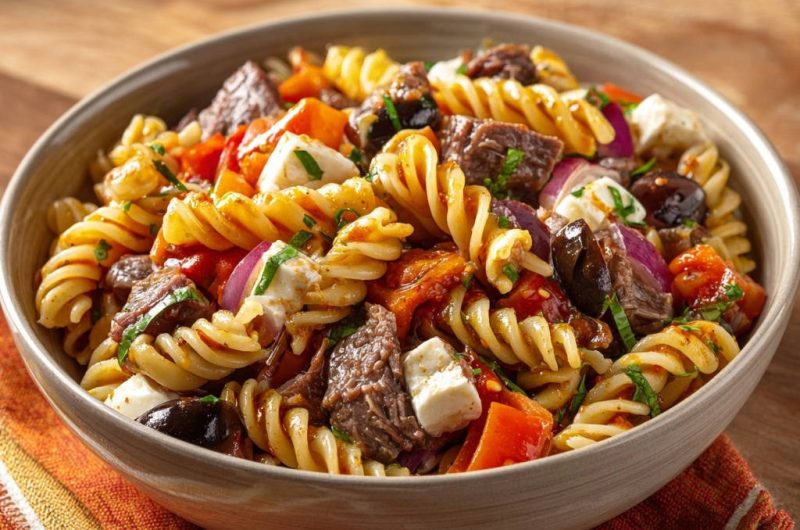
Mediterranean Steak Pasta Salad
Course: SaladCuisine: MediterraneanDifficulty: easy6
servings20
minutes15
minutes650
kcal35
minutesSay goodbye to tough, chewy steak leftovers! This Mediterranean pasta salad uses a special technique to lock moisture into the beef, keeping it perfectly tender when chilled. It’s the ultimate flavorful summer meal prep.
Ingredients
1 pound rotini or fusilli pasta
1 pound cooked lean beef (like sirloin or chuck, cubed small)
1 cup chopped fresh tomato
1/2 cup chopped red onion
1/2 cup sliced black olives
1/2 cup cubed fresh mozzarella cheese
1/4 cup chopped fresh basil and parsley mixture
1/2 cup olive oil
1/4 cup red wine vinegar
2 cloves garlic minced
1 tablespoon dried oregano
1 teaspoon salt
1/2 teaspoon black pepper
Directions
- Prepare the Steak for Tenderness: If starting with raw beef, season and sear or grill the steak until medium-rare, or braise until fork-tender, depending on your cut. Immediately cube the cooked beef into bite-sized pieces while it is still warm. Place the warm beef cubes in a medium bowl.
- Create the Moisture Lock Dressing Base: In a small bowl, whisk together the olive oil, red wine vinegar, minced garlic, oregano, salt, and pepper. This is your vinaigrette.
- The Tenderizing Technique: Pour 1/4 cup of the finished vinaigrette directly over the warm, cubed beef. Gently toss to coat completely. The warm beef will absorb the dressing, locking in moisture and seasoning as it cools, preventing the meat fibers from seizing and drying out. Set the dressed beef aside while you prepare the pasta.
- Cook the Pasta: Bring a large pot of salted water to a rolling boil. Cook the rotini pasta according to package directions until perfectly al dente. Drain the pasta immediately and rinse quickly with cold water to stop the cooking process. Shake off excess water thoroughly.
- Assemble the Salad: In a large serving bowl, combine the drained pasta, the seasoned and cooled beef, chopped tomatoes, red onion, black olives, mozzarella cubes, and fresh herbs.
- Dress and Chill: Pour the remaining vinaigrette over the salad. Gently toss the salad until all ingredients are evenly coated and the dressing has reached every spiral of the pasta.
- Serving: Serve immediately or chill for at least 30 minutes for flavors to meld. The steak will remain tender even when chilled thanks to the pre-dressing technique.
Notes
- The technique of coating the warm steak in vinaigrette prevents drying and keeps the beef tender when chilled.