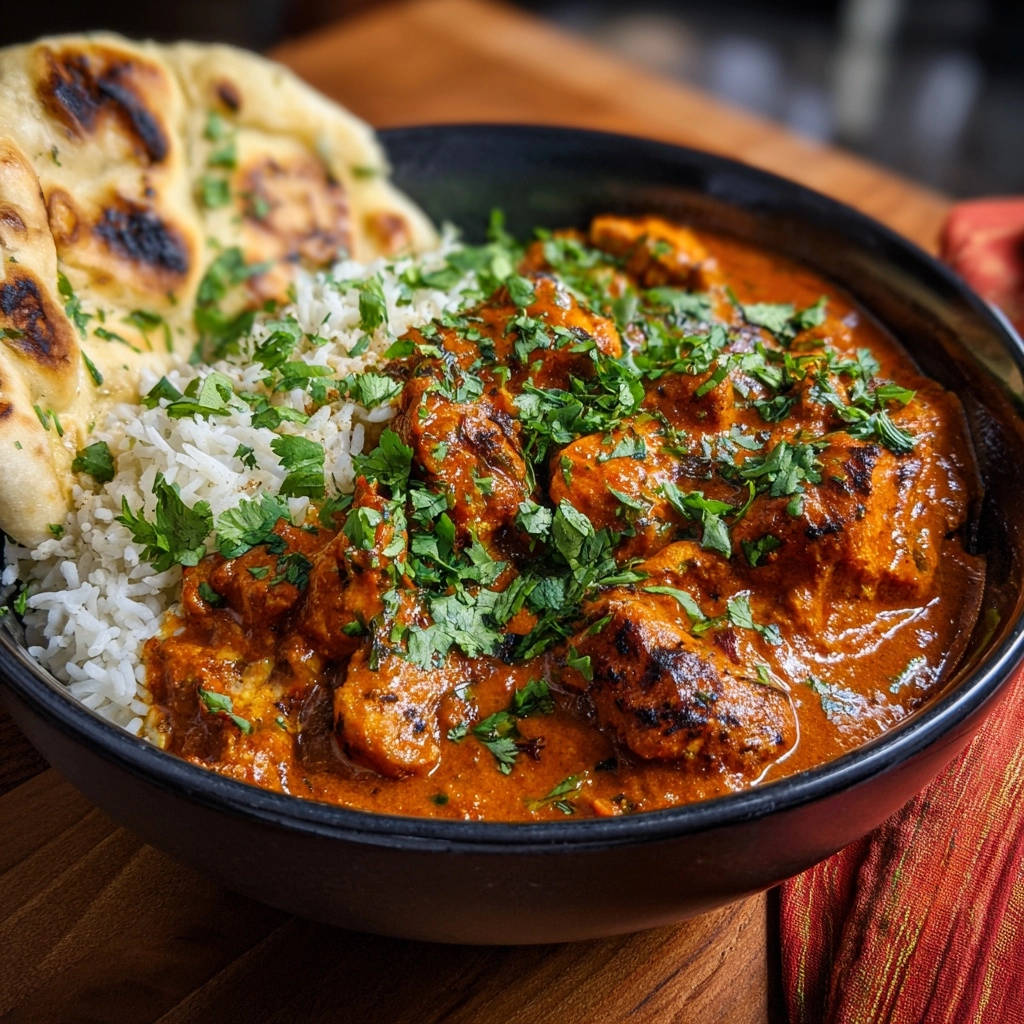
Many home cooks struggle with achieving the deep, complex flavor of true Restaurant-Style Chicken Curry, often resulting in a sauce that tastes thin or raw. The secret lies not in the number of ingredients, but in the technique of layering the spices and caramelizing the tomato paste-a step I call the “Flavor Depth Hack.” Once you master this simple, crucial 10-minute commitment, you will unlock unparalleled depth and richness.
Why Your Homemade Curry Has Tasted Flat (And How to Fix It)
The pursuit of authentic curry flavor often fails when cooks treat the spices and tomatoes as simple additions rather than foundational layers.
The most common mistake is cooking dry spices for mere seconds before adding liquid, which results in a harsh, raw, metallic flavor profile.
This recipe focuses on deep, layered flavor creation by toasting the spices and caramelizing the tomato base before any liquids are introduced.
The Triple Benefit of the “Flavor Depth Hack”
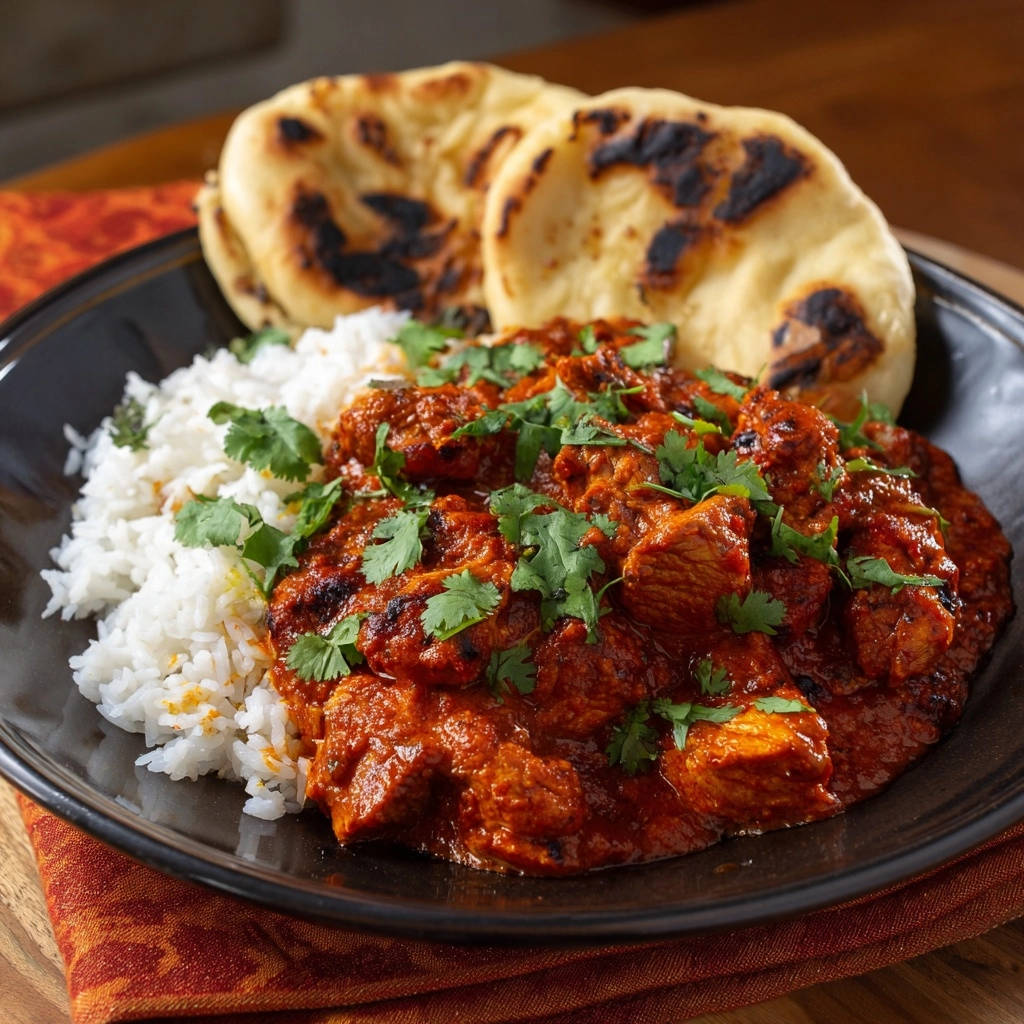
Properly caramelizing the tomato paste deepens the sauce from a bright, artificial red to a rich, warm terracotta or copper shade.
Slow cooking the acidic tomatoes eliminates the harsh, raw taste common in rushed sauces, leaving behind a mellow, balanced sweetness.
Blooming the spices in hot fat wakes up their essential oils, resulting in a significantly more potent and fragrant curry base.
The Essential Ingredients for a Rich and Profound Curry Base
The Foundation: Chicken Cuts and Quality
Boneless, skinless chicken thighs are recommended for their moisture and richness, though breast meat can be used if cubed uniformly to prevent drying out.
Cutting the chicken into consistently sized cubes (about 1.5 inches) ensures that every piece cooks evenly during the final simmer.
Marination Magic: Why Yogurt is Non-Negotiable
The acidity from plain yogurt and lemon juice initiates a gentle tenderization process, which results in incredibly moist and soft chicken.
The thick yogurt base acts as a binding agent, adhering the initial spice mixture (turmeric, chili powder) tightly to the surface of the meat.
The Right Spices and Aromatics
While fresh minced ginger and garlic are acceptable, using pre-made ginger garlic paste streamlines the process and ensures an even distribution of aromatics.
Turmeric provides essential color depth, while chili powder (adjust heat as desired) ensures the spice penetrates the meat itself before cooking.
Garam masala is used twice: a small amount in the middle for base flavor, and the final portion added off-heat to preserve its highly volatile, floral aroma.
For another variation on rich chicken flavor, check out this creamy spiced chicken curry.
Choosing Your Tomato Base and Cooking Fat
Tomato paste contains concentrated sugars and deep color; it is the fundamental ingredient needed for the crucial caramelization step that creates richness.
Ghee (clarified butter) provides a signature nutty, roasted flavor that vegetable oil cannot match, though oil is a suitable neutral substitute.
While water thins the sauce, using chicken stock immediately boosts the savory, umami intensity of the overall dish.
The Recipe Flow: From Marination to Simmering Perfection
The Crucial Prep Work (Steps 1 & 2)
-
Marinating the Chicken:
Ensure the chicken is fully coated and cover tightly.
Allowing the marinade at least 30 minutes, or up to four hours, gives the yogurt time to work its tenderizing magic.
-
The High-Heat Sear:
Heat your fat (ghee is best) to medium-high and sear the chicken quickly in small batches.
Do not crowd the pot-searing in batches ensures proper browning and char, which adds essential textural depth, even though the chicken is not cooked through yet.
The Flavor Depth Hack: Mastering Layered Spices (The 10-Minute Commitment)
-
Building the Base: Slow-Cooking the Onions:
Add the remaining ghee and cook the finely diced yellow onion slowly over medium-low heat.
You are looking for softened, translucent onions, not aggressively browned pieces, which can add bitterness.
-
The Tomato Paste and Spice Bloom:
This is the most critical step for authentic Restaurant-Style Chicken Curry flavor: add the tomato paste, cumin, smoked paprika, and the first teaspoon of garam masala to the softened onions and fat.
Cook this mixture, stirring frequently, for a full 8 to 10 minutes until the paste darkens, caramelizes, and clings to the bottom of the pot.
This prolonged, slow cooking removes raw acidity and successfully “wakes up” or blooms the spices by warming their essential oils.
Creating the Silky Sauce and Final Simmer (Steps 5-7)
-
Deglazing and Building Volume:
Stir in the puree and stock to deglaze the pot, ensuring you scrape up all the flavorful caramelized bits (the fond) from the bottom.
Bring the sauce to a gentle simmer before moving to the next stage.
-
The Final Tenderization:
Return the seared chicken to the silky sauce, reduce the heat to low, cover, and simmer for 15 minutes.
If you enjoy this tender chicken in sauce, you might also like exploring a similar dish in tender butter chicken.
This low, slow simmer allows the chicken to absorb the complex sauce flavors completely and finish cooking until fork-tender.
-
Finishing Creamy and Smooth:
Remove the pot from the heat completely before stirring in the heavy cream and the final teaspoon of garam masala.
Adding the cream off the heat prevents any risk of curdling, ensuring a uniformly smooth, orange-hued, silky sauce.
Chef’s Corner: Troubleshooting and Advanced Tips
Solving Common Curry Issues
Problem: My Curry Tastes Bitter/Too Sour. This is usually residual raw acidity from the tomato. Cook the tomato paste/spice mixture longer, or add a pinch of sugar or baking soda at the end.
Problem: My Sauce is Too Thin. If adjusting the lid during simmering didn’t help, create a slurry (cornstarch mixed with cold water) and stir it in gently to thicken.
Problem: The Chicken is Dry. Ensure you are using high-quality chicken and that the simmering time is exactly 15 minutes or until just cooked through. Over-searing initially can also dry it out.
Pro Tips for Maximum Flavor Depth
Tip 1: Bloom Spices in Oil First. Always cook the dry spices in fat (ghee or oil) for several minutes to unlock their full potential; never add them directly to a watery sauce base.
Tip 2: Use Fresh Garam Masala. The flavor profile of garam masala fades quickly; ensure your batch is recently purchased or freshly ground for peak aroma.
Tip 3: The Rest is Best. Like stew, this Restaurant-Style Chicken Curry improves significantly overnight as the spices continue to meld.
If possible, prepare the dish a day ahead, refrigerate, and simply reheat it slowly on the stovetop.
Presentation Matters: What to Serve with Your Restaurant-Style Chicken Curry
Choosing the Perfect Starch Base
Basmati rice is the traditional choice due to its long, aromatic grains that remain separate and fluffy, perfectly soaking up the rich sauce.
Soak Basmati rice for 30 minutes before cooking to remove surface starch; this guarantees those desired light, separated grains.
What to Serve With Your Chicken Curry
Round out your meal with these complementary dishes that pair well with your chicken curry.
- For dipping into your fragrant curry sauce, prepare some garlic naan – its fluffy layers are ideal for soaking up every last drop.
- Add some texture and sweetness to your plate with perfect roasted carrots and crispy chickpeas, complementing the spices in the curry.
Beyond Naan: Alternative Dipping Options
For textural variety, consider serving with whole wheat Roti (a flatbread) or layered, crispy Paratha instead of standard naan.
A simple side of Cumin Potatoes (Aloo Jeera) provides a hearty, complementary vegetable element to the meal.
Essential Garnishes and Sides
A generous handful of freshly chopped cilantro is mandatory, adding a necessary contrasting color and herbaceous freshness to the heavy curry.
Always balance the richness with a cooling component, such as Raita (cucumber yogurt dip) or a quick squeeze of fresh lime juice.
Meal Prep and Storage: Making Your Favorite Curry Ahead of Time
Storing Leftovers Safely
Store leftover curry in an airtight container in the refrigerator for up to 4 days.
Cream-based curries can occasionally separate upon thawing; if planning to freeze, consider adding the heavy cream only upon reheating for the best texture.
Reheating for Fresh Flavor
Reheat slowly on the stovetop over low heat, adding a splash of water or stock if the sauce has thickened too much overnight.
Flavors dull slightly when frozen and reheated; always taste and finish with fresh salt and a micro-sprinkle of garam masala just before serving.
Ready to Impress? Share Your Chicken Curry Masterpiece!
This recipe transforms the intimidating process of making a deeply flavored curry into a streamlined, foolproof method based on expert technique.
Mastering the Flavor Depth Hack is the key to creating an authentic, complex, and silky sauce every time, ensuring your homemade dish stands up to any restaurant offering.
Try this Restaurant-Style Chicken Curry tonight and share your success!
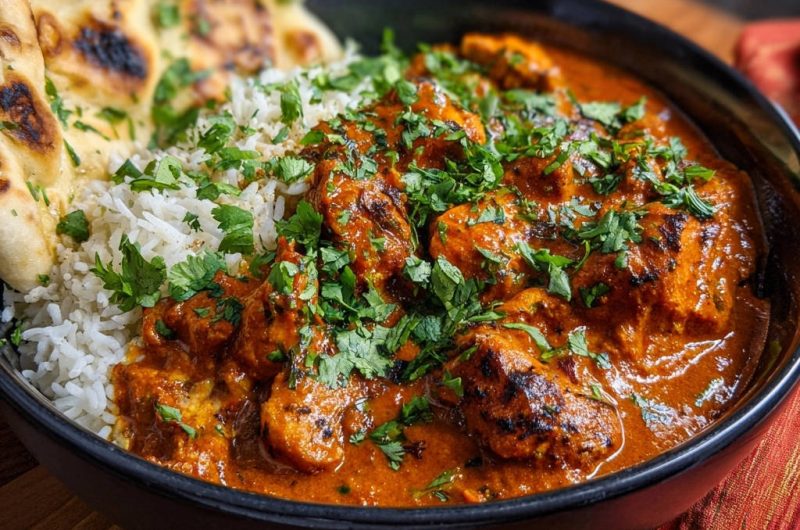
Chicken Curry
Course: Main CourseCuisine: IndianDifficulty: medium4
servings20
minutes45
minutes550
kcal60
minutesTired of flat, thin curries? This recipe reveals the key hack to layering spices and caramelizing tomato paste, eliminating acidity and building the authentic, profound base flavor usually reserved for restaurants. Enjoy rich, creamy, tender chicken every time.
Ingredients
1.5 pounds boneless skinless chicken breast or thighs, cubed
1/2 cup plain yogurt
1 tablespoon ginger garlic paste (or 1 tsp minced ginger, 2 tsp minced garlic)
1 teaspoon turmeric
1 teaspoon chili powder
1 teaspoon salt
1 tablespoon lemon juice
2 tablespoons ghee or vegetable oil, divided
1 large yellow onion, finely diced
2 cups tomato puree (or crushed tomatoes)
1/2 cup tomato paste
1 tablespoon garam masala, divided
1 teaspoon cumin
1/2 teaspoon smoked paprika
1 cup heavy cream
1/2 cup water or chicken stock
Fresh cilantro for garnish
Cooked rice and naan for serving
Directions
- Marinate the Chicken: In a large bowl, combine the cubed chicken, yogurt, ginger garlic paste, turmeric, chili powder, salt, and lemon juice. Mix well, cover, and refrigerate for at least 30 minutes, or up to 4 hours.
- Sear the Chicken: Heat 1 tablespoon of ghee or oil in a large pot or Dutch oven over medium-high heat. Remove the chicken from the marinade (leaving excess marinade behind) and sear in batches until browned and lightly charred on all sides. The chicken does not need to be cooked through. Remove the chicken pieces and set them aside.
- Build the Flavor Foundation (The Hack): Lower the heat to medium. Add the remaining 1 tablespoon of ghee or oil to the pot. Add the diced onion and cook slowly until softened and translucent, about 5 to 7 minutes.
- The Flavor Depth Hack: Add the tomato paste, 1 teaspoon of garam masala, cumin, and smoked paprika directly to the cooked onions and fat. Cook this mixture slowly over medium-low heat for 8 to 10 minutes, stirring frequently. The spices must toast and the tomato paste must caramelize and darken in color, clinging to the bottom of the pot. This crucial step deepens the color, removes the raw acidity, and blooms the dry spices, creating the rich, profound base flavor.
- Create the Sauce: Stir in the tomato puree, water or stock, and the remaining 1 teaspoon of garam masala. Bring the sauce to a gentle simmer.
- Simmer and Finish: Return the seared chicken pieces to the sauce. Reduce the heat to low, cover, and simmer for 15 minutes, or until the chicken is tender and cooked through.
- Finish Creamy: Remove the pot from the heat and stir in the heavy cream until the sauce is smooth and uniformly orange. Taste and adjust seasoning with salt if needed.
- Serve immediately over basmati rice, garnished generously with fresh cilantro and served alongside warm naan bread.
Notes
- The most crucial step is slowly cooking the tomato paste and spices (garam masala, cumin, paprika) for 8-10 minutes over low heat to deepen flavor.