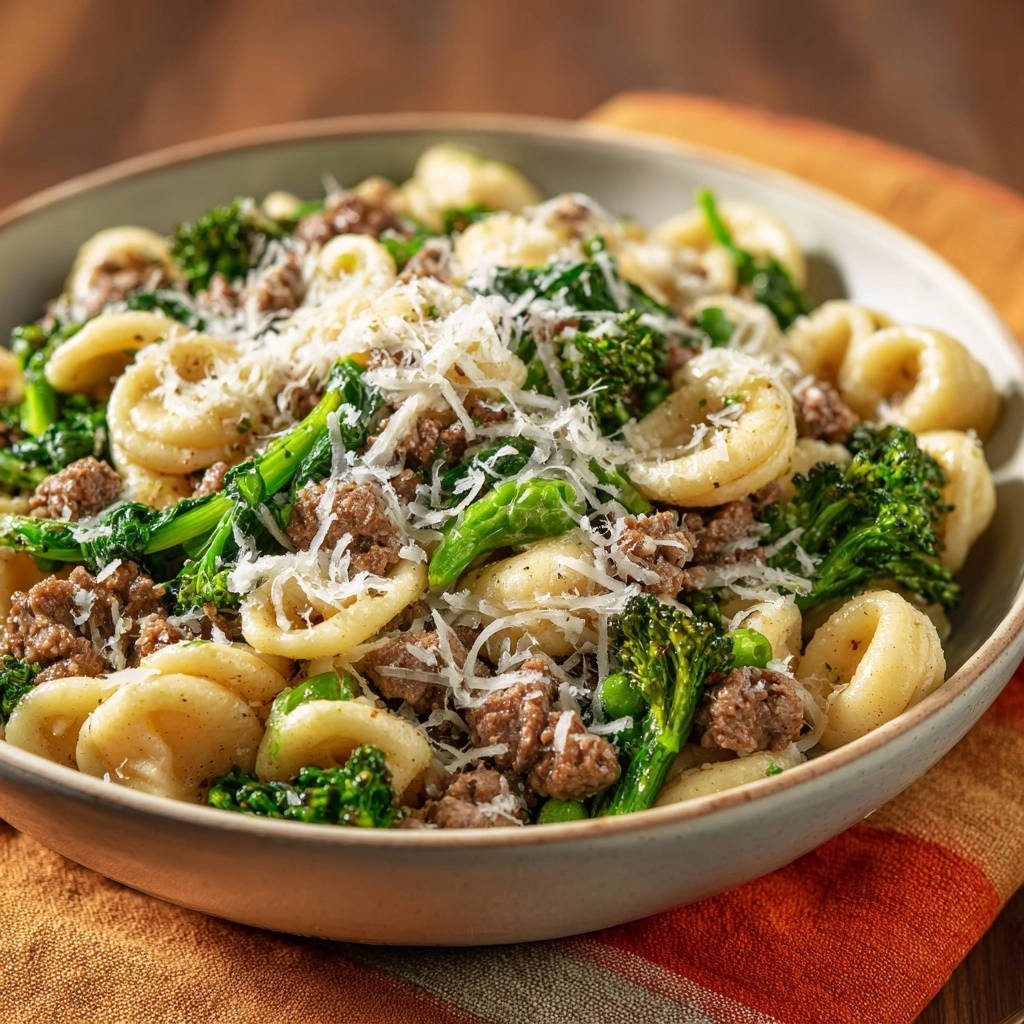
I struggled for years trying to perfect hearty pasta dishes, often ending up with dry, separated sauces that just wouldn’t cling to the ingredients. Mastering the technique of creating a thick, velvety coating changed everything, resulting in this exceptional Sausage and Broccolini Orecchiette.
This recipe provides the secret method to achieve perfect emulsification, ensuring every piece of the ‘little ear’ pasta is coated in a rich, non-oily sauce.
The Secret to Sausage and Broccolini Orecchiette That Never Falls Flat
The goal of this dish is maximum flavor extraction followed by a perfect binding of fat and starch. We extract deep flavor by browning the sausage thoroughly and utilizing the rendered fat to infuse aromatics.
The true magic happens when the starchy pasta water, high-quality olive oil, and Parmesan cheese are agitated over heat. This process forces the fats and liquids into a stable, silky emulsion, creating a sauce that clings instead of separating.
Why This Technique Solves the “Dry Pasta” Problem
Traditional methods often rely on just adding cooked pasta to the sauce, which leads to oil separating out or the dish tasting flat and dry. By finishing the pasta in the sauce with the starch water and fat, we create a chemical bond that guarantees a luxurious, uniform coating.
Quick Prep, Gourmet Results: Ideal for Weeknights
Despite its rich, complex flavor, this meal requires only 35 minutes from start to finish. The speed comes from multitasking: blanching the greens while the water heats, and building the sauce base while the pasta cooks to al dente perfection.
Gathering Your Flavor Arsenal: Key Ingredients Breakdown
Orecchiette: Why the “Little Ears” Matter
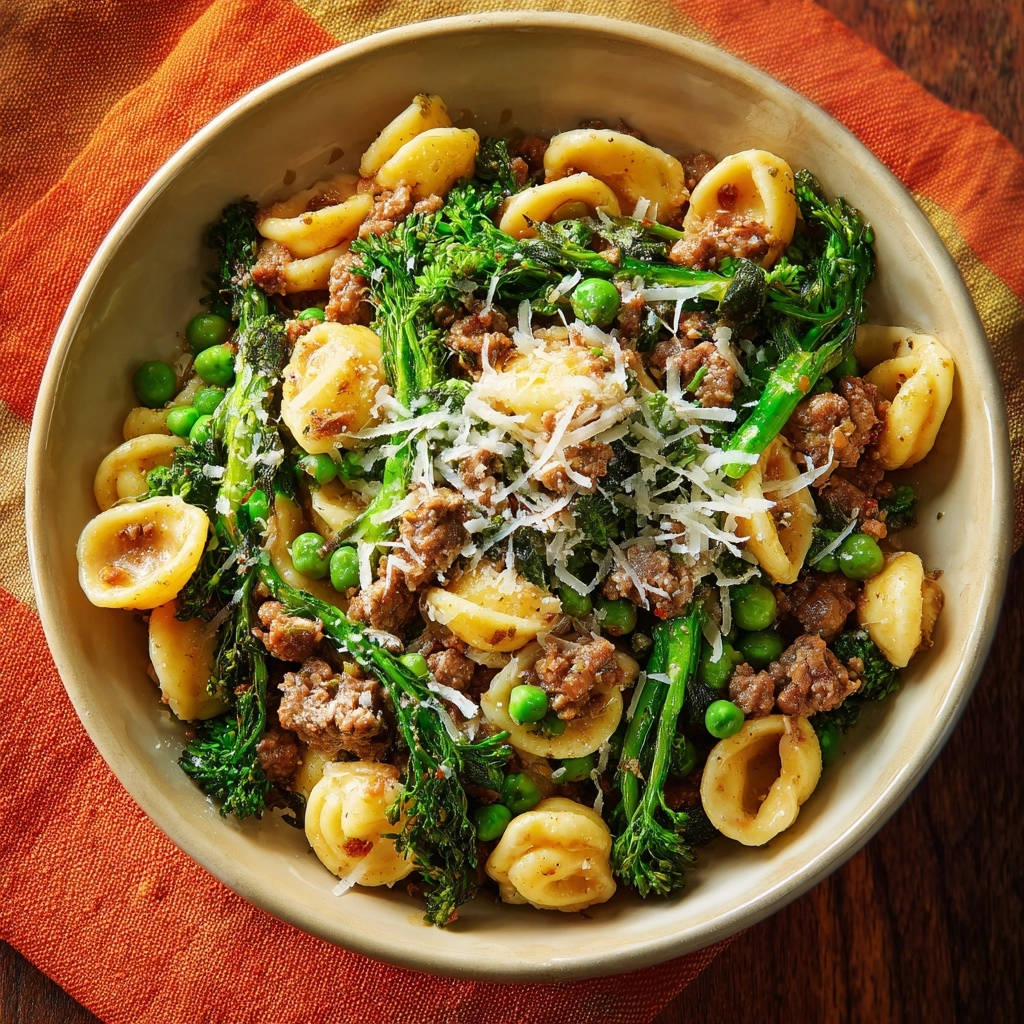
Orecchiette means “little ears” in Italian, and their concave shape is specifically designed to act as tiny cups. This is ideal for catching and holding the creamy sauce, savory bits of sausage, and small pieces of broccolini.
Sausage Selection: Sweet vs. Mild Italian Sausage
Use either sweet Italian sausage (which contains fennel for sweetness) or mild Italian sausage, depending on your preference. Crucially, remove the casings; the exposed meat allows for better browning and releases the necessary fat that forms the sauce base.
The Vitality of Broccolini (or Broccoli Rabe)
Broccolini adds a necessary slight bitterness and earthy note, which balances the richness of the sausage and cheese. Blanching it first ensures its vibrant green color is maintained and its texture remains pleasantly tender-crisp.
The Binder Trio: Starch Water, Olive Oil, and Parmesan
These three seemingly simple ingredients are the scientific backbone of the silky sauce. The starch in the pasta water provides the emulsifier, the olive oil provides the necessary fat, and the Parmesan melts to add salt, richness, and further thickening power.
Essential Tools for Your Orecchiette Adventure
Large, Wide Skillet (Cast Iron or Stainless Steel): Necessary for maximum surface area when browning the sausage and ample room for the final toss/emulsification.
Slotted Spoon or Spider Strainer: Essential for transferring the broccolini and sausage while preserving the valuable cooking water and rendered fat.
Ice Bath Setup: Needed to shock the blanched broccolini, locking in its vibrant green color and halting the cooking process immediately.
Step-by-Step Mastery: Building Your Sausage and Broccolini Orecchiette
Blanch and Shock the Greens: Bring a large pot of heavily salted water to a boil and drop the chopped broccolini in. Boil for exactly 2 minutes until bright green. Immediately chill in an ice bath to retain color and texture. Preserve the cooking water!
Pro Tip: Heavily salted water seasons the broccolini from the inside out, making the final dish more flavorful.
Caramelize the Sausage: Heat 1 tablespoon of olive oil in your large skillet over medium-high heat. Add the casing-removed sausage and break it up vigorously, browning it deeply until caramelized (8-10 minutes). Transfer the meat using a slotted spoon, leaving all the rendered fat in the skillet.
The browned bits (fond) left in the pan are crucial flavor components that will carry into the final sauce.
Infuse the Aromatics: Reduce the heat to medium-low. Add the sliced garlic and red pepper flakes (if using) to the reserved sausage fat. Cook gently for about 30 seconds until fragrant; do this quickly-scorched garlic turns bitter.
Prep the Pasta to Perfection: Return the salted water to a boil. Add the orecchiette and cook until very al dente, about two minutes less than the package directs. This ensures the pasta finishes cooking in the sauce without becoming mushy.
The Starch Water Harvest: Before draining, scoop out 1 1/2 cups of the starchy pasta water. This liquid is the “secret weapon” for building the creamy emulsion.
Achieve the Creamy Coating: Return the broccolini mixture to the stovetop over medium-low heat. Add the drained pasta, cooked sausage, the remaining olive oil (about 3 tablespoons), and 1/2 cup of grated Parmesan cheese. Pour in 1 cup of the reserved pasta water.
Emulsify Vigorously: Increase the heat to medium and toss the mixture constantly and vigorously. This action, combined with the heat, blends the starch, oil, and cheese into a thick, velvety sauce that clings, rather than sits loosely, on the pasta.
Chef’s Technique: How to Achieve That Velvety, Clingy Sauce Every Time
Understanding the Emulsion Triangle: Starch, Fat, and Heat
Emulsification is the process of using mechanical energy (tossing) to force two non-mixing substances-in this case, the rendered fat/olive oil and the starchy water-to combine. The starch acts as the bridge that stabilizes this blend.
The continuous, rapid tossing breaks the fat into microscopic droplets, which the dissolved starch molecules then coat, keeping them suspended evenly throughout the liquid base.
The Importance of Residual Heat in the Skillet
It is vital to toss the pasta mixture over medium heat, not off heat. The heat is necessary to properly melt the Parmesan cheese into the liquid and fat, and it also encourages the final starches on the pasta surface to release into the sauce.
If the mixture is too cold, the cheese clumps and the fat separates. If it looks dry, add one tablespoon of reserved water at a time until the perfect texture is achieved.
Pro-Tips and Delicious Variations for Your Orecchiette Dish
Optimize Your Broccolini Texture: If you prefer softer greens, skip the ice bath in Step 1. Simply blanch and drain the broccolini, then toss it directly into the warm skillet in Step 3 after the garlic is fragrant.
Adding a Citrus Brightener: Just before serving, a squeeze of fresh lemon juice adds a lift and cuts through the richness of the sausage and cheese. Try a 1/2 teaspoon, ensuring you taste test first.
Make it Spicy: Increase the red pepper flakes up to a full teaspoon, or ensure you use spicy Italian sausage for a stronger kick. You can also finish the dish with a sprinkle of high-quality Calabrian chili oil for complex heat.
Storage and Reheating: Store leftovers in an airtight container for up to 3 days. When reheating, add 1-2 tablespoons of chicken broth or water to reactivate the sauce and prevent dryness from excessive starch absorption.
Troubleshooting Your Orecchiette: Solving Common Texture and Flavor Issues
Problem: The Sauce Looks Watery and Doesn’t Cling
This means your starch-to-liquid ratio is off, or you haven’t tossed enough. Increase the heat slightly and continue tossing vigorously for another 60 seconds to cook down the liquid and continue the emulsion. If needed, add a small pinch of extra grated Parmesan, which helps thicken instantly.
Problem: The Garlic Scorched and Tastes Bitter
Garlic cooks extremely fast in hot fat. Ensure the heat is reduced to medium-low before adding it, and only cook it for 30 seconds to a minute before adding the broccolini to stop the cooking process.
Always watch the garlic closely; it should become fragrant and slightly golden, not brown.
Problem: My Pasta is Sticking Together
This often happens if you drained the pasta too early or didn’t toss it immediately when returning it to the skillet. Ensure you use plenty of salt in the boiling water, as this also prevents sticking.
Remember: never rinse your pasta after draining, as this washes away the valuable surface starch needed for the emulsion.
Frequently Asked Questions About Sausage and Broccolini Orecchiette
Can I substitute a different pasta shape?
Yes, while orecchiette is ideal, shapes with small cups or texture (like medium shells, rigatoni, or cavatappi) work best. These shapes are excellent at holding the thick, chunky sauce created by the sausage and broccolini.
Can I use pre-cooked sausage?
For the best flavor and for the crucial rendered fat required for the emulsion, it is highly recommended to use raw Italian sausage and remove the casings yourself. If you must use pre-cooked, you will need to start Step 2 with 2 extra tablespoons of olive oil to provide the necessary fat base for the sauce.
Is broccoli rabe the same as broccolini?
No, they are different but often interchangeable here. Broccoli rabe (rapini) is generally more bitter, with thinner stems and small florets. Broccolini is a hybrid of broccoli and Chinese kale, offering a slightly sweeter, milder flavor that is often preferred for its tender stalk.
Ready to Impress? Share Your Sausage and Broccolini Orecchiette Masterpiece!
This Sausage and Broccolini Orecchiette recipe proves that truly great pasta dishes rely on science and simple technique. Mastering the art of emulsification transforms everyday ingredients into a restaurant-quality meal.
For a similar take on roasted green vegetables, check out this recipe for charred garlic broccolini.
We encourage you to try the “Silky Coating Secret” tonight and taste the difference this one step makes. Happy cooking!
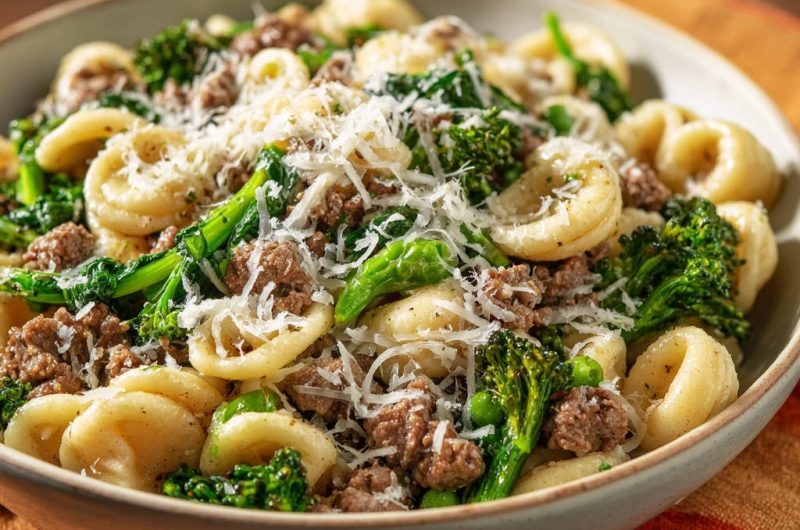
Sausage and Broccolini Orecchiette
Course: Main CourseCuisine: ItalianDifficulty: easy4
servings15
minutes20
minutes750
kcal35
minutesTired of dry pasta? This recipe utilizes a simple technique involving reserved pasta water and high-quality fat to create a luscious, creamy sauce that perfectly binds every piece of orecchiette and sausage. A comforting, restaurant-quality Italian main dish ready in under 40 minutes.
Ingredients
1 pound orecchiette pasta
1 pound sweet or mild Italian sausage, casings removed
1 bunch broccolini or broccoli rabe, trimmed and roughly chopped
3 cloves garlic, thinly sliced
1/4 cup olive oil, divided
1/2 teaspoon red pepper flakes (optional)
1/2 cup grated Parmesan cheese, plus more for topping
Kosher salt and freshly cracked black pepper
1 1/2 cups reserved pasta water
Directions
- Cook the Broccolini: Bring a large pot of heavily salted water to a rolling boil. Drop the chopped broccolini into the boiling water and cook for about 2 minutes until bright green and slightly tender. Remove the broccolini using a slotted spoon and immediately drop it into an ice bath or run under cold water to stop the cooking process and retain its color. Drain well and set aside. Keep the boiling water for the pasta.
- Cook the Sausage: Heat 1 tablespoon of olive oil in a large skillet over medium-high heat. Add the sausage and break it up vigorously with a spoon. Cook until fully browned and caramelized, about 8 to 10 minutes. Use a slotted spoon to transfer the sausage to a paper towel lined plate, leaving the fat rendered from the sausage in the skillet.
- Build the Flavor Base: Reduce the heat to medium-low. Add the sliced garlic and red pepper flakes (if using) to the skillet with the reserved sausage fat. Cook gently for about 30 seconds until fragrant; do not let the garlic scorch. Add the blanched broccolini to the skillet and toss to coat, seasoning lightly with salt and pepper. Turn the heat off and set the skillet aside. Cook until no pink remains and it reaches 160°F (71°C).
- Cook the Pasta and Prep the Secret Weapon: Return the water from Step 1 to a boil. Add the orecchiette and cook until very al dente (about 2 minutes shy of package instructions). Before draining, scoop out 1 1/2 cups of the starchy pasta cooking water. Drain the pasta well, but do not rinse.
- Achieve the Creamy Coating (The Key Step): Return the skillet from Step 3 (containing the broccolini mixture) to the stovetop over medium-low heat. Add the drained pasta and the cooked sausage back into the skillet. Now, add 1 cup of the reserved pasta water along with the remaining olive oil (about 3 tablespoons) and the 1/2 cup of grated Parmesan cheese.
- Emulsify and Serve: Increase the heat to medium. Toss the pasta mixture constantly and vigorously. The starch from the pasta water, combined with the fat from the olive oil and the melted cheese, will bind together, creating a thick, velvety coating that clings perfectly to the pasta. If the mixture seems too dry, add more reserved pasta water, 1 tablespoon at a time, until the perfect creamy consistency is reached. Serve immediately, topped with extra grated Parmesan cheese and fresh black pepper.
Notes
- Cook pasta to very al dente to allow the starches to fully emulsify the sauce during the final coating step.