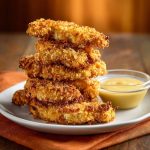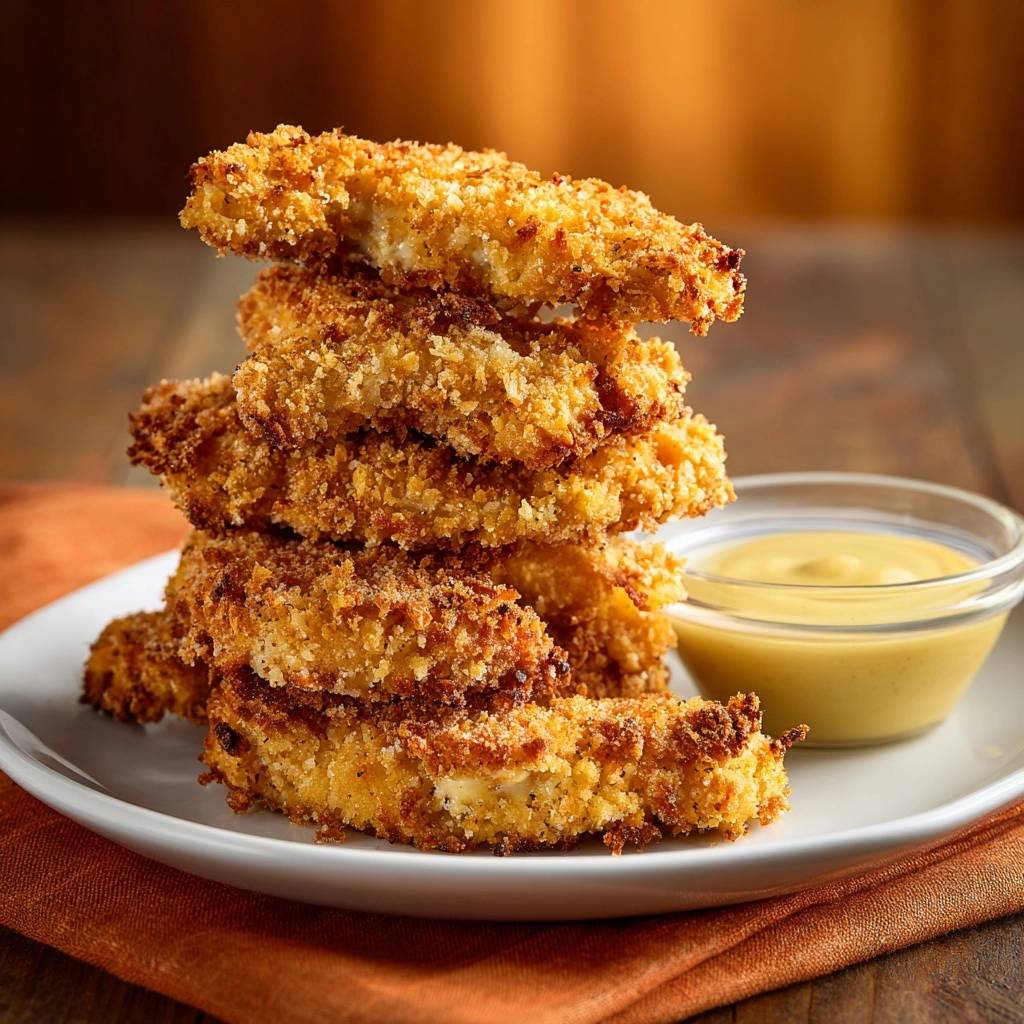
Homemade chicken tenders that fall apart mid-bite? You’re not alone. Most folks skip the double-dip and chill method, so their breading turns into a soggy, crumbly disaster right in the fryer. But this recipe fixes that for good. You’ll get restaurant-style crunch that shatters with every bite, wrapping juicy chicken inside.
Why does it work so well? First, you pat the tenders bone-dry. Then, the layered coating of seasoned flour, egg with Dijon, and packed panko creates unbreakable adhesion. In addition, that quick fridge chill sets everything tight. Therefore, no more breading fallout.
Here’s the pro tip that seals the deal: press the panko firmly on all sides after the egg dip. However, don’t just sprinkle it on. Pack those crumbs like you’re building a fortress. That extra step traps air pockets for ultimate crispiness, and you’ll taste the difference immediately.
Why Double-Dip Method Ensures Crispy Chicken Tenders
Moisture Removal for Superior Breading Grip
Start by patting your chicken tenders completely dry with paper towels. Surface moisture repels the flour, causing the whole coating to slip off during frying. Dry tenders grip perfectly, so breading stays put.
Think about it this way: wet chicken creates steam bubbles that lift the breading. Pat thoroughly, and you avoid that. Pro tip: chill the raw tenders for 10 minutes before patting. It draws out even more moisture through osmosis. You’ll notice the paper towels soak it right up.
In addition, season your flour bowl now with salt, pepper, garlic powder, and paprika. This builds flavor from the base. Therefore, every bite pops.
Layered Coating Sequence Breakdown
The flour acts as the glue base, absorbing any sneaky moisture. Next, eggs with Dijon bind it all with their proteins. Finally, panko provides that airy crunch.
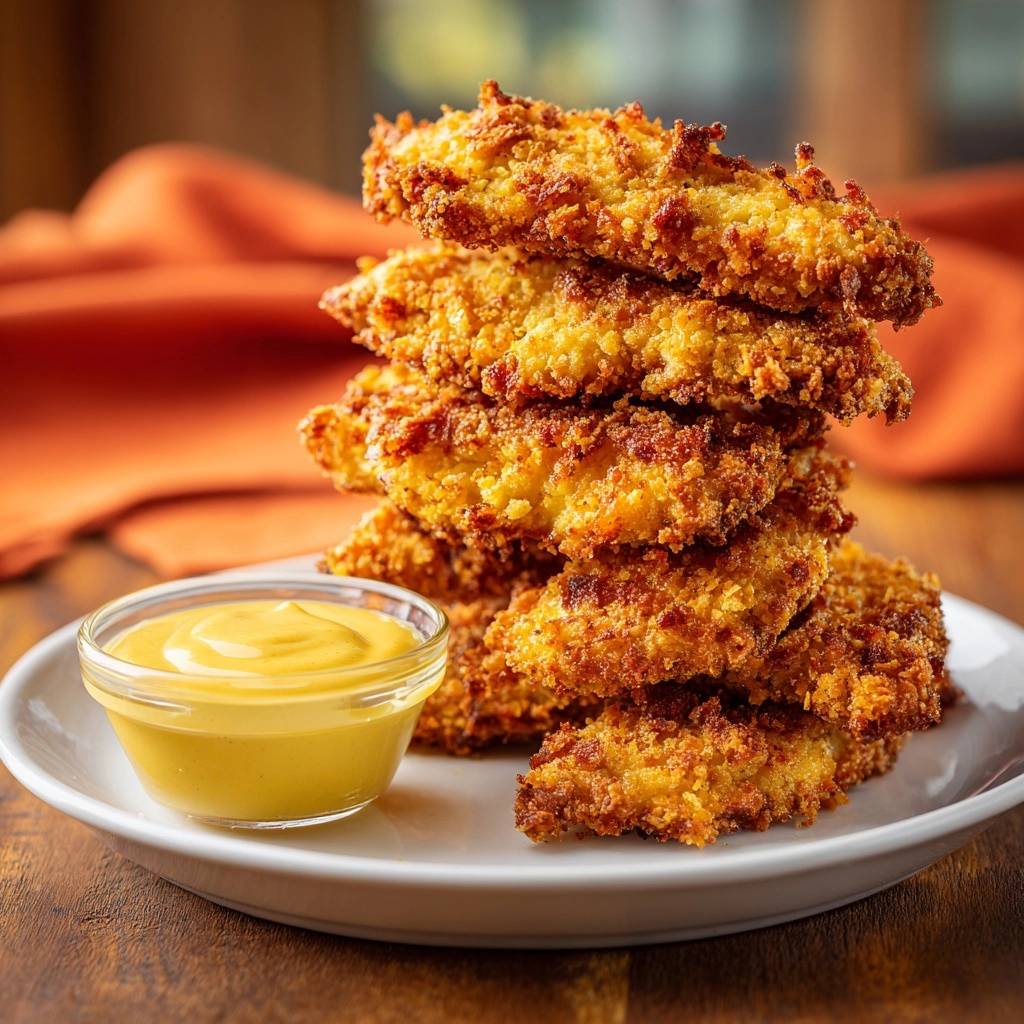
Single-dip methods fail because they lack layers. Here, flour seals the chicken, egg links everything, and panko traps steam for crispiness. For visual folks, picture three bowls in a row: flour on the left, egg in the middle, panko on the right. Easy flow keeps your hands clean.
However, shake off excess flour every time. Clumps lead to uneven spots. This sequence guarantees 100% coverage.
Essential Ingredients for Flawless Crispy Chicken Tenders
Chicken Tenders: Freshness and Prep Standards
Grab 1 1/2 pounds of fresh chicken breast tenders. Uniform size ensures even frying, so nothing overcooks while others stay raw. Breast gives lean protein, about 25 grams per serving.
Thighs work too if you want juicier results. Skip pre-brined ones; they release extra water and ruin crispiness. Fresh from the butcher counter tastes best.
In addition, cut any thick pieces thinner for quick, safe cooking. You’ll love the tenderness.
Flour, Egg, Panko: Breading Trio Science
Use 1 cup all-purpose flour; cake flour’s too fine and sogs. Whisk 3 large eggs with 1 tablespoon Dijon for emulsification that tenderizes subtly and boosts adhesion.
Panko’s 2 cups beat regular breadcrumbs hands down. Its jagged flakes create air pockets, less oil absorption, more crunch. Season with 1 teaspoon each garlic powder and paprika for savory depth.
Salt and pepper go in the flour to avoid drawing out moisture later. Therefore, no sogginess.
Honey Mustard Dip Components Explained
Mix 1/4 cup mayonnaise for creamy stability, 2 tablespoons Dijon for sharp tang, and 2 tablespoons honey to balance it sweet. This cuts through the fried richness perfectly.
Customize with more honey if you like sweeter. Whole grain mustard adds texture. It holds up great made ahead in the fridge.
However, whisk vigorously for smoothness. Pairs hot with tenders for bliss.
Science of Crispy Chicken Tenders Breading Adhesion
Chilling Locks Coating: Protein Gelation
After breading, chill tenders on a wire rack for 15 minutes. Egg proteins gel, flour hydrates into a tough matrix. This locks crumbs tight against fry shock.
Cold coating resists the hot oil’s initial blast, preventing detachment. Food labs confirm it: chilled breading retains 100% through cooking. Fridge at 38°F works best.
In addition, air circulation on the rack dries the exterior more. Therefore, double protection.
For an equally satisfying meal, consider this crispy breaded chicken Caesar salad preparation.
Panko’s Unique Texture Advantage
Japanese panko flakes are larger than Western crumbs, trapping steam for shatter crisp. Less oil soaks in, crunch lasts longer. Paprika and garlic spark Maillard browning for golden perfection.
Fry at exactly 350°F for even color. Too low, and it greases up. Panko shines here.
However, use fresh panko; stale goes chewy. Freshness matters.
Equipment Choices for Perfect Crispy Chicken Tenders
Deep Skillet and Thermometer Precision
Heat 2 inches vegetable oil in a cast iron skillet. It holds steady at 350°F. Instant-read thermometer checks internal 165°F for safety and juiciness.
Wire racks drain better than paper towels; no steam sogginess. Drain post-fry here too.
In addition, test oil with a scrap bread piece. Bubbles mean ready.
Bowl Setup and Packing Tools
Shallow bowls make dredging easy. Use tongs for hygiene, or clean hands in a pinch. Wire rack over a baking sheet chills with air flow.
No fancy tools needed; budget bowls work fine. Efficiency rules.
Step-by-Step: Mastering Crispy Chicken Tenders Frying
Phase 1: Dry, Season, Dredge Thoroughly
Pat tenders dry. Dredge in seasoned flour (salt, pepper, garlic powder, paprika). Shake off excess firmly; clumps cause lumps.
This takes 5 minutes. Feel the flour stick tight now. Common mistake: skipping shake-off. Don’t do it.
Therefore, perfect base layer every time.
Phase 2: Egg Dip with Dijon Integration
Whisk eggs with 1 tablespoon Dijon. Dip floured tenders fully, let excess drip for 30 seconds. Dijon tenderizes and flavors deeply.
Full submersion coats evenly. Drip time prevents drippy mess in panko.
Phase 3: Panko Press and Chill Lock
Press tenders firmly into panko on all sides. Pack tight for no gaps. Place on wire rack.
Chill 15 minutes in fridge. Avoid touching; it sets the coating solid.
However, overcrowd the rack and air won’t circulate. Space them out.
Phase 4: Oil Heat and Batch Frying
Heat oil to 350°F. Fry 3-4 tenders per batch, 3-4 minutes per side till golden. Internal hits 165°F.
Avoid overcrowding; oil drops temp fast. Flip gently with tongs. Drain on clean rack.
Pro tip: between batches, wait for oil rebound. Keeps everything crisp.
Phase 5: Honey Mustard Assembly
Whisk 1/4 cup mayo, 1 tablespoon Dijon, 2 tablespoons honey. Taste and tweak.
Add lemon juice if too thick. Serve hot with tenders for contrast.
Oh man, that first dip with crunch? Heaven.
Avoiding Pitfalls in Crispy Chicken Tenders
Overcrowding and Temperature Drops
Overload drops oil 50°F, making greasy tenders. Fry small batches. Reheat oil fully between.
Monitor with thermometer. Home skillets handle 4-5 max. Patience pays off.
In addition, fresh oil fries cleaner. Reuse once, strained.
Breading Fallout Fixes
Fallout means wet chicken, light press, or no chill. Check dryness first. Re-dip fallen pieces and air-fry to rescue.
Symptoms: bare spots or floating crumbs. Double-check sequence next time.
Soggy Results Prevention
Rest on rack post-fry, uncovered. Re-crisp in 400°F oven 3-5 minutes. Skip microwave; it steams.
Fresh oil’s high smoke point prevents burning. Therefore, sustained crunch.
Flavor Twists on Crispy Chicken Tenders
Spicy or Herbed Breading Upgrades
Add cayenne to flour for heat. Mix Italian herbs in panko for earthiness. Post-fry buffalo sauce for kick.
Mild: 1/2 tsp cayenne. Hot: 1 tsp. Keep Dijon base. Four options fit any mood.
However, taste flour first. Balance rules.
Sauce Swaps Beyond Honey Mustard
Ranch cools spice, BBQ adds smoke, sriracha mayo brings fire. Acidity cuts fat best.
Store sauces 3 days chilled. Quick whisk each time.
Ideal Pairings for Crispy Chicken Tenders
Crisp Veggie Sides
Coleslaw’s crunch contrasts perfectly. Oven fries time with tenders. Pickles amplify tang.
Simple, fresh balance.
Simple Salads and Slaws
Apple slaw: shred cabbage, apple, toss with vinaigrette. Boosts nutrition with greens.
Light side to fried joy.
Complementary Dishes
Round out your chicken tender meal with these other great recipes.
- For a fresh take on chicken, try this Grilled Chicken Pasta Salad, featuring tender chicken and vibrant vegetables.
- Pair your crispy chicken with the comforting flavor of this Golden Skillet Cornbread, known for its tender texture.
Storage and Reheating Crispy Chicken Tenders
Make-Ahead Freezing Protocol
Freeze breaded tenders on a sheet, then bag. Thaw in fridge, fry fresh. Keeps crisp 2 months.
Pre-fry freezes too, but refry revives. Shelf life beats takeout.
Reheating Without Sogginess
Air fryer at 375°F for 5 minutes. Oven rack at 400°F works too. Microwave ruins texture.
Hot and crunchy again.
For even crispier results, explore crispy glazed chicken cutlets.
Troubleshooting Crispy Chicken Tenders Issues
Breading Won’t Stick?
Pat drier, shake flour excess, press panko hard. Chill longer if needed. Fixes 90% cases.
Not Crispy Enough?
Check oil to 350°F, use fresh panko. Double-fry 1 minute extra. Crunch returns.
Too Greasy Outcomes
Drain longer on rack, avoid low temp. Strain and limit oil reuse. Problem solved.
Undercooked Inside?
Slice thick tenders thinner. Probe thickest part to 165°F. Safety first, always.
FAQ
How do I store leftovers of these crispy chicken tenders?
Store cooled tenders in an airtight container in the fridge for up to 3 days. They reheat well without much loss in crispiness. For freezing, place breaded uncooked tenders on a sheet pan until solid, then transfer to a freezer bag; they keep up to 2 months and fry up fresh after thawing in the fridge. Do not refreeze cooked ones, as texture suffers.
Why is my breading falling off the chicken tenders?
The top cause is skipping the dry pat or not chilling. Moisture repels coating, and no chill means proteins don’t set. Always pat super dry, press panko firmly, and fridge for full 15 minutes. If it happens, re-dip and air fry at 375°F to salvage; works great for small batches.
Can I substitute ingredients in crispy chicken tenders?
No all-purpose flour? Use rice flour for gluten-free crunch. Skip Dijon? Yellow mustard or a splash of vinegar works, but Dijon emulsifies best. Panko out? Regular breadcrumbs crisp less, so toast them first. Chicken thighs sub for breasts fine, just trim fat for even frying. Veggie oil swap to canola; same smoke point.
What’s the best oil temperature for frying chicken tenders?
Hold steady at 350°F. Use a thermometer; test with bread scrap for golden bubbles in 60 seconds. Batches drop temp, so wait 1-2 minutes between. Too low greases up, too high burns outside before inside cooks. Precision here nails the shatter crisp every time.
Can I bake these crispy chicken tenders instead of frying?
Yes, spray breaded tenders with oil, bake at 425°F on a rack for 20-25 minutes, flipping halfway. They crisp well but won’t match deep fry shatter. Internal 165°F still. Great lower-fat option; brush extra oil for best results.
How do I make the honey mustard dip thicker or thinner?
For thicker, add more mayo or chill 10 minutes. Thin it with lemon juice or water drop by drop. Whisk smooth; it stabilizes fast. Make double batch ahead, lasts 5 days fridge. Perfect balance cuts fried richness without overpowering.
Crispy Chicken Tenders
Course: Main CourseCuisine: AmericanDifficulty: easy4
servings20
minutes20
minutes450
kcal40
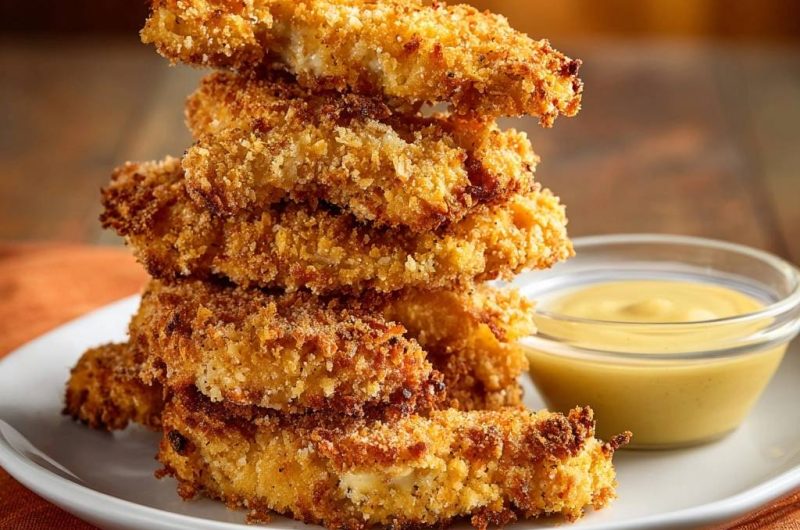
MinutesHomemade chicken tenders always turn into a crumbly mess? This double-dip and chill method makes the breading cling tight and stay ultra-crispy through frying.
Ingredients
1 1/2 pounds chicken breast tenders
1 cup all-purpose flour
3 large eggs
2 tablespoons Dijon mustard (divided)
2 cups panko breadcrumbs
1 teaspoon garlic powder
1 teaspoon paprika
Salt and black pepper to taste
Vegetable oil for frying
For honey mustard dip:
1/4 cup mayonnaise
2 tablespoons Dijon mustard
2 tablespoons honey
Directions
- Pat chicken tenders completely dry with paper towels. This removes moisture so breading grips perfectly.
- Set up three shallow bowls: flour seasoned with salt, pepper, garlic powder, and paprika in first; whisk eggs with 1 tablespoon Dijon mustard in second; panko in third.
- Dredge each tender in flour, shake off excess. Dip fully in egg mixture, let excess drip. Press firmly into panko, coating all sides evenly and packing crumbs tight. Place on a wire rack.
- Chill breaded tenders in fridge for 15 minutes. This locks the coating in place, preventing fallout during frying.
- Heat 2 inches vegetable oil in a deep skillet to 350 degrees F (use thermometer for precision).
- Fry tenders in batches, 3 to 4 minutes per side until deep golden and internal temp hits 165 degrees F. Avoid overcrowding to keep oil hot. Drain on clean wire rack.
- Mix mayonnaise, remaining 1 tablespoon Dijon, and honey for dip. Serve tenders hot with sauce. Crunch guaranteed.
Notes
- Pat chicken completely dry for best breading adhesion. Chill breaded tenders for 15 minutes to lock coating in place. Fry at 350°F for perfect crispiness.