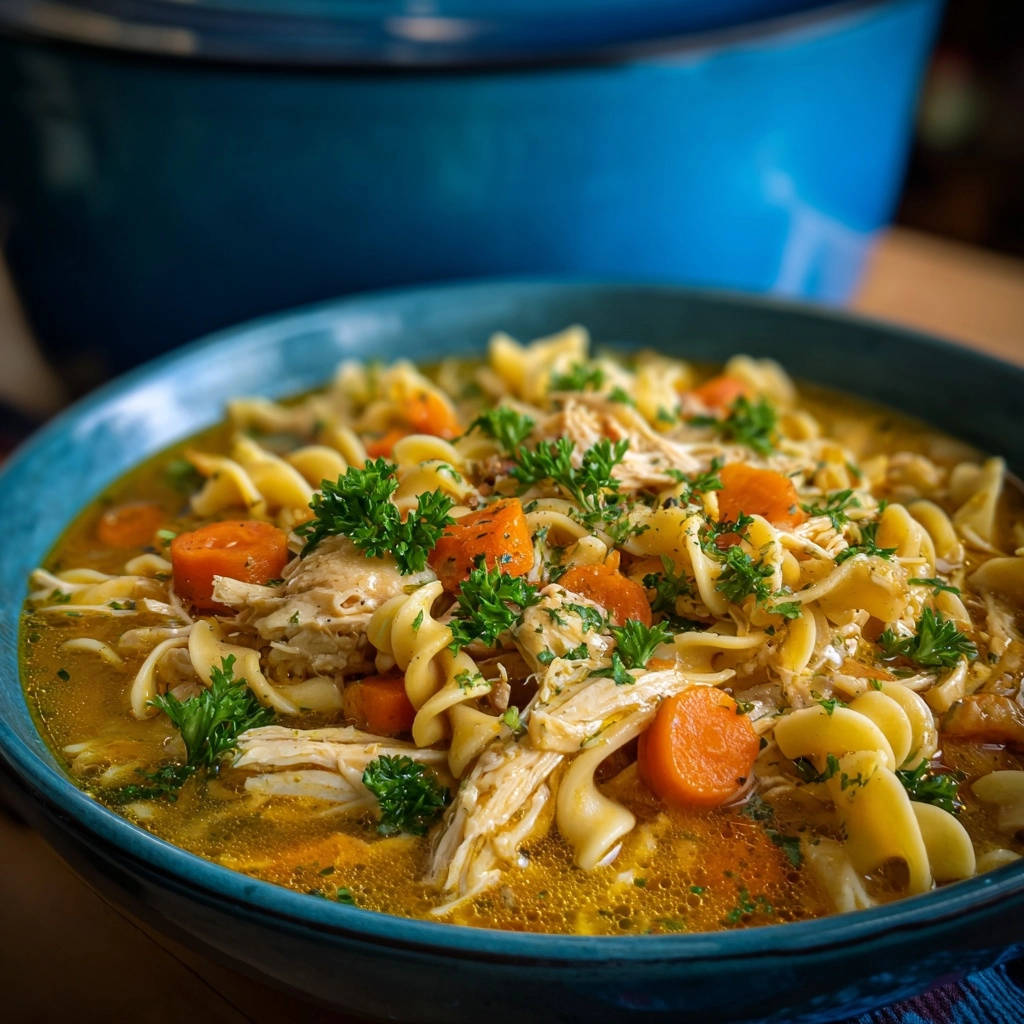
For years, I struggled with the devastating disappointment of discovering my leftover chicken soup had turned into a thick, starchy sludge as the noodles absorbed all the precious liquid.
This ultimate recipe for Homestyle Chicken Noodle Soup changes everything by employing one simple, expert technique that guarantees perfectly bouncy noodles and a rich, clear broth every single time.
For another hearty chicken dish, explore the delicious creamy chicken and potato chowder.
Beyond Basic Broth: Why This Homestyle Chicken Noodle Soup Stands Apart
The Dreaded Mush: Solving the Soggy Noodle Dilemma
The universal problem with soup is the sponge-like nature of pasta, which relentlessly sucks up moisture and releases starch, turning a beautiful broth cloudy.
For a different kind of comforting soup, explore creamy shredded chicken and mushroom.
Our “Noodle Texture Lock-In” solution completely isolates the cooking process, ensuring the noodles remain al dente and the golden broth stays clear and flavorful, even after two days in the fridge.
Flavor That Feeds the Soul (And Your Family)
We achieve superior depth of flavor by gently simmering whole chicken pieces directly in the broth, allowing the fats and proteins to infuse the liquid naturally.
This slow infusion, combined with the foundational mirepoix and generous dried thyme, creates that signature, nostalgic taste that defines great comfort food.
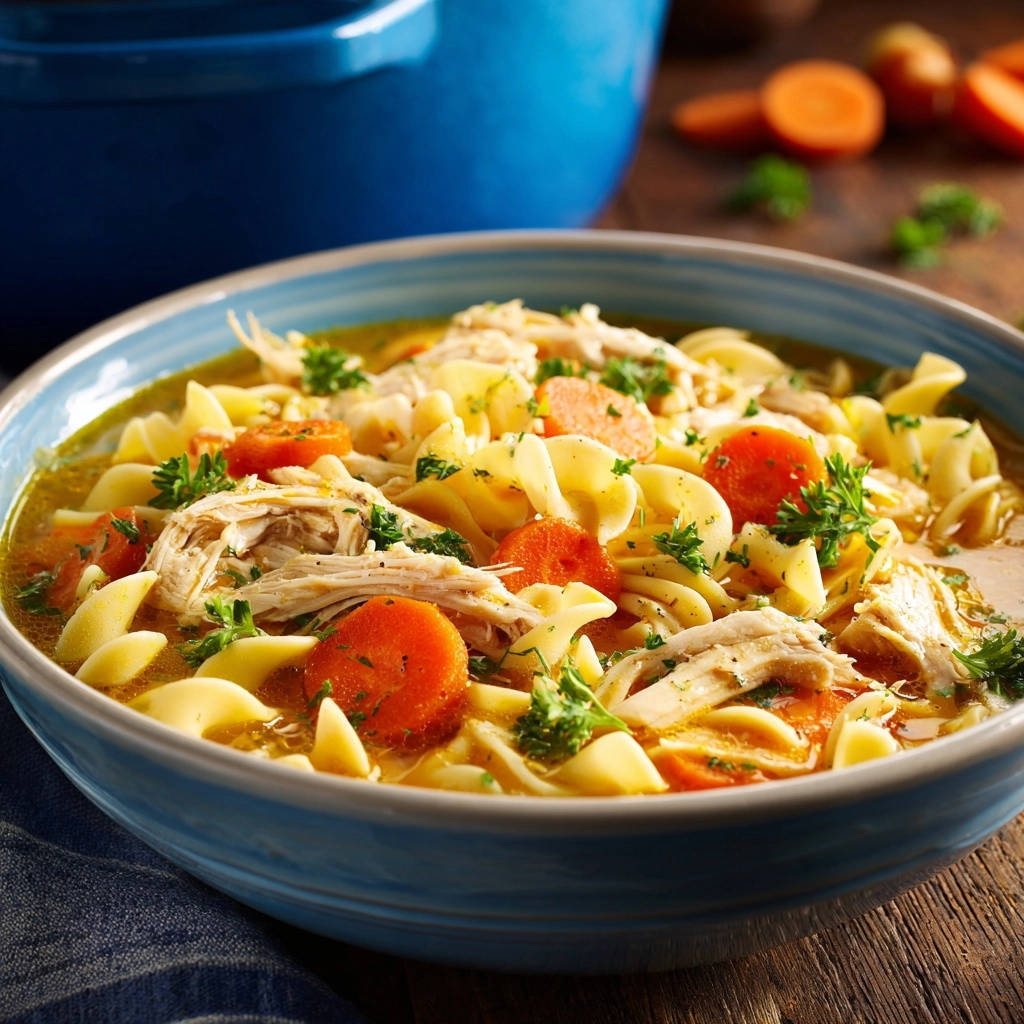
A Versatile 60-Minute Comfort Meal
Despite its rich, slow-simmered flavor, this recipe is strategically structured to be completed efficiently in about 60 minutes.
The generous servings make it perfect for meal prepping, feeding a crowd, or providing soothing nourishment during cold and flu season.
The Essential Elements: Ingredients for Rich, Satisfying Flavor
Building the Flavor Foundation: The Mirepoix and Aromatics
The combination of onion, celery, and carrots (the mirepoix) forms the aromatic base of nearly every great soup.
Cooking them gently until softened, before adding any liquid, draws out their natural sweetness, adding depth that simply cannot be rushed.
Garlic and a generous amount of dried thyme are essential for hitting the classic, savory notes expected in a truly homestyle dish.
Choosing Your Protein: Breast vs. Thighs
Boneless, skinless chicken breasts yield a leaner, cleaner protein source that shreds easily into substantial pieces.
Using chicken thighs will introduce more fat and flavor into the broth, resulting in a slightly richer base and moister final texture for the shredded chicken.
The Crucial Broth Base: Stock vs. Broth
Stock typically has a richer mouthfeel due to bones, but high-quality, low-sodium chicken broth works perfectly here and is more readily available.
Using low-sodium liquid is absolutely necessary so you can control the salt content precisely after the chicken has simmered and the broth has slightly reduced.
The Starches: Selecting the Right Egg Noodles
Wide, dried egg noodles or a sturdy shape like rotini are ideal because they hold their shape well during the separate cooking process.
It is non-negotiable that these noodles are cooked in a separate pot to prevent excess starch from clouding your beautifully developed broth.
Crafting Your Comfort Bowl: Step-by-Step Homestyle Chicken Noodle Soup Directions
- Prepare the Soup Base and Sauté Vegetables:
Heat the oil in a large Dutch oven or soup pot over medium heat. Add the diced onion, carrots, and celery.
Cook gently for 7 to 8 minutes, stirring until the vegetables are softened but not browned. This process, known as softening the mirepoix, is critical for extracting maximum flavor.
- Build and Bloom the Broth Aromatics:
Add the minced garlic, thyme, bay leaf, salt, and pepper to the pot. Cook for 1 minute until the garlic is fragrant.
This quick step ‘blooms’ the dried herbs and garlic, activating their oils and maximizing their aromatic contribution to the final Homestyle Chicken Noodle Soup.
- Simmer the Chicken and Develop Broth Depth:
Pour in the chicken broth and water. Submerge the whole chicken pieces (breast or thighs) in the liquid. Bring to a gentle boil, then reduce heat to low, cover, and simmer for 20 minutes.
Simmering the chicken whole ensures it remains tender and allows its proteins to enrich the broth’s body and flavor profile.
- Shred and Season:
Carefully remove the cooked chicken (ensure it reached 165°F) and discard the bay leaf. Shred the chicken using two forks and return it to the pot.
Taste the broth and adjust salt and pepper immediately after adding the shredded chicken back, as the meat will slightly absorb some of the seasoning.
- Assemble and Serve Immediately:
Keep the soup warm over very low heat. When ready to serve, add the prepared, separate noodles (see next section for details) directly into the bottom of each serving bowl, then ladle the hot chicken soup over the top.
- Final Garnish:
Garnish liberally with fresh chopped parsley before serving.
Complementary Dishes for Your Chicken Noodle Soup
To round out your meal, consider these dishes that pair well with comforting chicken noodle soup.
- For a vibrant vegetable addition, try these Balsamic Glazed Pearl Onions, offering a sweet and savory contrast.
- If you enjoy a touch of green with a satisfying crunch, these Bacon-Wrapped Asparagus Bundles make a great accompaniment.
The Noodle Texture Lock-In: Say Goodbye to Mushy Leftovers
The Essential Technique: Cooking Noodles Separately
The single most crucial factor is cooking the noodles entirely separate from the broth in heavily salted water, just as you would pasta.
This prevents the release of excess surface starch into the delicate soup base and guarantees that the broth remains clear and focused in flavor.
The “Al Dente Minus One” Rule
Cook the dried noodles according to the package directions, but set your timer to drain them exactly one minute before they reach their suggested minimum cooking time.
They should still be slightly firm, as the residual heat from the hot broth will finish the cooking process when you assemble the bowls.
The Post-Cook Rinse: Why Warm Water is Key
Drain the slightly undercooked noodles immediately, then briefly rinse them with warm, not cold, water.
This warm rinse instantly stops the carry-over cooking and washes away any remaining surface starch, ensuring the noodles don’t stick together or cloud the final product.
Storage Strategy: Never Store Them Together
If you anticipate leftovers, you must store the remaining broth and vegetables in one airtight container and the cooled, rinsed noodles in a separate container.
Even if they are undercooked, storing them together allows the pasta to slowly absorb the broth over time, negating all your hard work.
Elevate Your Soup Game: Pro Tips, Tools, and Customization
Essential Equipment for Soup Success
The Heavy-Bottomed Pot: A Dutch oven offers superior heat retention and even cooking, which prevents scorching the mirepoix.
Instant-Read Thermometer: Necessary for ensuring the chicken reaches 165°F safely without overcooking and becoming dry.
Boosting Broth Depth and Umami
Roast the Carcass (If using bone-in): If you start with bone-in chicken, quickly roasting the bones first before simmering can add an incredible layer of savory depth to the broth.
A Touch of Acid: A squeeze of lemon juice stirred in just before serving can brighten and lift all the flavors, cutting through the richness beautifully.
Time-Saving Shortcuts
Pre-Shredded Chicken: Use leftover rotisserie chicken; add it only in the last 5 minutes of simmering the broth to prevent it from toughening.
Do not simmer pre-cooked chicken for the full 20 minutes, or it will become stringy and flavorless.
Frozen Mirepoix: For speed, many stores sell pre-chopped mirepoix (onion, carrot, celery mix) in the freezer section. Sautéing time remains similar, often requiring slightly longer to fully thaw and soften.
Customizing Your Homestyle Chicken Noodle Soup
Gluten-Free Noodle Options
Gluten-free pasta, such as brown rice rotini, can be substituted, but this separate cooking technique is even more critical for these starchier alternatives.
Alternatively, use short-grain white rice, cooked separately, and add a small scoop to the bowl before ladling the hot liquid.
Adding Hearty Greens
For extra nutrition and color, stir in a couple of large handfuls of fresh spinach or thinly sliced kale during the last 5 minutes of simmering.
The residual heat will perfectly wilt the greens without compromising their texture or color.
Homestyle Chicken Noodle Soup Troubleshooting and FAQs
Why Did My Broth Turn Cloudy?
Cloudiness usually results from boiling the soup too vigorously, which emulsifies the chicken fat and breaks down fine particulates into the liquid.
Always maintain a very gentle, low simmer, never a rolling boil, especially when the chicken is in the pot.
My Chicken is Tough and Dry, What Went Wrong?
The most common culprit is overcooking the meat past the internal temperature of 165°F.
Cooking at a high temperature or reducing the heat too slowly during the simmer can also cause the muscle fibers to seize up, resulting in dry chicken.
Can I Make a Large Batch and Freeze This Soup?
Yes, this Homestyle Chicken Noodle Soup freezes beautifully, provided you only freeze the broth, vegetables, and shredded chicken mixture.
Freeze the liquid and meat in freezer-safe bags, defrost, and then add freshly cooked noodles upon reheating.
What is the Best Way to Reheat Leftovers?
Gently reheat the reserved broth and chicken mixture on the stovetop until simmering hot.
Only add the reserved (separate) noodles into the hot broth right before you serve, giving them just 30 seconds to warm through and achieve their perfect texture.
Savoring the Moment: Final Thoughts on Your Ultimate Comfort Food
This recipe transforms the classic challenge of chicken noodle soup into a guaranteed success, allowing you to focus purely on savoring the rich, herbal broth and tender chicken.
The “Texture Lock-In” technique ensures that every spoonful of this beautiful Homestyle Chicken Noodle Soup delivers maximum comfort and zero disappointment.
Now that you know the secret to perfect noodles, give this recipe a try and share your results! What are your favorite additions to this ultimate comfort dish?
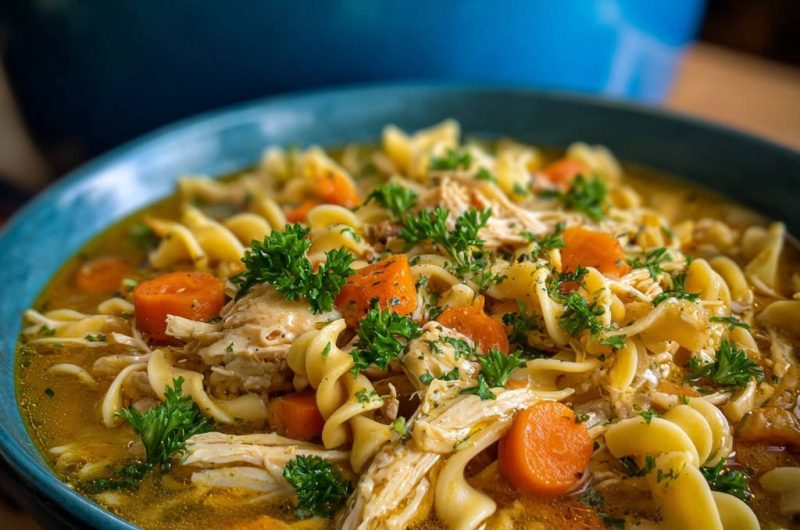
Chicken Noodle Soup
Course: Soups-StewsCuisine: AmericanDifficulty: easy6
servings15
minutes45
minutes370
kcal60
minutesThis classic comfort food recipe solves the perennial problem of mushy, bloated noodles. By slightly undercooking the pasta separately and adding it just before serving, you ensure perfectly bouncy texture and rich, clear broth every time. A total game-changer for leftovers!
Ingredients
1 tablespoon olive oil or cooking fat
1 medium yellow onion, diced
2 large carrots, sliced into rounds
2 celery stalks, diced
4 cloves garlic, minced
6 cups low sodium chicken broth or stock
2 cups water
1 pound boneless, skinless chicken breast or thighs
1 teaspoon dried thyme
1 bay leaf
1/2 teaspoon black pepper
1 teaspoon salt (or to taste)
8 ounces dried egg noodles (rotini or wide egg noodle style)
1/4 cup fresh parsley, chopped, for garnish
Directions
- Prepare the Soup Base: Heat the oil in a large Dutch oven or soup pot over medium heat. Add the diced onion, carrots, and celery. Cook gently for about 7 to 8 minutes, stirring occasionally, until the vegetables begin to soften.
- Build the Broth Flavor: Add the minced garlic, thyme, bay leaf, salt, and pepper to the pot. Cook for 1 minute until fragrant.
- Cook the Chicken and Broth: Pour in the chicken broth and water. Submerge the whole chicken pieces in the liquid. Bring the soup to a gentle boil, then reduce the heat to low, cover, and simmer for 20 minutes, or until the chicken registers 165 degrees Fahrenheit internally.
- Shred the Chicken: Carefully remove the cooked chicken pieces from the pot and place them on a cutting board. Discard the bay leaf. Using two forks, shred the chicken and return it to the soup pot. Taste the broth and adjust salt and pepper if needed. Keep the soup warm over very low heat.
- Implement the Noodle Texture Lock-In (The Solution): In a separate pot, bring heavily salted water to a boil. Add the dried noodles and cook them according to package directions, but remove them about 1 minute before they are fully al dente (meaning they should still be slightly firm).
- Assemble and Serve Immediately: Drain the noodles immediately and rinse them briefly with warm water to stop the cooking process and remove excess starch. Add a serving of the drained, slightly undercooked noodles directly into the bottom of each serving bowl, then ladle the hot chicken and vegetable soup over the top.
- Garnish: Sprinkle liberally with fresh chopped parsley before serving. This crucial technique ensures the noodles absorb only the exact amount of broth needed in the moment, preventing them from swelling and turning mushy, even in leftovers (if storing, keep the remaining noodles and soup completely separate).
Notes
- For best results and storage, always keep the cooked noodles and the remaining soup stored completely separate.