
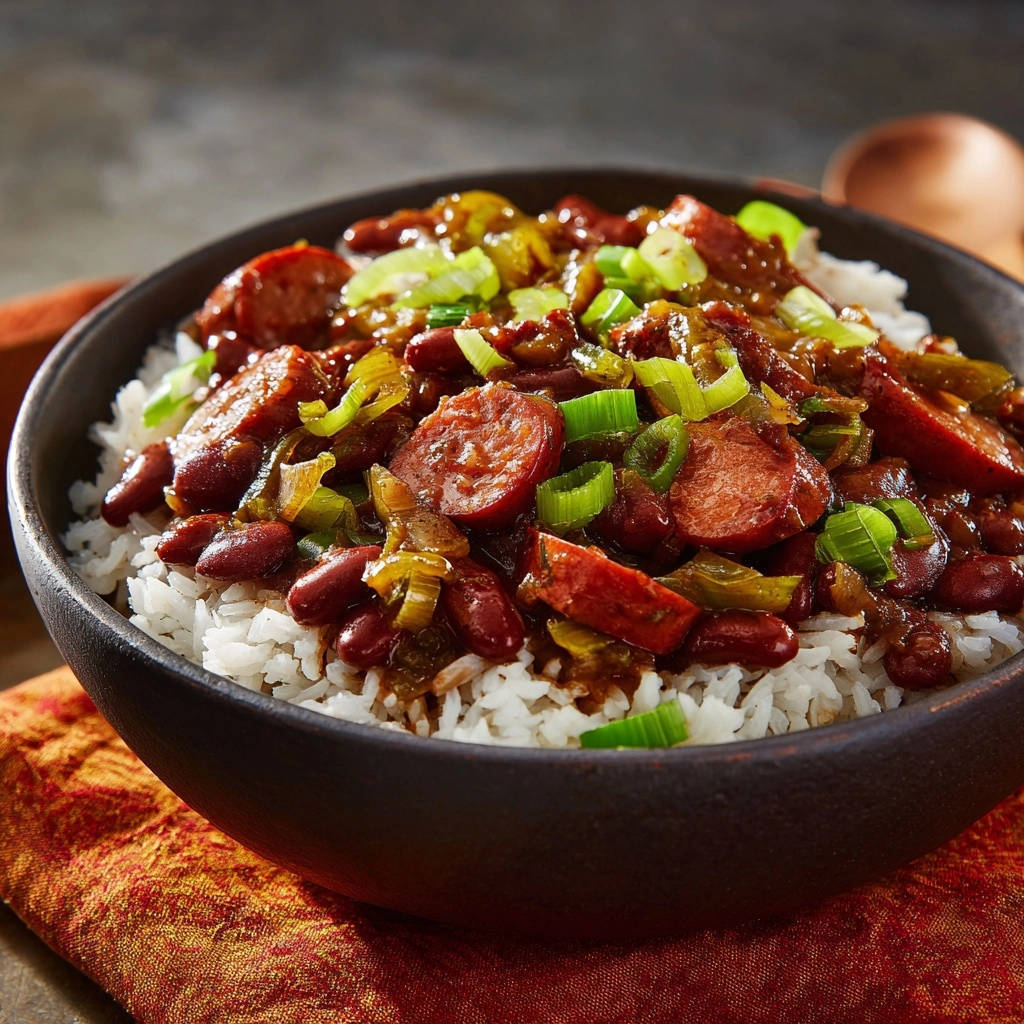
For years, I struggled with thin, watery broth when making Louisiana Smoked Sausage and Red Beans-a common heartbreak after hours of simmering.
This recipe solves that universal frustration by harnessing the beans’ natural starch, guaranteeing that signature, clingy gravy that truly defines comfort food.
You will achieve an unbelievably rich and creamy texture every time, transforming this simple meal into an authentic culinary triumph.
If you’re looking for another way to achieve that velvety texture, try creamy chicken and wild rice.
Say Goodbye to Soupy Beans: Why This Recipe Is Essential
The Problem We Solve: Achieving Clingy, Gravy-Like Sauce
The biggest disappointment in this slow-cooked classic is spending hours simmering only to end up with a thin, soupy broth that slides right off the rice.
Authentic red beans require a rich, velvety consistency; our method uses the beans’ own starches-not flour or heavy cream-to naturally create that perfect gravy.
Flavor Layering: Building the Trinity Base for Maximum Depth
Depth of flavor is built from the ground up, starting with searing the sausage to develop a rich, brown crust and render its crucial fat.

This rendered fat is then essential for sautéing the Holy Trinity (onion, celery, bell pepper), laying the aromatic foundation critical for true Louisiana cooking.
This initial flavor development ensures the final dish tastes deep and savory, not just like spiced broth.
The Essential Pantry Staples for Authentic Red Beans
Choosing the Right Beans: Small Reds vs. Kidney Beans
Small red beans are highly preferred over large kidney beans because they break down more easily during the long simmer.
This increased breakdown contributes necessary starch, which is vital for achieving the signature thick texture and aids significantly in the final thickening technique.
Soaking the beans drastically reduces the overall cooking time and helps ensure all beans reach tenderness simultaneously, preventing hard centers.
Smoked Sausage Selection: Flavor Profile and Fat Content
We rely on high-quality smoked chicken or turkey sausage for a deep, smoky flavor without the heaviness associated with traditional beef fat.
For more smoky sausage ideas, explore Southern black eyed peas and sausage.
The sausage must be hot-smoked; this preparation ensures it retains its flavor and texture during the lengthy cooking process without becoming dry or mushy.
The Holy Trinity and Herb Essentials
The classic 1:1:1 ratio of onion, celery, and bell pepper should be diced finely so that they dissolve almost completely during cooking, adding body rather than chunks.
Dried thyme provides an earthy warmth, while the two bay leaves infuse the liquid with a subtle, savory background note throughout the long simmer.
A touch of cayenne pepper is vital, providing necessary Louisiana heat that balances the deep, savory character of the red beans without overwhelming them.
Gear Up: Essential Tools for the Perfect Simmer
The Heavy-Bottomed Pot (Dutch Oven)
A heavy pot is crucial for superior heat retention and distribution, which prevents the beans from scorching on the bottom during the extended two-hour low simmer.
Potato Masher or Fork
This is the critical tool needed to execute the “Thickness Technique.” The mashing action is what releases the necessary starches.
Slotted Spoon
Required to remove the seared smoked sausage from the pot, ensuring the valuable, rendered fat is left behind to build the flavor base for the Trinity.
The Method: Achieving Deep Flavor and Unmatched Creaminess
- Bean Preparation: Rinse and Soak
Thoroughly rinsing the beans removes any dust or debris. Starting with pre-soaked beans drastically reduces the overall cooking time and helps ensure they cook evenly.
- Searing the Sausage for Depth
Heat the vegetable oil in your heavy pot. Browning the smoked sausage develops a richer, caramelized flavor and releases rendered fat into the pot, crucial for sautéing the aromatics.
- Sautéing the Trinity and Blooming Spices
Add the diced onion, bell pepper, and celery to the rendered fat and cook until soft and translucent-a process known as sweating the vegetables.
Next, add the minced garlic, thyme, and cayenne pepper and cook for exactly one minute; this brief cooking time allows the spices to ‘bloom’ in the hot fat, intensifying their aroma and taste.
- The Initial Simmer: Low and Slow
Return the sausage and add the beans, broth, and bay leaves. Bring the mixture to a full boil, then immediately reduce the heat to the lowest setting.
A gentle, low simmer is vital; cooking too high will cause the beans to break apart prematurely. Cover partially to allow steam to escape and stir only every 30 minutes to prevent sticking.
The Secret Technique: Guaranteeing Thick, Restaurant-Quality Sauce
When and How Much to Mash
The thickening technique should only be executed when the beans are fully tender, usually after the initial two hours of covered simmering time.
Carefully remove about one-third of the cooked beans along with a small amount of the cooking liquid into a separate bowl for mashing; this ratio provides the perfect amount of starch for guaranteed thickness.
The Science Behind the Creaminess (Starch Release)
Mashing the beans ruptures their cellular structure, forcing the release of complex starches directly into the small amount of liquid.
When this mashed bean mixture is returned to the main pot, the concentrated starches dissolve instantly, acting as a natural binder to create that desired thick, creamy, gravy-like sauce.
Finishing the Dish: Uncovered and Creamy
The final 15 to 30 minutes must be cooked uncovered to allow excess moisture to evaporate, which further concentrates the flavor and rapidly accelerates the thickening process.
Stir frequently during this final phase; as the mixture thickens, it becomes much more prone to sticking and scorching at the bottom of the pot.
Remove the bay leaves immediately before serving, taste, and adjust the salt and pepper for maximum flavor.
Round Out Your Meal
Consider these dishes to complement your Louisiana Smoked Sausage and Red Beans.
- For a sweet and savory addition, try balsamic glazed pearl onions, echoing the richness of the sausage.
- Enjoy vibrant green vegetables alongside your red beans with bacon-wrapped asparagus bundles for a touch of crispness.
Serving Suggestions and Smart Storage Solutions
Classic Pairings Beyond White Rice
While serving over hot, long-grain white rice is the standard, elevate these robust Louisiana Smoked Sausage and Red Beans alongside sweet, buttery cornbread.
For a refreshing balance, pair the richness of the dish with a crispy green salad or a simple, vinegar-based coleslaw.
Make-Ahead & Freezing Tips for Large Batches
Red beans are famous for tasting even better the next day after the flavors have fully married; cool quickly and store in the refrigerator for up to four days.
This dish freezes exceptionally well. Cool completely, portion into freezer-safe containers, and store for up to three months.
Thaw overnight in the refrigerator and reheat gently on the stovetop, adding a splash of broth if the texture has become too tight.
Troubleshooting Your Red Beans & Sausage: Common Fixes and Flavor Swaps
Problem: My Beans Are Still Too Hard After Two Hours!
Ensure your heat is truly low and the pot is partially covered, preventing too much liquid loss. If using very old beans, they may need another hour of simmering, or a pinch of baking soda can be added to soften the water if you suspect hard water is the issue.
Problem: I Forgot to Soak the Beans (Help!)
Use the quick-soak method outlined in the recipe (bring beans and water to a boil, boil 1 minute, turn off heat, cover, and let stand for 1 hour, then drain and rinse).
While overnight soaking yields the best results for texture, the quick method is a reliable backup that saves significant time.
Flavor Swap: Adapting for Traditional Beef Sausage
If using Andouille or another high-fat beef sausage, you must drain off most of the rendered fat after searing.
Failing to drain the beef fat will result in an overly greasy finished dish that hides the complexity of the seasonings.
FAQs About Louisiana Red Beans and Sausage
Do I really have to soak the beans overnight?
Soaking is highly recommended, as it aids in quicker, more even cooking and can help improve digestibility by neutralizing certain compounds.
However, the quick-soak method is a viable alternative if you are short on time, though it may slightly affect the final texture.
Can I use a pressure cooker or Instant Pot for Louisiana Smoked Sausage and Red Beans?
Yes, the total cook time can be dramatically reduced, but the flavors of the Trinity should still be built first using the sauté function.
Be cautious when adjusting liquid levels, as pressure cookers retain much more moisture than stovetop simmering, potentially requiring less broth initially.
Why did my bay leaves turn bitter?
Bay leaves should be removed immediately after simmering is complete.
Leaving them in the hot liquid for extended periods (especially overnight storage) can impart a slightly bitter or medicinal flavor to the finished dish.
Ready to Impress? Share Your Louisiana Smoked Sausage and Red Beans Masterpiece!
The heart of soulful cooking lies in patience and technique, and mastering the creamy gravy transforms your Louisiana Smoked Sausage and Red Beans into something truly unforgettable.
By implementing this simple thickening secret, you have unlocked the key to making a truly authentic and deeply satisfying meal that tastes like it simmered all day.
Now grab your Dutch oven, get simmering, and share your masterpiece with the world-you’ve earned that perfect bowl!

Smoked Sausage and Red Beans
Course: Main CourseCuisine: AmericanDifficulty: medium6
servings15
minutes2
hours450
kcal135
minutesSay goodbye to thin, soupy broth. This recipe delivers deep, rich, gravy-like Louisiana Red Beans and Sausage by utilizing the beans’ natural starches. This comforting classic is perfect served over hot white rice.
Ingredients
1 pound dried small red beans (soaked overnight, or quick-soaked)
1 tablespoon vegetable oil
1 pound smoked chicken or turkey sausage, sliced into 1/2 inch rounds
1 large yellow onion, diced
1 green bell pepper, diced
2 celery stalks, diced
4 cloves garlic, minced
6 cups low sodium chicken or vegetable broth
1 teaspoon dried thyme
1/2 teaspoon cayenne pepper
2 bay leaves
Salt and black pepper to taste
4 cups cooked long-grain white rice, for serving
1 bunch green onions (scallions), sliced for garnish
Directions
- Prepare the Beans: Rinse the soaked red beans thoroughly. Set aside. (If using the quick soak method: bring beans and water to a boil, boil 1 minute, turn off heat, cover, and let stand for 1 hour, then drain and rinse).
- Sear the Sausage: In a large, heavy pot or Dutch oven, heat the oil over medium heat. Add the sliced smoked sausage and cook until browned on both sides, about 5 to 7 minutes. Remove the sausage with a slotted spoon and set aside, leaving the rendered fat in the pot.
- Build the Flavor Base: Add the diced onion, bell pepper, and celery (the ‘Trinity’) to the pot. Cook over medium heat until the vegetables are softened and the onions are translucent, about 8 to 10 minutes. Add the minced garlic, thyme, and cayenne pepper and cook for 1 minute until fragrant.
- Simmer: Return the sausage to the pot. Add the prepared red beans, chicken broth, and bay leaves. Bring the mixture to a full boil, then immediately reduce the heat to low, cover the pot partially (allowing steam to escape), and simmer gently for 2 hours, stirring every 30 minutes.
- THE THICKNESS TECHNIQUE (Solving the Pain Point): After 2 hours, the beans should be tender. To achieve the guaranteed thick and creamy texture, remove approximately 1/3 of the beans and a small amount of liquid into a separate bowl. Using a fork or a potato masher, thoroughly mash these beans until they form a thick paste.
- Finish the Dish: Return the mashed bean mixture back into the main pot and stir well. Continue to simmer the red beans, uncovered, for another 15 to 30 minutes, stirring frequently. The mashed starches will dissolve and rapidly thicken the liquid into a creamy sauce that clings beautifully to the whole beans and sausage. Remove the bay leaves. Taste and adjust seasoning with salt and pepper.
- Serve: Spoon the thick red beans and sausage over hot white rice. Garnish generously with fresh sliced green onions before serving.
Notes
- The thickening technique (mashing 1/3 of the beans) is key to achieving the desired creamy, gravy-like consistency. Remember to soak beans overnight or quick-soak.