We’ve all been there. You spend forty minutes at the stove, carefully simmering a sauce, only to have it turn into a thin, watery pool at the bottom of your bowl. Instead of a rich coating, your ravioli sits in a sad puddle of separated liquid. It’s frustrating, but it’s also completely avoidable once you understand the mechanics of a true emulsion.
The secret to this Creamy Mushroom Ravioli isn’t just the ingredients; it’s the technical bridge you build between the pasta and the fat. When done correctly, the sauce becomes a thick, glossy velvet that clings to every ridge of the pasta. You aren’t just eating noodles with sauce on top; you’re eating a cohesive, restaurant-quality dish where the flavors are literally cooked into the dough.
For a different take on a smooth sauce, check out creamy sun-dried tomato ravioli.
I’ve found that the real “aha!” moment comes when you stop treating the pasta and sauce as two separate entities. By pulling your ravioli out of the water while they still have a firm bite, you allow them to finish their journey inside the skillet. This allows the starchy surface of the pasta to grab onto the heavy cream and parmesan, creating a permanent bond that won’t break on your plate.
For a similarly smooth sauce without a watery outcome, check out creamy broccoli shells.
The Chemistry of a Non-Watery Cream Sauce
Creating a stable cream sauce is a lesson in physics and chemistry. We use heavy cream specifically because its high fat content makes it much more stable under heat than milk or half-and-half. When you reduce the cream, you’re evaporating water and concentrating the fats and solids, which naturally thickens the texture without needing a flour-based roux.
However, the real heavy lifting is done by the Parmesan cheese and the reserved pasta water. Parmesan contains proteins that act as a natural binder, helping the fats in the cream and butter stay suspended in the liquid. When you add that splash of starchy pasta water, the amylose starch acts as a “glue,” ensuring the sauce stays emulsified and glossy rather than oily and separated.
Why Mushrooms Release Excess Moisture
Mushrooms are essentially sponges, consisting of about 90% water. If you toss them into a lukewarm pan and hit them with salt immediately, the salt draws out all that internal moisture through osmosis. Instead of searing, the mushrooms end up “stewing” in a grey, unappetizing liquid that thins out your sauce later on.
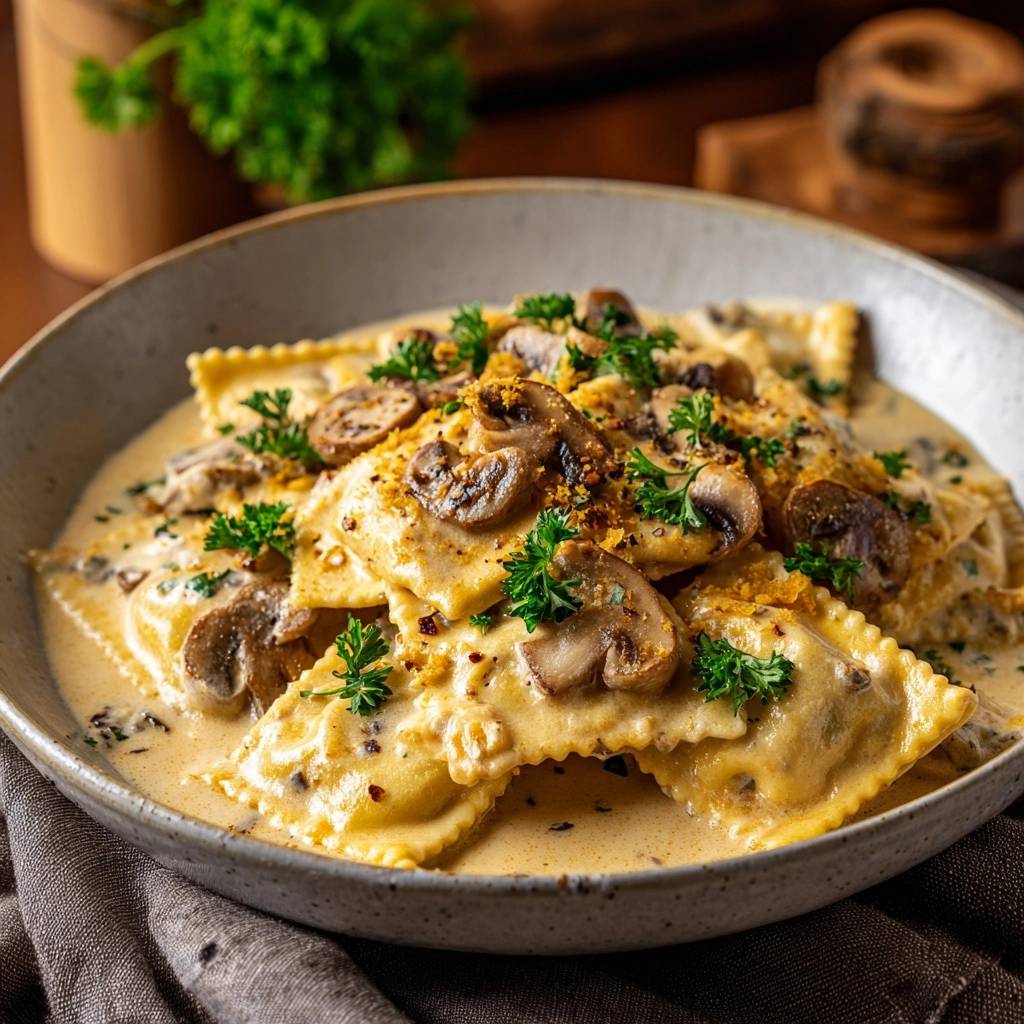
To prevent this, you have to break down their cellular structure with high, dry heat first. By searing them undisturbed, you evaporate that water instantly and trigger the Maillard reaction. This creates a deep, savory crust on the mushroom while keeping the interior meaty, ensuring they add flavor to the sauce rather than watering it down.
Essential Components for Creamy Mushroom Ravioli
For the best results, I always reach for refrigerated cheese ravioli over the shelf-stable or frozen varieties. Refrigerated pasta has a higher moisture content in the dough, which helps it absorb the sauce more effectively during the final toss. Look for a high-quality brand where the filling feels substantial and the edges are well-sealed.
The choice of mushroom also dictates the depth of your dish. While white button mushrooms are fine in a pinch, cremini mushrooms (often labeled as baby bellas) offer a much more intense umami profile. They have a denser texture that holds up beautifully against the rich heavy cream and butter, providing a “meaty” bite without the meat.
Selecting the Right Cheese Ravioli
A classic four-cheese or ricotta filling is the gold standard here because the mild, creamy interior complements the earthy mushrooms. If you want more complexity, a spinach and cheese filling adds a nice herbal note. Just be sure to inspect the seals of the ravioli before boiling; any tiny tears will cause the cheese to leak out, leaving you with empty pasta shells.
The Role of Aromatics and Herbs
Garlic and thyme provide the aromatic backbone of this dish, but the real hero is the lemon zest added at the very end. Because this recipe is heavy on lipids—butter, cream, and cheese—it needs a sharp acidic lift to cut through the richness. The lemon zest provides a bright, floral top note that wakes up the entire palate without curdling the cream.
Step-by-Step: Searing Mushrooms for Maximum Umami
This is the most important part of the process. You need to get your skillet hot—really hot—before the mushrooms ever touch the surface. Add your olive oil and a tablespoon of butter, then lay the sliced creminis in a single layer. If you crowd the pan, the steam from one mushroom will prevent the one next to it from browning.
Now, here is the hard part: don’t touch them. Let them sit for at least four minutes. You’ll hear a vigorous sizzling, and that’s exactly what you want. When you finally flip them, they should be a deep, mahogany brown. This “sear” is where all the flavor lives. Once they are browned on both sides, only then should you add your aromatics and a pinch of salt.
If your mushrooms look grey or shrunken, the pan wasn’t hot enough or you moved them around too much. Don’t worry, they’ll still taste okay, but you’ll miss out on that professional, roasted depth. Patience in these first few minutes pays off in the final flavor of the sauce.
Deglazing and Building the Cream Base
After searing the mushrooms and sautéing the garlic, you’ll notice brown bits stuck to the bottom of the pan. This is called “fond,” and it is concentrated flavor gold. Pouring in your broth causes a violent sizzle that lifts those bits off the pan and incorporates them into the liquid. This ensures every drop of mushroom essence ends up in your sauce.
Let that liquid simmer until it has reduced by about half. You want the harshness of the liquid to cook off, leaving behind only the concentrated sugars and acidity. This creates a flavorful foundation before you ever pour in the heavy cream.
Emulsifying the Parmesan and Cream
Once the cream is in the pan, keep the heat at a gentle simmer. If you boil heavy cream too violently, you risk breaking the emulsion. After a few minutes, the cream will naturally thicken. At this point, stir in your freshly grated Parmesan. Use a whisk or a wooden spoon to incorporate it until the sauce is smooth and coats the back of a spoon—a state chefs call “nappe.”
The “Finish in Pan” Method for Pasta
Never cook your ravioli all the way through in the water. If the package says 6 minutes, pull them out at 4. They should feel slightly too firm in the center. By transferring them directly into the simmering cream sauce, the pasta acts like a sponge, soaking up the seasoned cream instead of plain water.
For more pasta ideas, explore this cheesy skillet gnocchi.
As the ravioli finishes cooking in the skillet, the starch from the pasta thickens the sauce even further. This creates a “permanent bond” where the sauce actually adheres to the pasta. You’ll see the texture change from a liquid to a thick, clinging glaze that moves with the ravioli as you gently toss them.
Adjusting Consistency with Starchy Water
If the sauce looks too thick or “gloopy,” don’t reach for more cream. Instead, use a tablespoon of that reserved pasta water. The starch in the water helps thin the sauce to the perfect consistency while maintaining its silkiness. Add it one spoonful at a time until the sauce looks glossy and moves easily around the pan.
Troubleshooting Common Sauce Failures
If your sauce tastes too salty, it’s likely because the Parmesan and the pasta water both brought a lot of sodium to the party. You can fix this by adding a splash more cream or a tiny squeeze of lemon juice to balance the salt. If the sauce looks grainy, the heat was likely too high when you added the cheese; next time, turn the heat to low before stirring in the Parmesan.
For ravioli that are breaking or bursting, you might be tossing them too aggressively. Use a wide silicone spatula and gently fold the sauce over the pasta rather than stirring vigorously. Also, ensure your water is at a gentle boil, not a violent rolling boil, which can slam the delicate ravioli against the sides of the pot.
Flavor Variations and Ingredient Swaps
While cremini mushrooms are my favorite, you can easily swap in Shiitake or Oyster mushrooms for a more “wild” and earthy flavor profile. A high-quality vegetable broth also works perfectly in place of chicken broth for deglazing the pan.
If you want to add some color and nutrition, toss in a handful of baby spinach or chopped kale during the last two minutes of simmering. The heat of the cream will wilt the greens perfectly without requiring extra cooking time. For a bit of crunch, toasted walnuts or pine nuts sprinkled on top add a fantastic textural contrast.
Optimal Pairings for Rich Pasta Dishes
Because this dish is incredibly rich and savory, you want to pair it with sides that offer high acidity or a bit of bitterness. A simple arugula salad with a sharp lemon vinaigrette is the perfect foil to the heavy cream. The peppery bite of the greens cleanses your palate between bites of the decadent pasta.
Complementary Dishes to Enjoy
Round out your meal with these complementary dishes that pair well with creamy mushroom ravioli.
- For a comforting addition, try these cheesy garlic breadsticks, perfect for soaking up extra sauce.
- Consider these asparagus bundles for a crisp and savory contrast to the rich pasta.
I also love serving this with a piece of crusty sourdough bread. You’ve worked hard to create that perfect, emulsified sauce, and you’ll want something to mop up every last drop left on the plate. Avoid serving this with other starchy sides like potatoes; the ravioli is the star of the show here.
Make-Ahead Logistics and Storage Tips
Cream sauces are notoriously finicky when it comes to reheating because the fat tends to separate from the solids. If you have leftovers, store them in an airtight container in the fridge for up to three days. I don’t recommend freezing this dish, as the cream will likely grain and the ravioli will become mushy upon thawing.
To reheat, avoid the microwave if possible. Instead, place the ravioli in a small skillet over low heat. Add a splash of water or milk and cover the pan. The steam will help loosen the sauce and gently warm the pasta without breaking the emulsion. Stir very gently once the sauce starts to liquefy again.
Expert Tips for Professional Plating
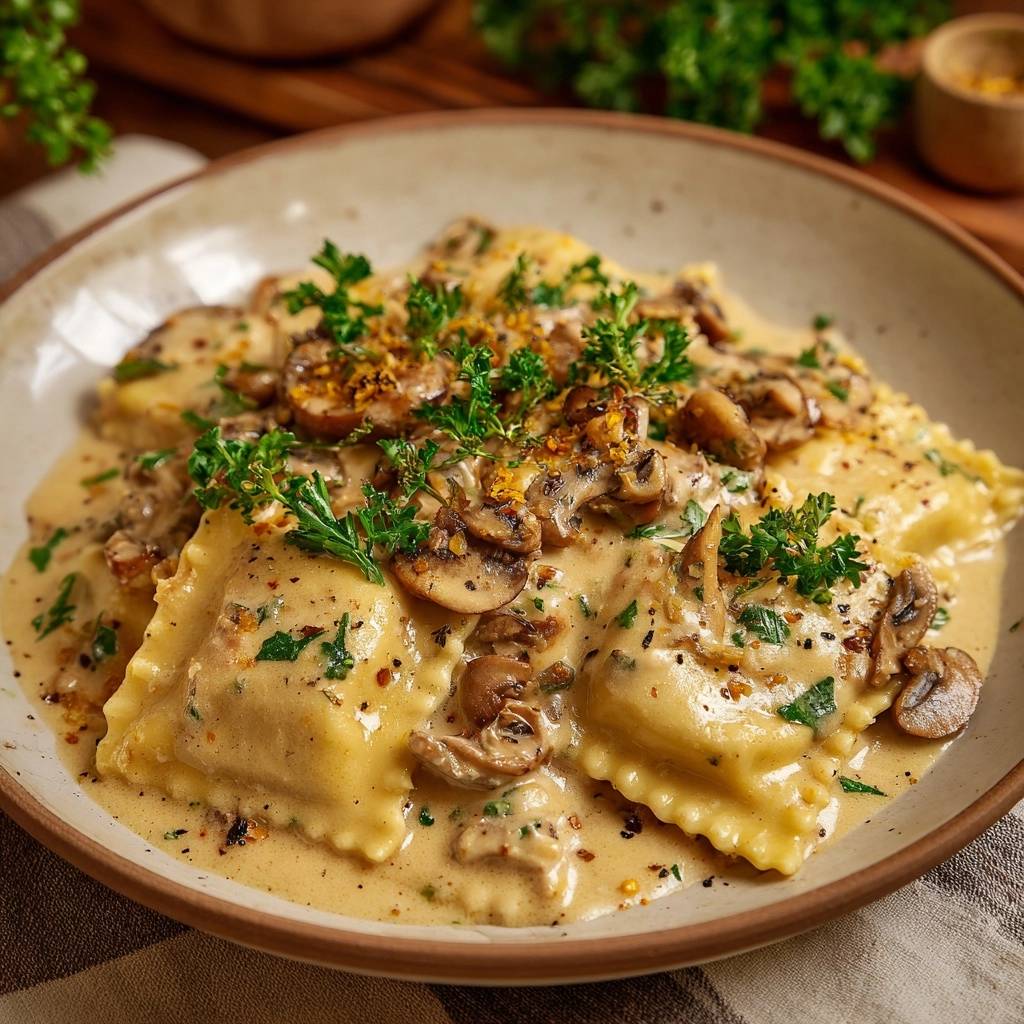
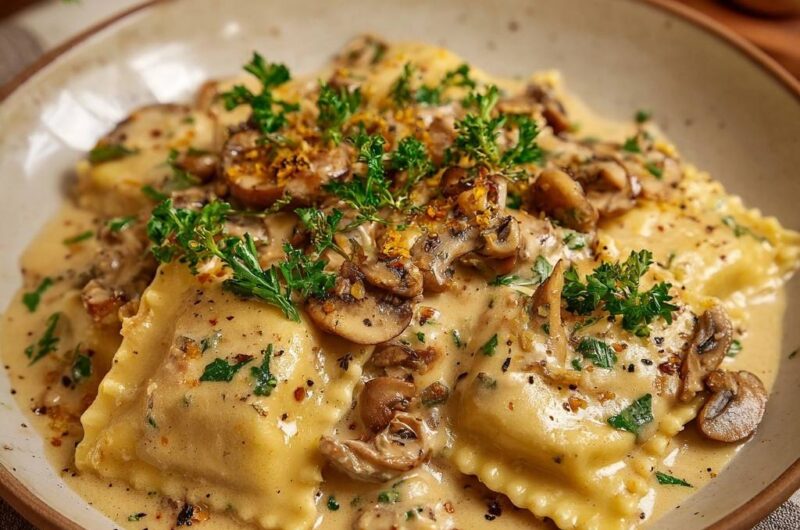
To get that “skyscraper” look you see in high-end bistros, don’t just dump the skillet onto a plate. Use a slotted spoon to plate the ravioli first, stacking them slightly for height. Then, spoon the mushrooms and the remaining sauce over the top so the golden-brown mushrooms are visible rather than buried.
Finish the dish with a heavy hand of fresh curly parsley and a final dusting of lemon zest. The bright green of the herbs and the yellow of the zest provide a beautiful visual contrast against the ivory sauce. A final crack of black pepper adds one last punch of flavor and makes the dish look complete.
How do I keep the sauce from getting watery?
The most common cause of watery sauce is not searing the mushrooms properly. Mushrooms release a lot of liquid; if you don’t cook that liquid off during the searing phase, it will leak into your cream later. Additionally, make sure you reduce your heavy cream for at least 3-4 minutes until it naturally thickens before adding the pasta.
Can I use milk instead of heavy cream?
I don’t recommend using milk for this specific method. Milk lacks the fat content necessary to create a stable emulsion with the cheese and pasta starch, which often results in a thin, broken sauce. If you must use a lighter option, half-and-half can work, but you will need to be much more careful with the heat to prevent curdling.
Why did my ravioli burst during cooking?
Ravioli usually burst for two reasons: the water was boiling too violently or they were cooked for too long. Keep your water at a gentle simmer rather than a rolling boil. Also, remember to pull them out 2 minutes early; they will finish softening in the sauce, which is much gentler than boiling water.
How should I store and reheat leftovers?
Store leftovers in an airtight container in the refrigerator for up to 3 days. To reheat, place the pasta in a skillet over low heat with a tablespoon of water or milk. Cover the pan and let the steam gently loosen the sauce. Avoid the microwave, as it often causes the cream sauce to “split” and become oily.
Can I use vegetable broth?
Yes, vegetable broth is an excellent 1:1 substitute for chicken broth. The goal of that step is to deglaze the pan and pick up the browned mushroom bits. The squeeze of lemon juice in the broth adds a pleasant acidity.
Mushroom Ravioli
Course: Main CourseCuisine: Italian AmericanDifficulty: easy4
servings10
minutes15
minutes510
kcal25
MinutesA decadent pasta dish featuring cheese ravioli tossed in a thick, emulsified mushroom cream sauce with garlic, white grape juice, and fresh herbs.
Ingredients
18 ounces refrigerated cheese ravioli
1 pound cremini mushrooms, sliced
3 tablespoons unsalted butter
1 tablespoon olive oil
4 cloves garlic, minced
1/2 cup chicken broth plus 1 teaspoon lemon juice
1 1/4 cups heavy cream
1/2 cup freshly grated parmesan cheese
1/2 teaspoon red pepper flakes
1/2 cup fresh curly parsley, roughly chopped
Salt and cracked black pepper to taste
1 teaspoon lemon zest
1/2 teaspoon dried thyme
Directions
- Bring a large pot of heavily salted water to a boil. Cook the ravioli according to package instructions, but drain them 2 minutes before they are fully done (very al dente). Reserve 1/2 cup of the starchy pasta water.
- Heat a large skillet over medium-high heat with the olive oil and 1 tablespoon of butter. Add the sliced mushrooms in a single layer. Do not crowd the pan or salt them yet. Let them sear undisturbed for 4 minutes until deep golden brown. Flip and cook for another 2 minutes. This step is crucial to prevent the mushrooms from “steaming” and thinning the sauce.
- Reduce heat to medium. Add the remaining 2 tablespoons of butter, minced garlic, red pepper flakes, and dried thyme. Sauté for 1 minute until the garlic is fragrant and golden.
- Pour in the chicken broth and lemon juice to deglaze the pan, scraping up all the browned bits (fond) from the bottom. Let the liquid reduce by half.
- Pour in the heavy cream and bring to a gentle simmer. Let the cream reduce for 3-4 minutes until it begins to thicken naturally. Stir in the parmesan cheese until melted and smooth. Season generously with cracked black pepper and a pinch of salt.
- Add the undercooked ravioli and half of the fresh parsley directly into the skillet. Toss gently for 2 minutes. The ravioli will finish cooking by absorbing the cream sauce, creating a permanent bond. If the sauce becomes too thick, add the reserved pasta water one tablespoon at a time until the desired “clinging” consistency is reached.
- Plate the ravioli and spoon the remaining mushrooms and sauce over the top. Garnish heavily with the remaining fresh parsley, lemon zest, and extra cracked pepper to match the visual finish. Serve immediately.
Notes
- The secret to the sauce is searing the mushrooms undisturbed to prevent moisture from thinning the cream. Always reserve pasta water to adjust the final consistency.