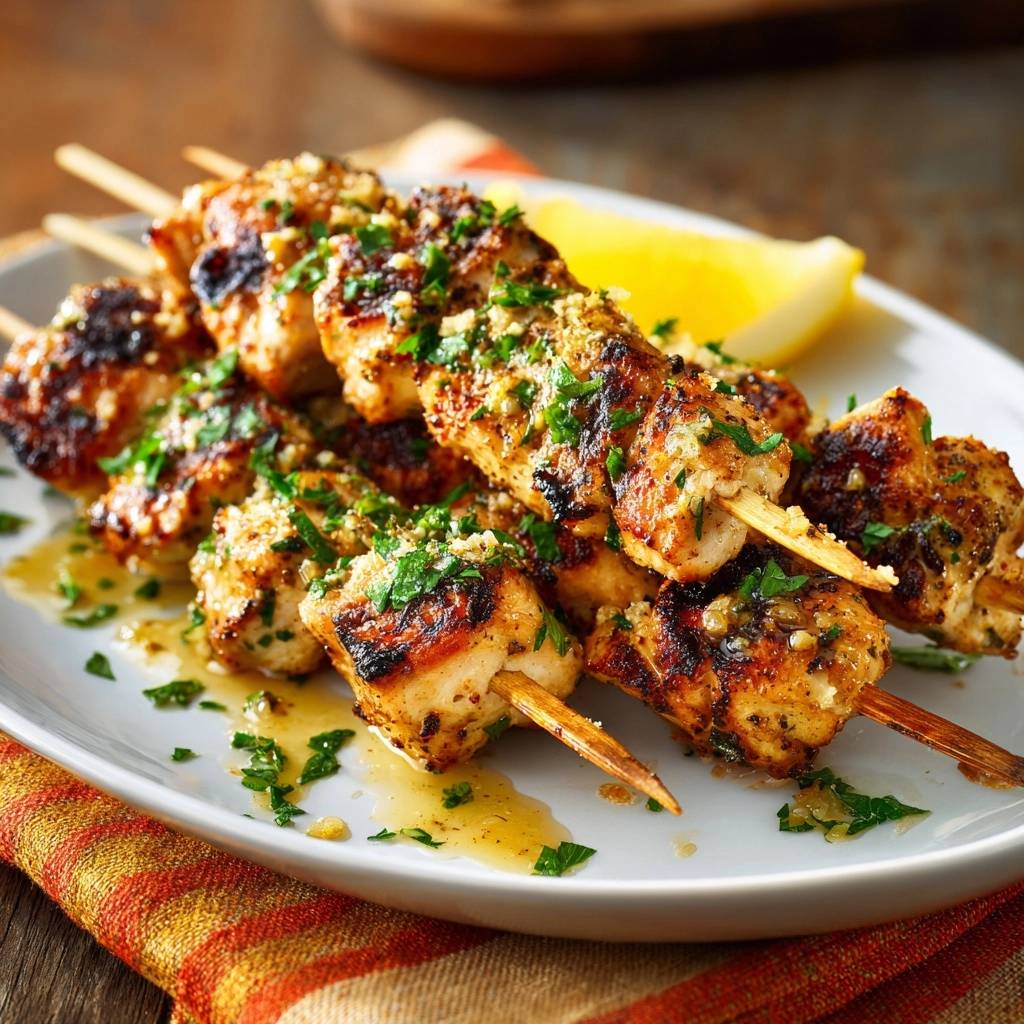
Nothing ruins a backyard barbecue faster than biting into a piece of chicken that has the texture of a pencil eraser. We’ve all been there, chewing through dry, rubbery skewers that require a gallon of water just to swallow. Standard street-style souvlaki often suffers from overcooking, but this Garlic Butter Chicken Souvlaki changes the game by focusing on moisture at every single stage of the process.
The experience starts with a high-heat sear that creates a salty, charred crust, followed immediately by a luxurious bath of melted garlic butter. As the butter hits the hot meat, it sizzles and seeps into the crevices, creating a velvety mouthfeel that contrasts perfectly with the smoky exterior. This isn’t just another grilled chicken recipe; it’s a technique-driven approach to ensuring your poultry stays dripping with juice.
The real secret to this recipe’s success lies in the “tight pack” threading method. Most people leave gaps between the chicken chunks, which allows heat to attack the meat from all sides and dry it out instantly. By pushing the pieces close together on the skewer, you create a larger thermal mass that protects the delicate interior while the outside gets that beautiful, dark golden char. Trust me, this one small change will revolutionize your grilling game.
For a different take on chicken that’s far from bland, explore Grilled Lemon Herb Chicken.
The Science of Acidic Marinades and Tenderness
Lemon juice is a powerful tool in the kitchen, but it requires a bit of respect. The citric acid works to break down the tough protein fibers in the chicken, allowing the olive oil and herbs to penetrate deeper into the meat. However, if you leave the chicken in this acidic bath for too long, the proteins will denature too much, resulting in a mushy, unappealing texture.
Therefore, you should aim for a sweet spot of about 30 minutes to two hours. This timeframe ensures the meat is seasoned all the way through without turning into “sawdust” once it hits the heat. In addition, the olive oil acts as a protective barrier, helping to distribute the heat evenly and preventing the lemon juice from “cooking” the meat prematurely through acid-denaturation.
Essential Components for Garlic Butter Chicken Souvlaki
Quality ingredients make a massive difference when the flavor profile is this simple. I always reach for Kosher salt because its larger grains are easier to pinch and distribute, and they dissolve more slowly into the meat than fine table salt. This creates a more even seasoning that draws out the natural savory notes of the chicken.
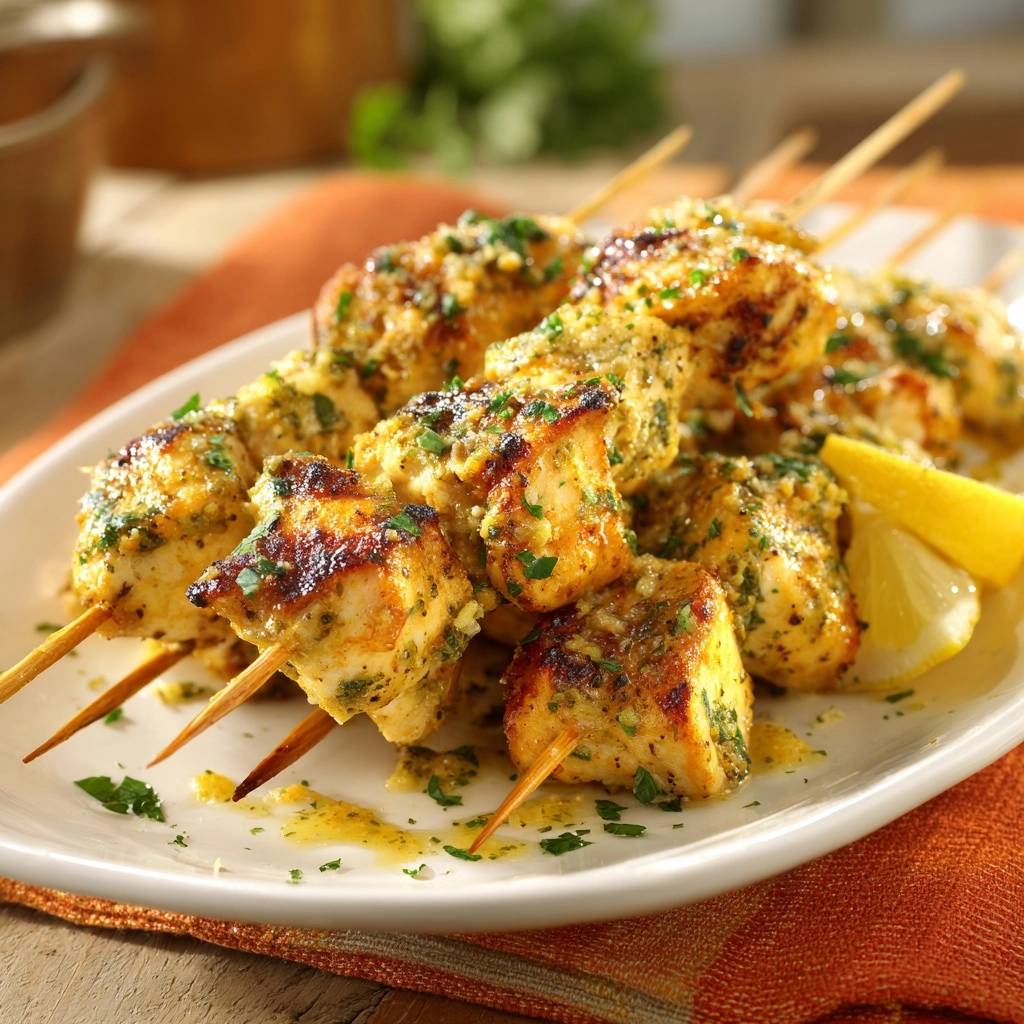
Mediterranean oregano is another heavy hitter here, offering a floral, slightly bitter punch that cuts through the richness of the butter. Unlike Mexican oregano, which has citrusy undertones, the Mediterranean variety provides that classic “Greek island” aroma. Finally, smoked paprika adds a gorgeous mahogany hue and a hint of campfire flavor without adding any actual heat.
Choosing Between Thighs and Breasts
If you want the absolute juiciest results, boneless skinless chicken thighs are the undisputed champion. They contain more intramuscular fat and connective tissue, which melts during cooking to keep the meat lubricated. Thighs are incredibly forgiving, so even if you leave them on the grill a minute too long, they’ll still be delicious.
For another great way to cook chicken thighs, check out these grilled chicken thighs with chimichurri.
However, if you prefer chicken breasts, you just need to be a bit more vigilant. Since breasts are leaner, they can go from perfect to parched in a matter of seconds. Cut them into slightly larger cubes and keep a close eye on your meat thermometer to ensure you don’t overcook them.
The Role of High-Quality Fats
We use Extra Virgin Olive Oil in the marinade because it has a robust flavor that stands up to the grill. It also helps the spices stick to the meat. But the real star is the salted butter used for the finish. Butter has a low smoke point, so we don’t use it for the actual grilling, or it would burn and taste bitter.
By whisking the butter with fresh garlic and lemon zest at the very end, you get all that creamy, rich flavor without any of the scorched notes. The salt in the butter also acts as a final flavor enhancer, making the herbs and garlic pop just before the souvlaki hits the table.
Preparing the Skewers for High-Heat Searing
If you’re using wooden skewers, you must soak them in water for at least 30 minutes before threading the meat. This prevents them from catching fire or snapping while you’re turning the chicken. It’s a simple step, but skipping it usually leads to a charred mess on your grill grates.
When you start threading, remember the “tight pack” rule. Slide the chicken cubes onto the skewer so they are snuggled up against each other. This minimizes the surface area exposed to the direct flame, which keeps the internal juices from evaporating. You want a solid log of meat rather than individual floating islands of chicken.
Step-by-Step: Achieving the Perfect Char
Before the chicken even touches the grill, make sure your grates are screaming hot. You want to hear a loud sizzle the moment the meat makes contact. This high heat triggers the Maillard Reaction, a chemical reaction between amino acids and reducing sugars that gives browned food its distinctive, savory flavor.
Once the skewers are down, leave them alone! Resist the urge to poke, prod, or flip them too early. The chicken needs about 4 minutes of undisturbed contact to develop a crust. If you try to flip it and the meat sticks, it’s telling you it isn’t ready yet. Once that crust forms, the meat will naturally release from the grates.
Creating the Garlic Butter Compound Baste
While the chicken is searing, melt your butter and whisk in the remaining garlic, lemon zest, and parsley. Using fresh garlic here is non-negotiable because it provides a sharp, vibrant bite that contrasts with the mellowed, cooked garlic in the marinade. The lemon zest adds a bright, aromatic oil that lifts the entire dish.
Keep this mixture warm near the side of the grill so it stays fluid. You want it ready to go the second the chicken comes off the heat. The parsley should be finely minced so it clings to the butter and coats every inch of the skewers.
The Carryover Cooking Principle
Professional chefs know that meat continues to cook even after it’s removed from the heat. This is called carryover cooking. For the juiciest souvlaki, pull the skewers off the grill when they hit 160°F. As the meat rests, the temperature will naturally climb to the safe 165°F mark.
Immediately brush the garlic butter over the hot chicken. As the meat rests for those crucial three minutes, the muscle fibers relax and actually pull that garlic-infused butter into the center of the cubes. This ensures every bite is seasoned from the outside in.
Troubleshooting Common Souvlaki Mistakes
If your meat is sticking to the grill, your grates might not have been clean or hot enough. Always scrub your grates before cooking and give them a light wipe with an oil-soaked paper towel. If the garlic in your butter tastes bitter, you might have let it sit on the heat for too long; fresh garlic should be stirred into warm butter, not boiled in it.
For rubbery chicken, the culprit is usually over-marinating. If you leave chicken in lemon juice overnight, the texture will become grainy and tough. Stick to the two-hour limit for the best results. If the chicken is cooked through but lacks color, turn up the heat! You need that high flame to get the char before the inside overcooks.
Flavor Variations and Regional Swaps
You can easily tweak this recipe to suit your mood. If you like a bit of heat, add a teaspoon of Aleppo pepper or red chili flakes to the marinade. For a more herbal, earthy vibe, swap the parsley in the finishing butter for fresh dill or mint. These small changes can completely shift the flavor profile.
If you want to turn this into a meal prep staple, serve the skewers over a bed of lemon-herb rice or quinoa. The garlic butter will soak into the grains, making them incredibly flavorful. You can also slide the meat off the sticks and toss it into a big Greek salad for a lighter, low-carb option.
What to Serve with Garlic Butter Chicken
Since this dish is rich and buttery, you need something bright and acidic to balance the plate. A thick, cucumber-heavy Tzatziki is the classic choice. The cool yogurt and crisp cucumber provide a refreshing counterpoint to the warm, garlicky chicken. A simple salad of tomatoes, red onions, and kalamata olives also works beautifully.
More Mediterranean Flavors
To round out your meal, consider these complementary dishes.
- For a refreshing contrast to your chicken, try this Mediterranean Bow-Tie Pasta Salad, featuring zesty vegetables and a light dressing.
- Pair your garlic butter chicken souvlaki with a crisp Simple Summer Salad for a light and satisfying addition.
Don’t forget the bread! Warm, charred pita is essential for swiping up any leftover garlic butter that drips onto the plate. If you want a more substantial side, saffron rice or roasted lemon potatoes are fantastic options that soak up all those Mediterranean flavors.
Make-Ahead Strategies and Storage
You can definitely prep this ahead of time. You can freeze the chicken in the marinade for up to three months. Just let it thaw in the fridge before grilling. The garlic butter can also be made a day in advance; just gently remelt it when you’re ready to baste the chicken.
Leftovers should be stored in an airtight container in the fridge for up to three days. When reheating, avoid the microwave if possible, as it tends to make chicken rubbery. Instead, place the chicken in a covered pan with a splash of water or chicken broth over medium-low heat until just warmed through.
Expert Tips for Professional Results
Firstly, always use a meat thermometer. It is the only way to guarantee juicy chicken every single time. Secondly, don’t overcrowd your grill pan; if the skewers are too close together, they will steam instead of sear, and you’ll miss out on that beautiful crust.
Thirdly, use a microplane to grate your garlic into a paste for the finishing butter. This ensures the flavor is evenly distributed and you don’t end up biting into a large chunk of raw garlic. Lastly, always zest your lemon before you juice it. It’s nearly impossible to zest a squeezed lemon half!
Frequently Asked Questions
Can I use dried parsley instead of fresh?
I really recommend sticking with fresh parsley for the finishing butter. Dried parsley loses most of its vibrant, peppery flavor and can have a hay-like texture. Since the butter is a raw finish, the freshness of the herbs is what makes the dish feel high-end and bright.
How do I prevent the garlic from burning?
The trick is in the timing. We put half the garlic in the marinade where the oil protects it, and the other half goes into the butter baste at the very end. By brushing the garlic butter on after the chicken is off the direct flame, you get the punchy flavor of the garlic without any of the bitterness that comes from scorching it.
Is this recipe suitable for an Air Fryer?
Yes, it works great! Preheat your air fryer to 380°F. Place the skewers in a single layer (you may need to cut your skewers to fit) and cook for about 10 to 12 minutes, flipping halfway through. Brush with the garlic butter immediately after they come out of the air fryer basket.
What if I don’t have a grill?
You can achieve a similar result using a heavy cast-iron skillet or your oven’s broiler. If using a skillet, get it very hot with a little oil and sear the skewers in batches. If using the broiler, place the skewers on a wire rack over a baking sheet and cook about 4 to 5 inches away from the heat element until charred and cooked through.
Chicken Souvlaki
Course: Main CourseCuisine: Greek and MediterraneanDifficulty: easy4
servings15
minutes12
minutes340
kcal27
MinutesA flavorful chicken skewer recipe that uses a lemon-oil emulsion to tenderize the meat and a compound garlic butter baste to ensure every bite is moist and charred to perfection.
Ingredients
1.5 lbs boneless skinless chicken thighs (preferred for juiciness) or breasts, cut into 1-inch cubes
1/4 cup extra virgin olive oil
3 tablespoons fresh lemon juice
6 cloves garlic, minced (divided)
1 teaspoon dried oregano
1/2 teaspoon smoked paprika
1/2 teaspoon onion powder
1 teaspoon kosher salt
1/2 teaspoon cracked black pepper
3 tablespoons salted butter, melted
3 tablespoons fresh parsley, finely chopped
1/2 teaspoon lemon zest
Lemon wedges for serving
Wooden skewers, soaked in water for 30 minutes
Directions
- The Marinade: In a large bowl, whisk together the olive oil, lemon juice, half of the minced garlic, oregano, paprika, onion powder, salt, and pepper.
- Tenderize: Add the chicken cubes to the marinade and toss to coat thoroughly. Marinate for at least 30 minutes, but no longer than 2 hours, to ensure the acid tenderizes the meat without making it mushy.
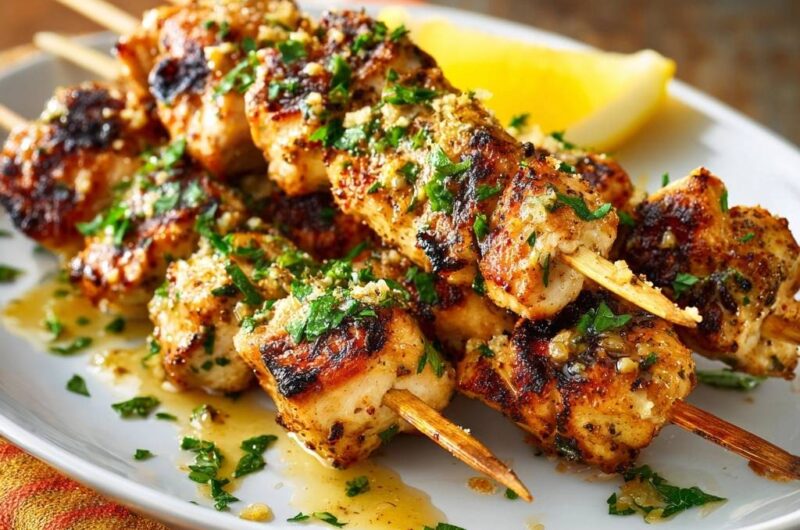
- Skewer: Thread the chicken tightly onto the soaked skewers. Packing the pieces closely together, as shown in the image, helps the meat retain internal juices and prevents the wooden skewers from burning.
- The Sear: Heat a grill pan or outdoor grill to medium-high heat. Lightly oil the grates. Place skewers on the grill and sear for 3 to 4 minutes per side. Do not move them prematurely; allow a dark, charred crust to form to lock in the moisture.
- The Garlic Butter Finish: While the chicken cooks, whisk the melted butter with the remaining fresh garlic, lemon zest, and chopped parsley.
- Baste and Rest: Once the chicken reaches an internal temperature of 160°F (it will rise to 165°F while resting), remove from heat. Immediately brush the garlic butter mixture generously over the hot skewers.
- Serve: Let the meat rest for 3 minutes to allow the juices to redistribute. Serve with extra lemon wedges and the remaining garlic butter from the plate for dipping.
Notes
- For the juiciest results, use chicken thighs. If using wooden skewers, ensure they are soaked in water for at least 30 minutes to prevent burning. Do not marinate longer than 2 hours as the lemon juice can change the texture of the meat.