Most people have a love-hate relationship with halloumi because it often ends up feeling like a rubbery, squeaky eraser in the mouth. However, when you treat this “grilling cheese” with the right technique, it transforms into a salty, savory masterpiece with a crust that shatters under your teeth. This Mediterranean Halloumi and Chickpea Stew is designed to fix that texture frustration once and for all.
If you dislike halloumi’s texture, explore Mediterranean halloumi rice bowls for a smoother bite.
The flavor profile here is a bold balance of smoky paprika, jammy tomatoes, and the bright acidity of blistered vine tomatoes. Therefore, the contrast between the deeply seared, warm cheese and the soft, spice-laden chickpeas creates a mouthfeel that is far superior to your average vegetable stew. It’s a hearty, comforting meal that feels like a weekend project but actually comes together in just 40 minutes.
The secret to success lies in the moisture management of the cheese. If you want that perfect golden-brown finish, you must pat the halloumi planks bone-dry before they ever touch the pan. In addition, timing the sear so the cheese moves directly from the skillet to the bowl ensures the proteins stay soft and pliable rather than tightening up into a chewy mess.
For a different take on halloumi, check out this crispy halloumi power bowl.
The Science of Searing Halloumi Without the Rubber
Halloumi is a unique cheese because it has an incredibly high melting point. During its production, the curds are heated in whey, which creates a dense, heat-resistant protein structure. Consequently, you can toss it directly into a hot pan without it turning into a puddle of grease. However, that same protein density is what causes the dreaded “squeak” if the cheese isn’t cooked properly.
Moisture is the absolute enemy of a good sear. If there is surface water on the cheese, it creates a layer of steam when it hits the oil. This steam prevents the Maillard reaction—the chemical process that creates those delicious brown, savory crusts—and instead boils the outside of the cheese. This results in a tough, rubbery texture that lacks flavor.
This recipe utilizes a hybrid searing approach. By using a non-stick skillet with a small amount of olive oil over medium-high heat, you get the best of both worlds. The dry surface of the cheese allows for immediate browning, while the oil helps conduct heat into the nooks and crannies of the cheese planks. This ensures the interior softens into a gooey, marshmallow-like consistency just as the exterior reaches a deep mahogany brown.
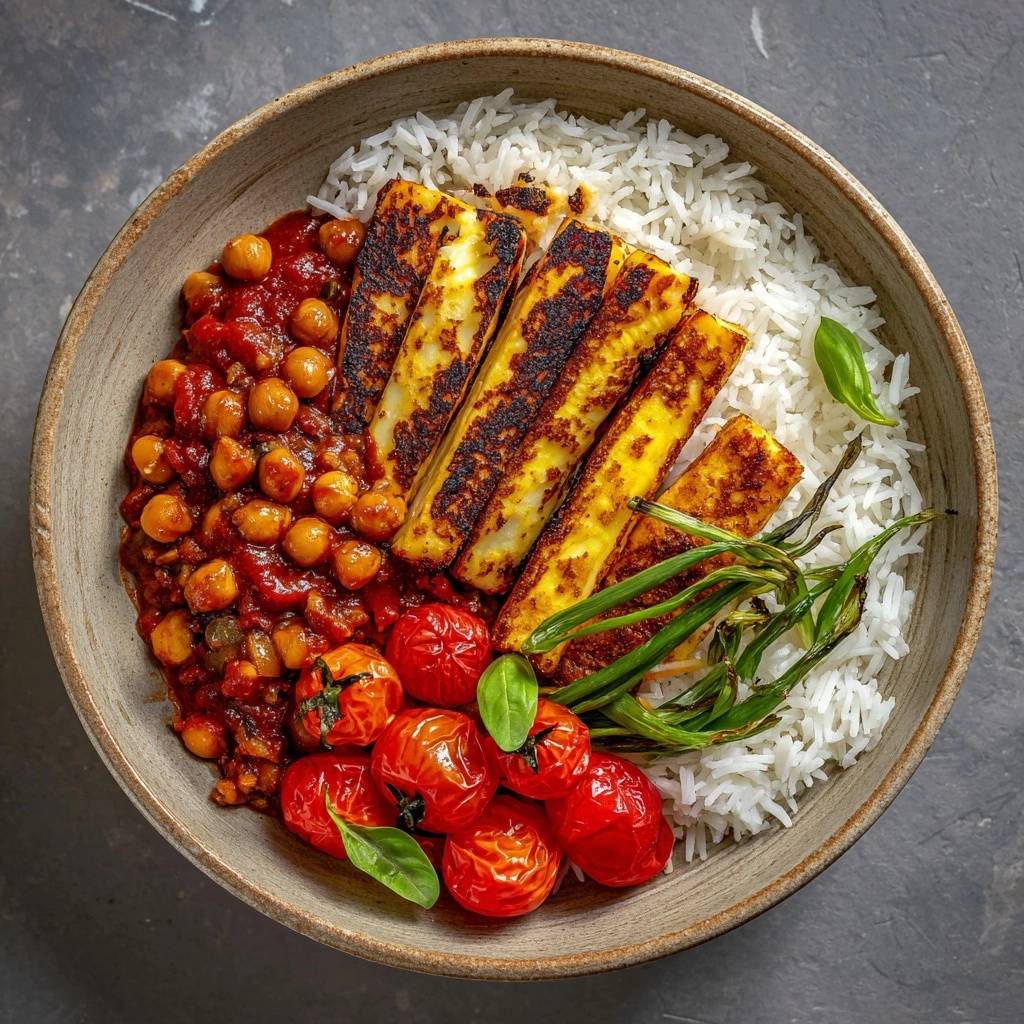
Essential Components for Mediterranean Halloumi and Chickpea Stew
Choosing the right base is vital for soaking up the rich sauce. Basmati rice is the preferred choice here because its long, slender grains stay separate and fluffy. Unlike short-grain rice, which can become sticky or gummy, Basmati offers a floral aroma that complements the smoky spices in the stew without competing for attention.
For the vegetables, jarred roasted red peppers are a total game-changer. Because they are already peeled and softened in brine, they provide a concentrated sweetness and a silky texture that fresh peppers simply can’t match in a short cook time. They melt into the sauce, adding body and a subtle charred undertone that ties the whole dish together.
Tomato paste acts as the “flavor anchor” in this recipe. When you sauté it with the onions and garlic, it undergoes a process called pincé, where the sugars caramelize and the raw metallic taste disappears. This provides a deep umami backbone that makes the stew taste like it has been simmering for hours. Furthermore, using high-quality smoked paprika (Pimentón) is essential for mimicking a wood-fired flavor profile that elevates the dish from simple to gourmet.
Selecting the Right Chickpeas and Tomatoes
While dried chickpeas are great for some dishes, canned chickpeas are actually superior for this specific stew. The liquid in the can contains starches that, when rinsed slightly but not completely, help thicken the “jammy” sauce. This creates a cohesive texture where the legumes are suspended in a rich coating rather than swimming in a thin liquid.
Similarly, crushed tomatoes are the best choice for the sauce base. They provide a much better coating for the chickpeas than diced tomatoes, which often stay chunky and watery. Crushed tomatoes break down quickly, allowing the sauce to reduce into a thick, concentrated glaze that clings to every ingredient in the bowl.
Step-by-Step: Building the Jammy Chickpea Base
The first phase of this stew is the soffritto. You’ll want to sweat the finely diced onions in olive oil until they are translucent and soft. This step is crucial because it releases the natural sugars in the onion, providing a sweet base to balance the acidity of the tomatoes. If you rush this and brown the onions too quickly, you’ll lose that foundational sweetness.
Once the onions are soft, it’s time for blooming the spices. Adding the smoked paprika and oregano directly to the warm oil allows the fat-soluble flavor compounds to release. You’ll notice the aroma immediately intensifies. Therefore, keep the heat moderate during this stage so the garlic and spices don’t scorch, which would introduce a bitter aftertaste to the entire pot.
The final phase is the reduction. After adding the crushed tomatoes and peppers, let the mixture simmer on low. You are looking for specific visual cues: the sauce should darken, and the oil should just begin to separate from the tomato solids at the edges of the pan. This “jammy” consistency is the goal. If the sauce looks too thin, keep simmering; if it gets too thick, a splash of water will loosen it right back up.
Technique: Achieving the Perfect Golden Halloumi Crust
Heat management is everything when it comes to the halloumi. You need the pan to be hot enough to sear the outside quickly before the inside loses too much moisture. Once you place the dry cheese planks into the hot oil, do not move them. Let them sit undisturbed for at least two minutes so the crust can fully develop and release naturally from the pan.
Watch for the “Glistening Point.” This is when the edges of the cheese start to look slightly translucent and soft, indicating the heat has penetrated the center. As soon as you flip them and see that deep golden-brown color, you’re almost there. In addition, you must move the cheese from the pan to the plate immediately. Carry-over cooking can happen fast, and leaving them in a hot pan will cause the proteins to harden back up.
Blistering Vine Tomatoes for Maximum Visual Impact
The charred cherry tomatoes aren’t just a garnish; they serve a vital culinary purpose. By searing them on high heat until the skins blister and pop, you create a burst of fresh, hot acidity. This bright juice cuts right through the saltiness of the halloumi and the richness of the chickpea base, refreshing your palate with every bite.
To achieve a professional restaurant-style presentation, keep the tomatoes on the vine during the searing process. Use a pair of tongs to gently turn the entire cluster. This keeps the fruit intact and looks stunning when draped over the finished bowl. Just be careful not to overcook them, or they will fall off the vine and turn into a mushy sauce instead of distinct, blistered jewels.
Flavor Variations and Ingredient Swaps
If you prefer a bit of heat, you can easily adapt this recipe by stirring in a tablespoon of Harissa paste or a sprinkle of Aleppo pepper during the spice-blooming phase. These additions provide a complex, fruity heat that pairs beautifully with the smoked paprika. For those wanting more greens, you can fold in a handful of baby spinach or chopped kale during the last two minutes of simmering.
If you can’t find chickpeas, butter beans make an excellent creamy alternative. Their larger size and velvety texture provide a different but equally satisfying mouthfeel. For a more briny, traditional Mediterranean twist, try adding a tablespoon of drained capers or some chopped preserved lemon. These ingredients add a sharp, salty punch that complements the halloumi perfectly.
Troubleshooting Common Stew Consistency Issues
If your stew looks too watery after the simmering time, don’t panic. A quick fix is to use the back of a wooden spoon to mash a small handful of chickpeas against the side of the pot. The released starch acts as a natural thickener, instantly giving the sauce a creamier, more cohesive texture. This is a great trick for any legume-based dish.
Sometimes, if the heat was too high during the spice-blooming phase, the paprika can taste slightly bitter. You can balance this out by adding a tiny pinch of sugar or an extra teaspoon of tomato paste. The sweetness and acidity will neutralize the bitterness. Additionally, if your rice ends up a bit mushy, spread it out on a large baking sheet for a few minutes to let the excess steam escape and the grains firm up.
Expert Tips for Serving and Presentation
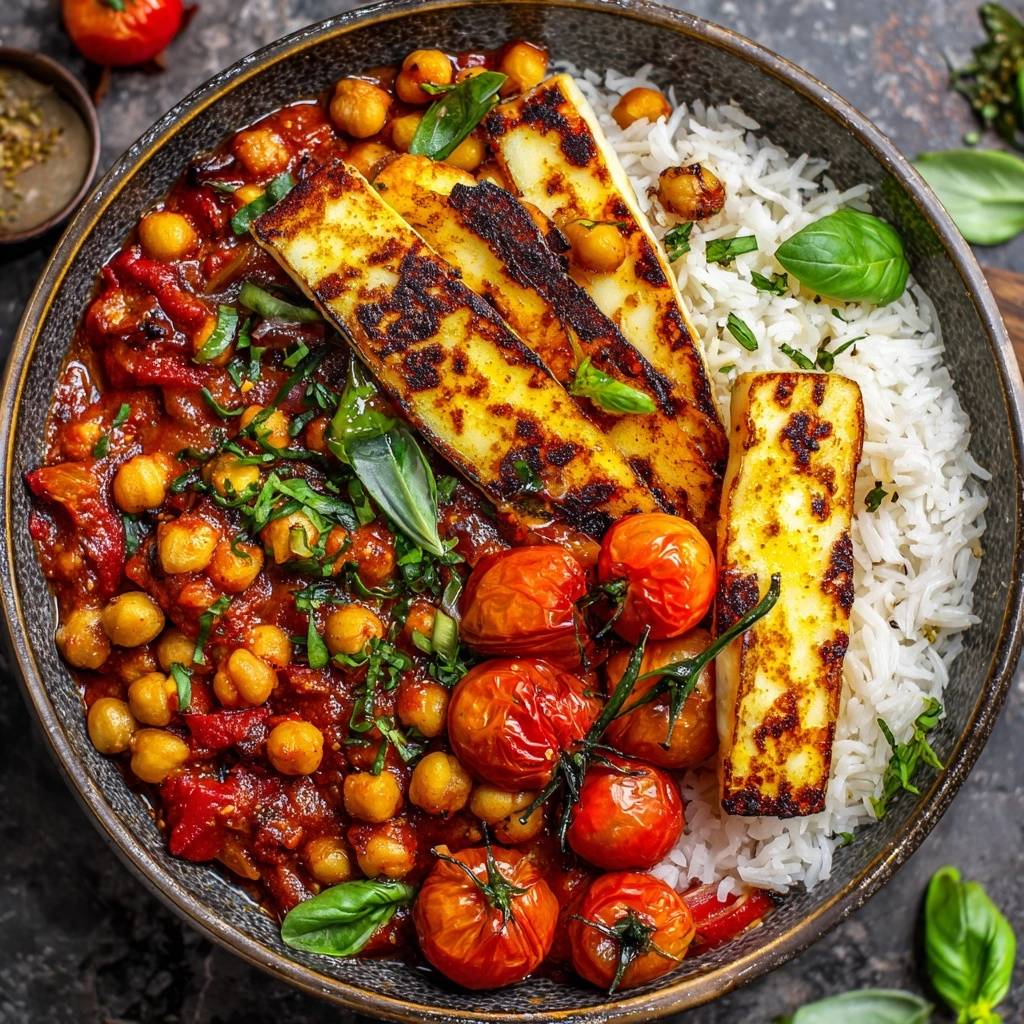
When it comes to “Bowl Construction,” presentation affects the eating experience. Instead of pouring the stew over the rice, place them side-by-side in the bowl. This prevents the rice from absorbing too much liquid and becoming soggy, allowing you to control the ratio of rice to stew in every spoonful. It also keeps the colors vibrant and distinct.
The final touch is the basil chiffonade. You should only slice and add the fresh basil at the very last second. Basil oxidizes and wilts almost immediately when it hits heat or air. By adding it just before serving, you ensure the bright, peppery aroma is at its peak. Lay the charred halloumi across the center of the bowl as the star of the show, topped with those beautiful blistered tomatoes.
Storage and Reheating for Meal Prep
This chickpea stew base is a fantastic candidate for meal prep because the flavors actually improve after 24 hours in the fridge. As the dish sits, the spices marry and the sauce becomes even more deeply flavored. Store the stew and rice in airtight containers for up to four days. However, keep in mind that halloumi is best enjoyed fresh.
When reheating, avoid the microwave for the cheese if possible, as it will almost certainly become rubbery. Instead, reheat the chickpea base on the stove or in the microwave, but re-sear fresh halloumi planks in a skillet for two minutes. This ensures you still get that contrast of the crispy crust and soft interior. If you must reheat the cheese, do it very briefly on a lower power setting.
Frequently Asked Questions
Can I make this recipe vegan?
Yes, you can easily adapt this dish. Use a block of extra-firm tofu that has been pressed to remove all moisture. Slice it into planks and sear it with a dusting of nutritional yeast and salt to mimic the savory, salty profile of halloumi. Alternatively, many grocery stores now carry vegan grilling cheeses specifically designed to be seared without melting.
Why is my halloumi still squeaky?
The “squeak” is caused by the long-chain proteins in the cheese rubbing against the enamel of your teeth. To minimize this, make sure your slices aren’t too thick—about half an inch is perfect. A harder, darker sear also breaks down some of those surface proteins, which significantly reduces the squeaking sensation while providing more flavor.
What can I use if I don’t have Basmati rice?
If Basmati isn’t in your pantry, couscous is a wonderful alternative that takes only five minutes to prepare. Quinoa also works well for a nuttier flavor and extra protein. If you want to skip the grains entirely, serve the stew with warm pita bread or crusty sourdough to scoop up the jammy chickpeas and cheese.
Completing Your Mediterranean Meal
Here are some ideas to round out your halloumi and chickpea stew.
- For a perfect bread to soak up all the flavorful stew, consider making Garlic Naan.
- If you’re looking for a lighter accompaniment that still brings Mediterranean flavors, this Mediterranean Bow-Tie Pasta Salad would be a great choice.
Is this stew freezer-friendly?
The chickpea and roasted pepper base freezes beautifully for up to three months in an airtight container. However, I do not recommend freezing the cooked rice or the halloumi. Rice can become grainy when thawed, and halloumi loses its signature texture. For the best results, freeze the stew base and simply prepare fresh rice and cheese when you’re ready to eat.
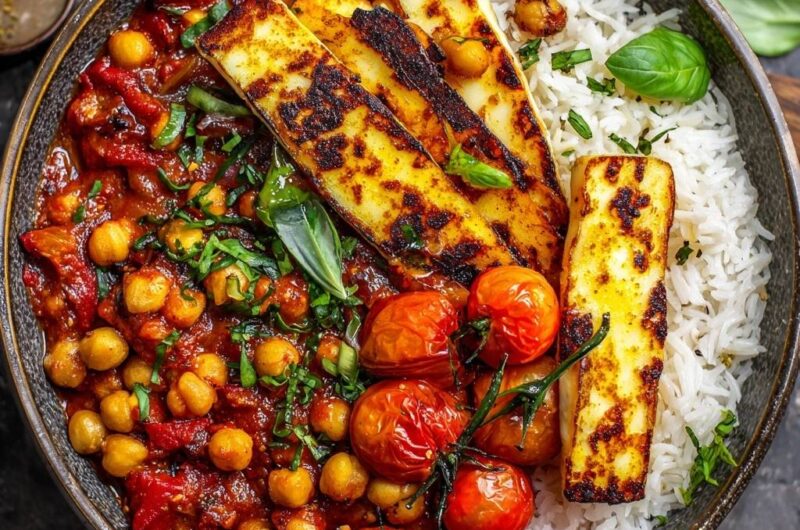
Halloumi and Chickpea Stew
Course: Main CourseCuisine: MediterraneanDifficulty: easy4
servings15
minutes25
minutes485
kcal40
MinutesA rich and jammy chickpea and roasted red pepper stew topped with expertly seared halloumi cheese and blistered cherry tomatoes.
Ingredients
2 blocks (approx. 8oz each) halloumi cheese, sliced into long, thick planks
2 cans (15oz) chickpeas, drained and rinsed
1 jar (12oz) roasted red peppers, drained and sliced into strips
1 can (15oz) crushed tomatoes
1 tablespoon tomato paste
1 cup cherry tomatoes on the vine
2 cups basmati rice
3 cloves garlic, minced
1 small yellow onion, finely diced
1 tablespoon smoked paprika
1 teaspoon dried oregano
1/2 teaspoon red pepper flakes (optional)
3 tablespoons olive oil, divided
Fresh basil leaves, chiffonade (thinly sliced)
Salt and black pepper to taste
Directions
- Cook the basmati rice according to package instructions. Once finished, fluff with a fork, stir in a pinch of salt and a teaspoon of olive oil, and set aside.
- In a large skillet or Dutch oven over medium heat, add one tablespoon of olive oil. Sauté the diced onion for 4 minutes until translucent. Add the minced garlic and tomato paste, cooking for another minute until the paste darkens slightly.
- Stir in the chickpeas, sliced roasted red peppers, smoked paprika, and oregano. Season with salt and black pepper.
- Pour in the crushed tomatoes. Reduce heat to low and simmer for 15-18 minutes. The sauce should reduce until it is thick and jammy, coating the chickpeas heavily rather than being soupy.
- While the stew simmers, prepare the halloumi. To solve the rubbery texture issue, pat the cheese planks completely dry with a paper towel. Heat a separate non-stick skillet over medium-high heat with one tablespoon of olive oil (the oil helps achieve the dark, charred spots seen in the image).
- Place the halloumi planks in the hot pan. Sear for 2 to 3 minutes per side without moving them, until a deep, dark golden-brown crust forms. Remove from heat immediately once browned.
- In the same pan used for the cheese, add the remaining teaspoon of oil and the cherry tomatoes (keep them on the vine for presentation). Sear for 3-4 minutes until the skins blister and char slightly.
- To serve, fill half the bowl with the fluffy basmati rice and the other half with the thick chickpea stew. Lay the charred halloumi planks across the center. Top with the blistered vine tomatoes and a generous amount of fresh basil. Serve immediately while the cheese is hot and soft.
Notes
- The secret to tender halloumi is the dry-sear technique; pat the cheese completely dry before searing and serve immediately to maintain the soft texture.