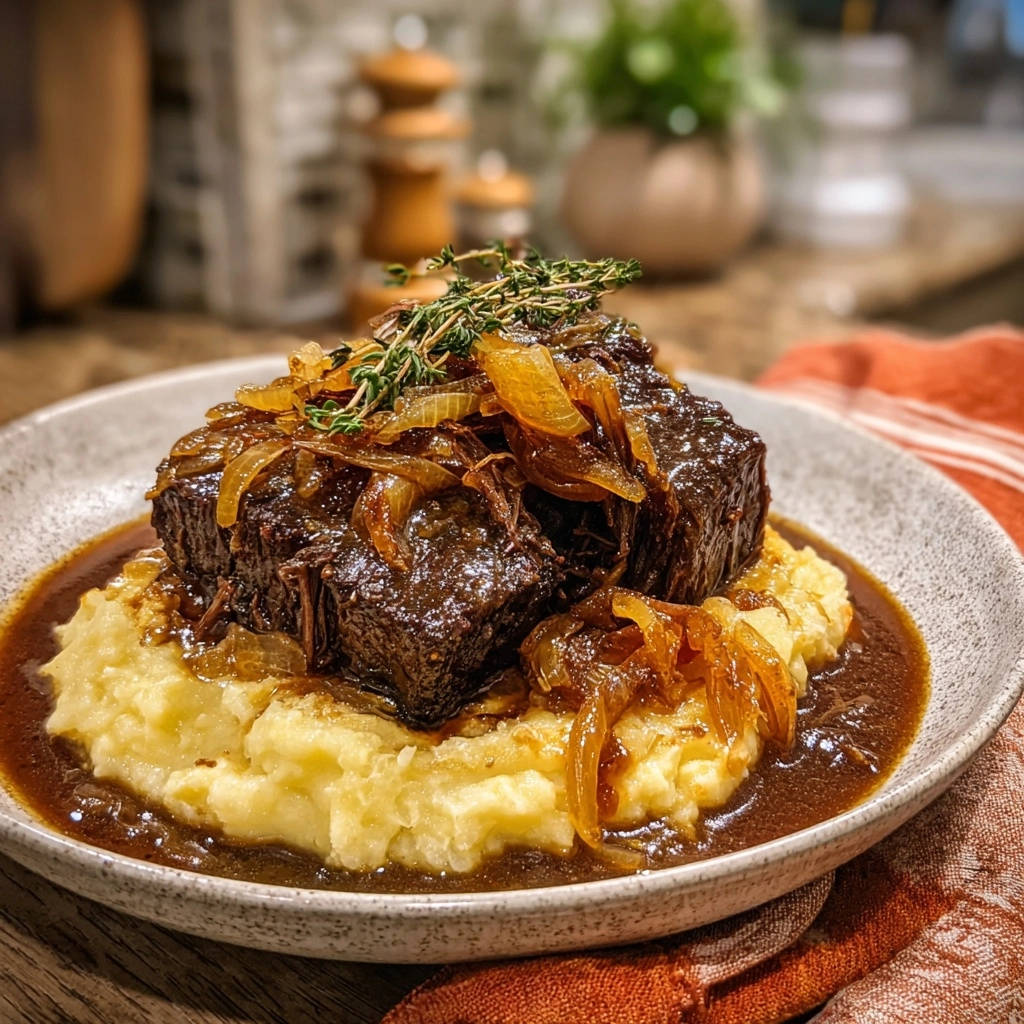
Making truly excellent braised beef often ends in frustration when the sauce is thin and pale, missing that signature depth and glossy richness. I developed this precise technique to guarantee a rich mahogany sauce every time, establishing that deep, concentrated flavor base early on.
Master this foundational step, and you will unlock the secret to phenomenal, melt-in-your-mouth Slow-Cooked Beef Short Ribs.
The Velvety Sauce Secret: Why This Recipe Is Restaurant-Quality
Achieving Depth of Flavor Without Slurry
Adding thickeners like cornstarch or flour at the very end of cooking often results in a dull, muted flavor profile and a texture that can feel artificially thick or chalky.
If you enjoy this slow-braised beef, you might also like slow-braised beef and apricot stew.
Our goal is to build the body and color naturally, integrating the thickening agents and flavor compounds directly into the foundational layer, allowing them to transform during the long braise.
The Crucial Role of Fond and Caramelization
Fond refers to the flavorful browned bits left clinging to the bottom of the pot after searing the beef, which are packed with concentrated flavor molecules.
When combined with deeply caramelized onions, these molecules react during deglazing to create savory amino acids (umami) and natural sugars that provide texture and the desired rich, dark color.
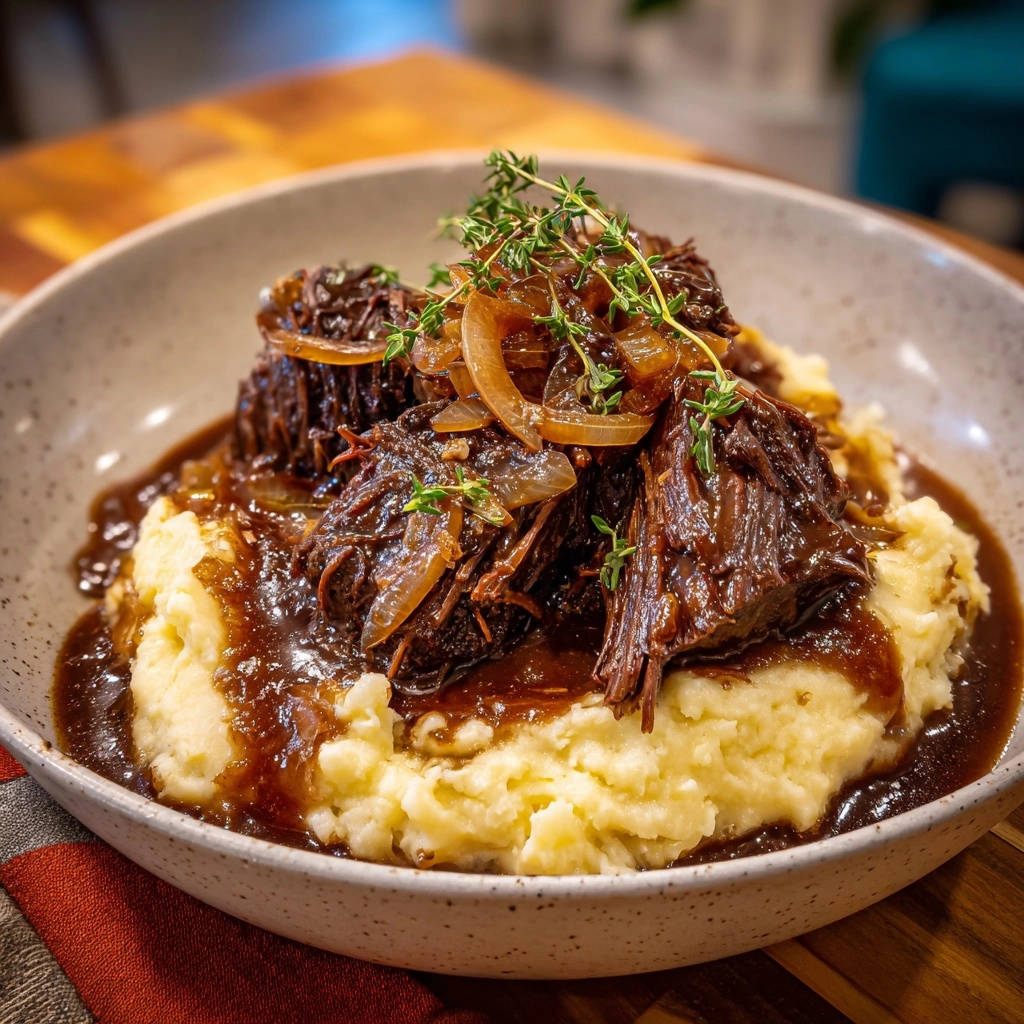
Maximizing Tenderness: The Magic of Low and Slow
The magic of braising lies in the slow breakdown of tough collagen connective tissue, transforming it into succulent, unctuous gelatin.
Maintaining a steady, low temperature of 325°F is ideal for this slow transformation, ensuring the short ribs become meltingly tender without drying out or seizing up.
The Building Blocks: Sourcing Your Short Ribs and Flavor Base
Selecting the Perfect Cut of Beef
While bone-in short ribs offer flavor from the marrow, this recipe specifically uses boneless short ribs for easier trimming, consistent cooking, and simplified serving.
Look for short ribs trimmed to about two-inch chunks, ensuring they have visible, fine streaks of fat (marbling) for maximum moisture retention and flavor release during the braise.
The Essential Aromatics and Acidic Punch
Onions are not merely aromatics here; cooking them for 10 to 12 minutes until they are deeply caramelized provides essential sweetness and bulk for the sauce base.
The minced garlic and tomato paste are crucial for concentrated umami; the paste must be cooked out until it darkens slightly to remove any harsh, raw flavor.
The balsamic vinegar provides a necessary acidic counterpoint to the richness, balancing the dish while simultaneously helping to fully dissolve the flavorful fond during the deglazing step.
The Role of Flour in Searing and Sauce
A light dredging of all-purpose flour performs two important tasks: it helps achieve a deeper, more robust crust during the initial sear on the beef chunks.
Secondly, the residual flour left in the pot absorbs some oil, acting as the very early stage of a roux that helps naturally thicken the braising liquid later on.
Essential Gear for Slow-Cooked Success
Why the Dutch Oven is Non-Negotiable
Heavy, enameled cast iron offers superior heat retention and distribution, which is crucial for uniform searing and stable braising temperatures in the oven.
The pot’s density ensures that the internal oven temperature remains consistent, and the tight-fitting lid prevents valuable steam and moisture loss over the long cooking period.
Prep Tools That Streamline the Process
The Right Knife: A sharp chef’s knife is necessary for trimming the short ribs and slicing the large quantity of onions thinly and uniformly.
Sturdy Tongs: Crucial for safely turning and handling the hot, heavy short ribs during the searing process without damaging the beautiful crust you worked to build.
A Reliable Whisk: Key for ensuring the flour and seasonings are perfectly mixed into the dredging station, guaranteeing an even coat on the meat.
From Sear to Simmer: Mastering the Slow-Cooked Short Ribs Technique
-
Prep the Beef and Sear:
Patting the beef exceptionally dry is the first crucial step to ensure a deep, dark crust, rather than steaming the meat in its own juices.
Sear the short ribs in batches and resist the urge to crowd the pan; proper browning (3 to 4 minutes per side) is non-negotiable for maximum initial flavor extraction.
-
THE RICH SAUCE TECHNIQUE (Caramelization):
This is the most time-intensive stovetop step, requiring patience. Cook the onions slowly for 10 to 12 minutes until they are a rich golden-brown color, continuously scraping up all the savory fond from the searing stage.
If the onions begin to burn or darken too quickly, reduce the heat immediately; they should be caramelized, not scorched.
-
Building the Flavor Base:
Once the onions are ready, add the garlic and tomato paste and cook for exactly two minutes, stirring constantly until the paste darkens slightly.
This process of ‘cooking out’ the tomato paste removes its metallic edge and activates its deep, concentrated umami flavor.
-
Deglaze and Simmer:
Pour in the balsamic vinegar and use a wooden spoon to vigorously scrape the bottom of the pot again, ensuring every browned bit is fully dissolved into the liquid base.
Allow the vinegar to reduce for 60 seconds until syrupy, as this brief reduction greatly intensifies its flavor profile before the bulk of the beef stock is added.
-
The Braise: Time and Temperature Control:
Return the short ribs to the pot, ensuring they are mostly submerged in the liquid, and cover the Dutch oven tightly to prevent moisture loss.
The 3.5-hour duration is a guide; the true indicator of doneness is when the beef is meltingly tender and can easily be pulled apart with gentle pressure from a fork.
-
Finishing and Reducing the Sauce:
Carefully remove the tender ribs to a separate plate; this separation allows the sauce to reduce efficiently without overcooking or damaging the beef.
Simmer the remaining sauce vigorously on the stovetop until it naturally reduces and thickens to a glossy consistency that coats the back of a spoon (typically 5 to 10 minutes).
Crafting the Ultimate Accompaniment: Silky Mashed Potatoes
The Secret to Light and Fluffy Mash
After draining the boiled potatoes, immediately return them to the low heat for 60 seconds to steam away excess surface moisture.
This critical step prevents the mash from becoming waterlogged or grainy when you introduce the fats.
Whipping in warmed milk and softened butter, rather than cold additions, ensures the fat and liquid emulsify smoothly into the hot potatoes for a perfect texture.
Perfect Seasoning and Texture
Always season the boiling water generously with salt, as this is the only way to season the potato from the inside out.
Be extremely careful not to over-mash the cooked potatoes, as excessive manipulation releases starch and results in a thick, unappetizingly gluey texture.
Chef’s Secrets: Elevate Your Slow-Cooked Beef Short Ribs Game
Skim the Fat: If time allows, chill the entire pot of braised short ribs and sauce overnight after Step 5. This allows the fat layer to solidify on top, making it effortless to skim before reheating and completing the sauce reduction.
Boosting the Broth: For deeper, more complex flavor, swap 1 cup of beef stock for a full-bodied red grape juice, such as sparkling grape juice, during the deglazing step.
The Herb Advantage: While thyme and bay leaf are essential for warmth, adding a few fresh rosemary sprigs during the last hour of braising can contribute an earthy depth and complexity.
Troubleshooting Common Braising Issues
Problem: My Sauce Tastes Flat or Bitter
Ensure you cooked the tomato paste long enough to activate its flavor, or that you used enough fond from the initial sear.
If the final sauce tastes bitter, add a tiny pinch of sugar or a splash more balsamic vinegar at the very end to help balance and lift the overall acidity.
Problem: The Short Ribs Are Still Tough After 3 Hours
Every oven varies, and sometimes the collagen needs more time to fully break down into gelatin.
Cover the pot again tightly and return it to the oven for another 30 to 60 minutes; tenderness is achieved purely by time and low heat, not by increasing the temperature.
Problem: The Meat is Too Dry or Stringy
If the braising liquid didn’t fully cover the ribs, or if steam escaped due to a loose lid, the exposed meat can dry out quickly.
Next time, check the pot halfway through the braise and add a splash more broth if needed to keep the short ribs mostly submerged in the liquid.
Serving, Storage, and Preparation FAQs
Can I Make Slow-Cooked Beef Short Ribs Ahead of Time?
Yes, and making them a day ahead is highly recommended because the flavor deepens significantly overnight as the ingredients meld.
Follow steps 1 through 5, then cool and refrigerate the entire pot; on the day of serving, skim the fat, reheat gently, and then complete Step 6 (finishing and reducing the sauce) before plating.
How Long Do Leftovers Last?
Store cooked short ribs and sauce together in an airtight container in the refrigerator for up to 3 to 4 days.
The luxurious sauce will likely thicken considerably when cold due to the natural gelatin, but it will loosen beautifully upon reheating.
What Are the Best Alternative Side Dishes?
While creamy mashed potatoes are the traditional accompaniment, rich, cheesy polenta, smooth risotto, or broad egg noodles such as pappardelle are excellent options.
All of these sides are perfect for soaking up every drop of the decadent, glossy braising sauce.
For similar depth in a hearty broth, explore slow-simmered savory beef stew.
Ready to Impress? Share Your Slow-Cooked Beef Short Ribs Masterpiece!
Following this precise method, particularly the crucial early sauce technique, ensures you achieve the deep, luxurious flavor and velvety texture associated with high-end braised dishes.
These Slow-Cooked Beef Short Ribs are the perfect meal for a cozy weekend dinner or for entertaining guests who truly appreciate authentic depth of flavor.
What to Serve with Your Slow-Cooked Beef Short Ribs
To round out your meal alongside these tender beef short ribs, consider these complementary dishes.
- For a comforting base, pair your ribs with these creamy mashed potatoes, perfect for soaking up extra sauce.
- Another excellent choice to complement the richness of the beef is this savory thyme beef stuffing.
We encourage you to try this technique and see the difference that a foundation built on deeply caramelized onions and savory fond makes. Don’t forget to leave a star rating and comment below with your results!
Beef Short Ribs
Course: Main CourseCuisine: AmericanDifficulty: medium4
servings30
minutes3
hours30
minutes950
kcal240
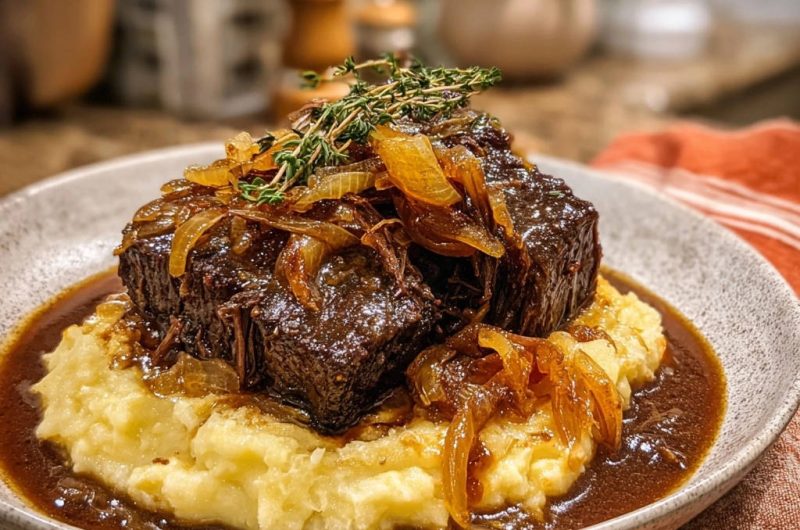
minutesThis recipe unlocks the secret to achieving intensely flavored, velvety braised beef short ribs every time. By properly caramelizing the onions and building a rich base at the start, you avoid thin sauces and guarantee a restaurant-quality depth of flavor. Serve over creamy mashed potatoes for the perfect hearty meal.
Ingredients
3 lbs boneless beef short ribs, trimmed and cut into 2-inch chunks
2 tablespoons all-purpose flour
2 teaspoons kosher salt, divided
1 teaspoon black pepper, divided
2 tablespoons neutral oil, divided
2 large yellow onions, sliced thinly
4 cloves garlic, minced
2 tablespoons tomato paste
1 tablespoon balsamic vinegar
4 cups beef stock or broth
4 sprigs fresh thyme
1 bay leaf
For the Mashed Potatoes:
3 lbs Russet potatoes, peeled and quartered
1/2 cup whole milk or cream
4 tablespoons unsalted butter
Salt and pepper to taste
Directions
- Prep the Beef and Sear: Pat the short ribs very dry. In a shallow dish, combine the flour, 1 teaspoon salt, and 1/2 teaspoon pepper. Dredge the short ribs lightly in the flour mixture, shaking off any excess. Heat a large Dutch oven or oven-safe pot over medium-high heat. Add 1 tablespoon of oil. Sear the short ribs in batches until deeply browned on all sides (about 3 to 4 minutes per side). Do not crowd the pan. Remove the beef and set aside.
- THE RICH SAUCE TECHNIQUE (The Key Step): Reduce the heat to medium. Add the remaining 1 tablespoon of oil to the pot. Add the sliced onions and cook, scraping up all the delicious browned bits (fond) from the bottom of the pot. Stir frequently and cook until the onions are soft and deeply caramelized, about 10 to 12 minutes. They should be a rich golden brown color, not just translucent.
- Build the Flavor Base: Add the minced garlic and tomato paste to the caramelized onions. Cook for 2 minutes, stirring constantly, until the tomato paste darkens slightly. This step activates the rich flavor.
- Deglaze and Simmer: Pour in the balsamic vinegar and scrape the bottom of the pot again, ensuring all the fond is fully dissolved into the mixture. Let the vinegar reduce for 1 minute until syrupy. Pour in the beef stock, add the thyme sprigs and bay leaf, and bring the liquid to a simmer. Stir to combine the thickened base with the stock.
- Braise: Return the seared short ribs to the pot, ensuring they are mostly submerged in the liquid. Cover the Dutch oven tightly and transfer to an oven preheated to 325 degrees F. Braise for 3 to 3.5 hours, or until the beef is meltingly tender and easily pulls apart with a fork.
- Finish the Sauce: Carefully remove the beef to a plate and cover lightly with foil. Remove the thyme stems and bay leaf from the pot. Place the pot over medium heat on the stovetop and let the sauce simmer vigorously for 5 to 10 minutes until it reduces slightly and thickens naturally to a rich, glossy consistency. Taste and adjust seasoning with salt and pepper.
- Make the Potatoes: While the beef braises, boil the quartered potatoes in salted water until fork-tender. Drain well. Return the potatoes to the pot and place over low heat for 1 minute to evaporate excess moisture. Mash thoroughly. Heat the milk and butter together until warm, then whip into the potatoes until smooth and fluffy. Season generously.
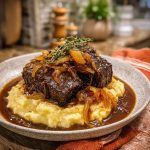
- Serve: Spoon a generous bed of mashed potatoes onto a plate, top with the rich beef short ribs, and spoon the decadent, glossy sauce and caramelized onions over the top. Garnish with fresh thyme.
Notes
- The key step is deeply caramelizing the onions and deglazing the fond to create a natural, glossy sauce base without relying on cornstarch.