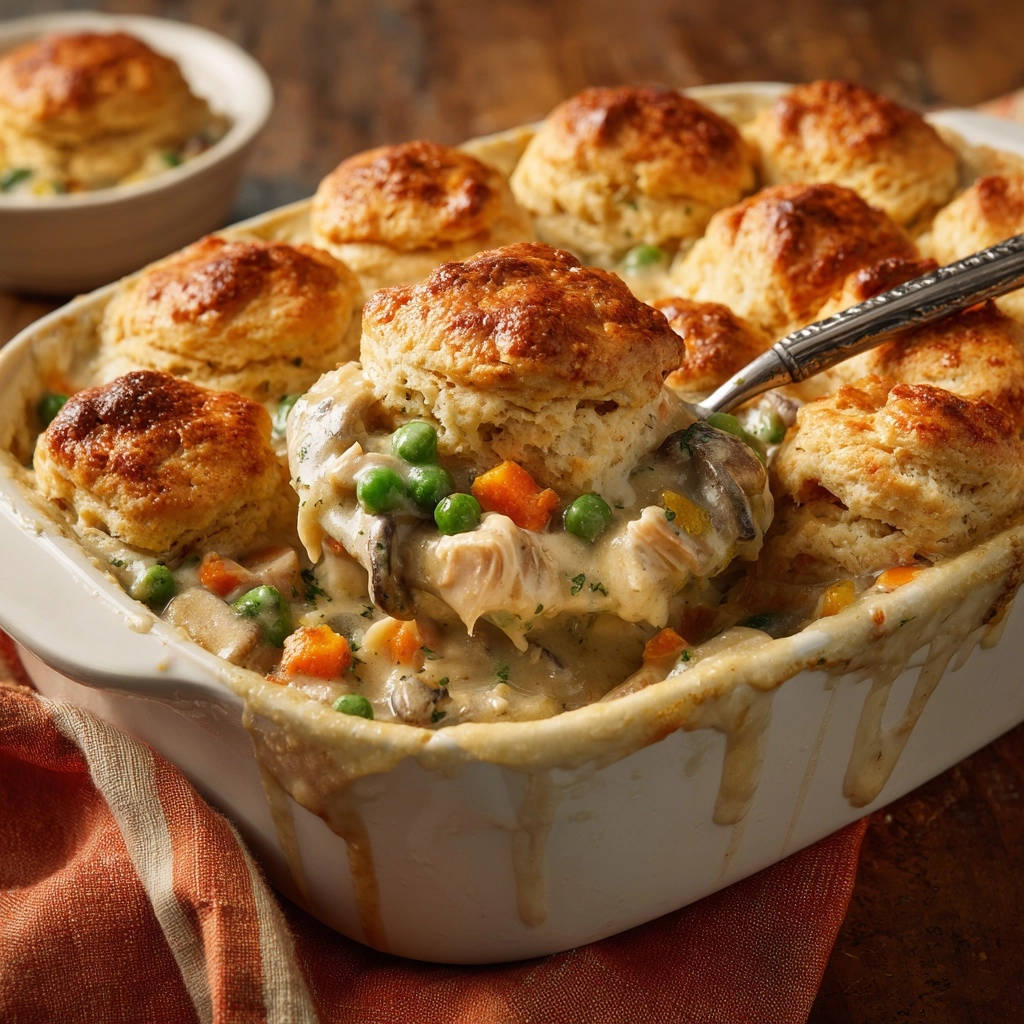
For years, I struggled with the classic tragedy of pot pie: a gorgeous golden top hiding a wet, dense, underbaked bottom. This simple adjustment-our unique high-boil sauce technique-is the revolutionary ‘soggy bottom fix’ that guarantees a light, fluffy topping every time, transforming this into the true Ultimate Biscuit-Topped Chicken Pot Pie.
This recipe focuses intensely on structural integrity in the filling, ensuring every bite of that creamy chicken mixture is perfectly matched with a tender, fully cooked biscuit. You can finally achieve that perfect contrast between creamy richness and satisfying crust.
The Ultimate Biscuit-Topped Chicken Pot Pie Secret: Eliminating the Soggy Bottom
The dreaded soggy bottom occurs when rising steam from the hot filling condenses directly into the dough base, turning it heavy and dense. Our entire methodology is designed to create a physical barrier to moisture migration.
To prevent that, you might prefer a flaky no-sog crust on your pot pie.
By maximizing the thickness of the filling before it ever enters the oven, we lock in the moisture below, ensuring the heat is used only to crisp the biscuits and bring the creamy chicken filling to a bubbling temperature.
Why Refrigerated Biscuits Are Perfect for This Recipe (And How to Handle Them)
Refrigerated biscuit dough offers unmatched consistency and structural stability, standing up better to the hot, heavy filling than a delicate homemade pastry might.
Their convenience means you spend less time preparing the topping and more time perfecting that incredibly creamy, thick chicken filling.
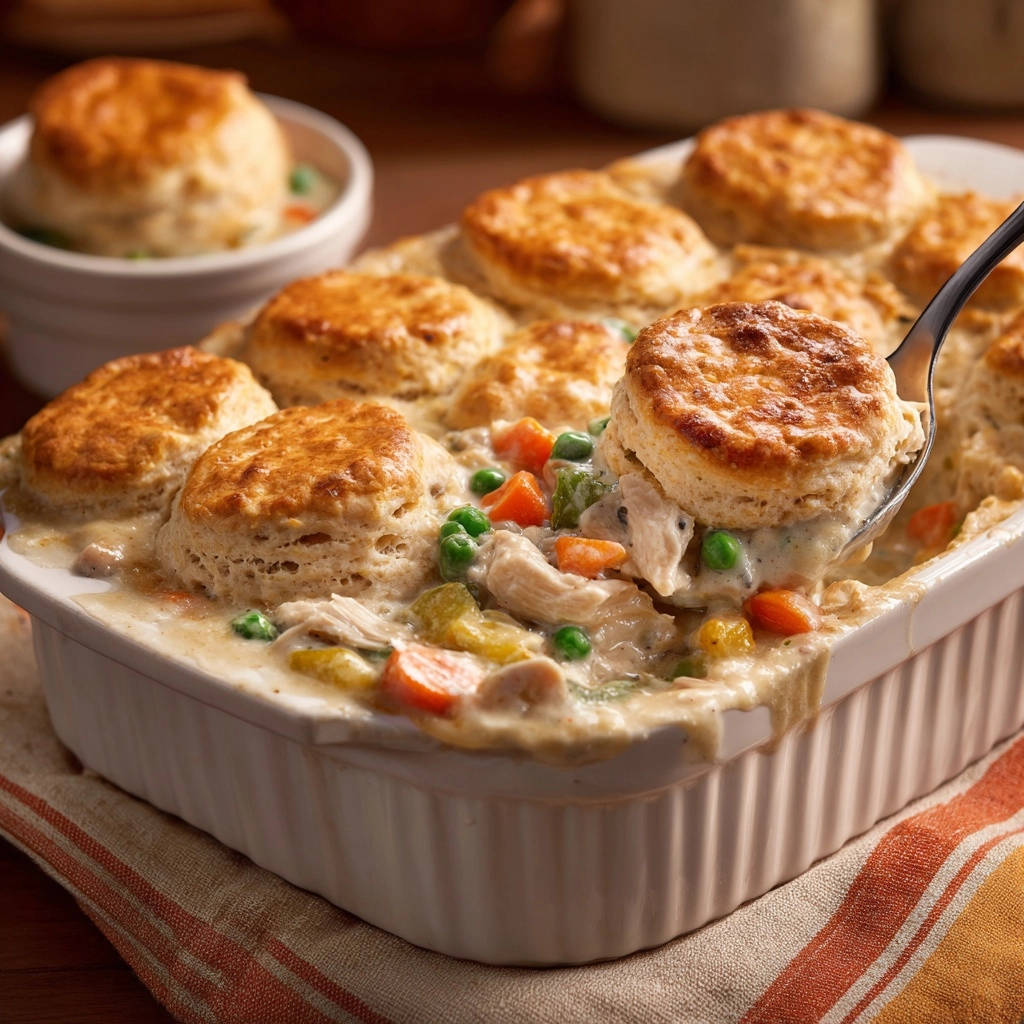
The Power of the High-Boil Roux Technique
A typical roux is only simmered, but this recipe demands a full, rolling boil for one minute after the liquid is added.
This rapid, high-heat step forces the starches in the flour to fully activate and achieve maximum gelatinization, resulting in a filling that is exceptionally thick and stable.
Assembling Hot: The Critical Temperature Strategy
We combine the hot, thickened filling immediately with the cold biscuit dough in the baking dish.
This temperature contrast immediately transfers heat to the base of the biscuits, starting the cooking process from the bottom up and helping them set before they can absorb any moisture.
Sourcing Your Ingredients: Building the Ultimate Pot Pie Flavor Base
Using quality ingredients, selected specifically for their texture, is essential for a standout meal. Here is everything you need to create this comforting classic.
- For the Filling: 2 tablespoons olive oil, 1 cup diced carrots, 1 cup sliced mushrooms, 1 cup frozen peas, 1 medium yellow onion (diced), 1 pound cooked chicken (shredded or diced), 1 teaspoon dried thyme, 1/2 cup unsalted butter (for roux), 1/2 cup all-purpose flour (for roux), 3 cups chicken broth (low sodium), 1 cup half and half or heavy cream, Salt and fresh black pepper to taste.
- For the Topping: 1 package (approx. 8 count) refrigerated buttermilk biscuit dough, 1 tablespoon melted butter.
Choosing the Best Chicken for Pot Pie
The simplest route is using pre-shredded rotisserie chicken, which is already seasoned and incredibly moist, saving significant prep time.
If cooking fresh, poaching boneless, skinless chicken breast keeps the meat tender and prevents it from drying out during the second bake in the pot pie.
For the most flavor, consider using dark meat like shredded chicken thighs, as they retain moisture better and offer a richer texture.
Dairy Decisions: Cream vs. Half-and-Half for Optimal Richness
Using heavy cream yields the richest, most decadent sauce due to its high butterfat content.
Half-and-half strikes a perfect balance, providing adequate richness while still allowing the roux’s thickening power to shine without the sauce becoming overwhelmingly heavy.
Vegetable Prep: Why Dicing Matters for Even Cooking
Dicing your hard vegetables, such as carrots and onions, to a uniform size (about half an inch) ensures they all soften simultaneously during the initial sautéing phase.
Mushrooms should be sliced to release their moisture quickly and achieve a slight browning, which concentrates their savory flavor.
Using frozen peas is ideal because they require no pre-cooking; they simply thaw and warm up when stirred into the hot, creamy filling.
Essential Equipment for a Perfect Ultimate Biscuit-Topped Chicken Pot Pie
Having the right tools is critical, especially when building a dense, cooked filling like this one. These pieces of equipment ensure control over heat and consistency.
The Importance of the Heavy-Bottomed Pot (Dutch Oven or Equivalent)
A heavy-bottomed pot, like a Dutch oven, is non-negotiable when making a roux.
It distributes heat evenly, preventing the butter and flour from scorching, and maintains the high heat needed to achieve a full, rolling boil for maximum thickening.
Selecting the Right Baking Dish (9×13 Standard)
The standard 9×13 inch baking dish is preferred because it allows the creamy filling to spread to an optimal, even depth.
This ensures that the center of the filling heats up at the same rate as the edges, guaranteeing a consistent bubble and a perfectly cooked biscuit topping.
Step-by-Step: Crafting Your Ultimate Biscuit-Topped Chicken Pot Pie Filling and Topping
-
Prepping the Pan and Oven:
Preheat your oven to a hot 400 degrees F (200 degrees C) to ensure the biscuits begin baking immediately.
Lightly grease a 9×13 inch baking dish; this simple step prevents the bottom crust from sticking and makes serving much easier.
-
Phase 1: Cooking Down the Vegetables:
Heat the olive oil in your heavy pot over medium heat, then add the diced carrots and onions.
Cook them until they are softened, about 5 to 7 minutes, before adding the mushrooms and dried thyme.
Continue cooking until the mushrooms have released all their moisture and browned slightly, then stir in the frozen peas and the shredded cooked chicken to combine.
-
Phase 2: Building the Perfect Roux Foundation:
Push the chicken and vegetables aside, creating a clean space on the bottom of the pot, then add the 1/2 cup of butter and let it melt completely.
Whisk in the 1/2 cup of flour immediately, stirring constantly for one minute until a smooth, slightly nutty-smelling paste forms; this cooks out the raw taste of the flour.
-
Phase 3: Achieving Max Thickness in the Sauce (The Critical Boil Step):
Gradually whisk in the chicken broth and the half-and-half or heavy cream until the sauce is completely smooth and free of lumps.
Bring the entire mixture to a full, rolling boil over medium-high heat, stirring frequently to prevent sticking or scorching on the bottom.
Boil for one full minute-this is the non-negotiable step that significantly thickens and reduces the liquid, locking in the consistency and preventing any chance of a soggy base later.
Reduce the heat and season the thick sauce generously with salt and pepper to ensure the entire dish is properly flavored.
-
Final Filling Prep:
Pour the hot, thickened chicken filling immediately into the prepared baking dish.
-
Fluffy Topping Assembly and Placement:
Separate the refrigerated biscuit dough pieces and arrange them evenly across the top of the steaming hot filling.
Ensure the biscuits are slightly touching each other but not overlapping, allowing them to rise properly without creating raw pockets; lightly brush the tops with melted butter for superior browning.
-
Baking to Golden Perfection:
Place the dish in the preheated 400 degree F oven and bake for 20 to 25 minutes.
The pie is done when the creamy chicken filling is bubbling vigorously and the biscuits are deeply golden brown; test for doneness by lightly pressing the center of a biscuit-it should spring back fully when cooked through.
For a decorative topping, explore golden lattice chicken pot pie techniques.
Deeper Dive: Why Boiling the Roux Sauce is Non-Negotiable
This specific technique elevates the sauce from a basic binder to a protective, structural element of the Ultimate Biscuit-Topped Chicken Pot Pie.
Understanding Starch Gelatinization and Maximum Thickness
Starch molecules in the flour require a high temperature, typically above 200°F (93°C), to fully absorb liquid and swell, a process called gelatinization.
Bringing the sauce to a full, rapid boil guarantees this temperature is reached and maintained throughout, resulting in a sauce that achieves its maximum potential thickness and stability.
Controlling Steam Condensation and Moisture Migration
A super-viscous, boiled sauce physically creates a dense barrier beneath the topping.
This high viscosity severely slows down the rate at which water vapor can rise and accumulate against the biscuit bases, effectively preventing the steam from turning into moisture and creating the dreaded “wet bottom.”
Chef’s Tips and Creative Variations for Your Next Pot Pie
Boosting Flavor: Roasting the Vegetables First
For an extra layer of depth, toss hard vegetables like carrots and potatoes with olive oil and roast them separately at 400°F for about 15 minutes.
Roasting caramelizes the natural sugars, adding a profound, sweet savoriness that sautéing alone cannot achieve.
Make-Ahead Magic: Prepping the Filling Safely
You can prepare the entire creamy chicken filling up to two days in advance, allowing it to cool completely before sealing it in an airtight container and refrigerating.
When ready to bake, gently reheat the filling on the stovetop until it is steaming hot before pouring it into the baking dish and topping with fresh, cold biscuits.
Adding Herbs: Beyond Thyme for Extra Depth
While thyme is essential, you can enhance the flavor by incorporating a touch of dried rosemary or sage during the sautéing phase to toast the spices.
For brightness, stir in a quarter cup of freshly chopped parsley or chives right after the sauce has boiled to retain their vibrant color and herbaceous flavor.
Quick Protein Swap: Using Turkey or Ham
This recipe is excellent for using up holiday turkey leftovers; simply ensure the meat is shredded and added in the final step with the vegetables.
If swapping in cooked ham, be mindful of the salt content and reduce the amount of salt added to the sauce until after the mixture has boiled.
Troubleshooting and FAQs: Solving Your Ultimate Biscuit-Topped Chicken Pot Pie Challenges
“My Biscuits Are Browning Too Quickly!”
If the biscuits reach your desired golden color after only 15 minutes, but the filling is not yet bubbling, they are likely finished cooking.
Loosely tent the top of the entire baking dish with aluminum foil; this shields the biscuits from direct oven heat, allowing the center filling to continue bubbling and cooking through without burning the crust.
Can I Use Milk Instead of Half-and-Half?
You can substitute whole milk, but understand the resulting sauce will be less rich and may require slight adjustment to achieve the desired thickness.
If using skim or 2% milk, consider increasing the flour in the roux by one additional tablespoon to ensure the final boiled consistency is robust enough to prevent sogginess.
Does This Recipe Work with Scratch-Made Biscuit Dough?
Yes, homemade biscuits work beautifully, but precision is key to ensuring they bake correctly on the hot filling.
Roll the dough to a consistent thickness of at least 3/4 inch and cut the pieces uniformly; chilling the finished dough rounds for 30 minutes before assembly helps them maintain their shape against the hot filling.
How to Store and Reheat Leftovers
Store any leftover pot pie, tightly covered, in the refrigerator for up to four days.
For best results, reheat individual servings in a moderate oven (350°F or 175°C) until the filling is hot and the biscuit tops have re-crisped.
Serving the Ultimate Comfort: Final Thoughts and Pairing Suggestions
The Ultimate Biscuit-Topped Chicken Pot Pie is a rich, satisfying, and complete meal, meaning side dishes should focus on light contrast.
Perfect Side Dishes to Complement Your Pot Pie
Pair the creamy richness of the pot pie with a simple, crisp green salad tossed with a sharp vinaigrette to cut through the heavy filling.
Lightly steamed green beans or asparagus, seasoned only with lemon zest and a pinch of salt, offer a fresh, balancing texture.
More Comforting Bites
Round out your chicken pot pie meal with these complementary dishes.
- Enjoy a taste of the South with this golden skillet cornbread, a great option for soaking up extra sauce.
- Add a touch of sweetness and tang with balsamic glazed pearl onions, a flavorful addition that pairs well with rich chicken.
The Importance of Resting (Or Lack Thereof)
Unlike fruit or cream pies that require time for the filling to set, this comfort classic is best served immediately.
The filling should be piping hot and bubbling when it reaches the table to deliver that intense, creamy warmth and tender biscuit contrast.
Mastering the high-boil roux technique is the only secret you need to eliminate the fear of a soggy bottom forever and create the perfect pot pie every time. Go ahead-gather your ingredients and prepare to deliver unparalleled comfort food that will quickly become your family’s favorite tradition.
Chicken Pot Pie
Course: Main CourseCuisine: AmericanDifficulty: medium6
servings20
minutes35
minutes550
kcal55
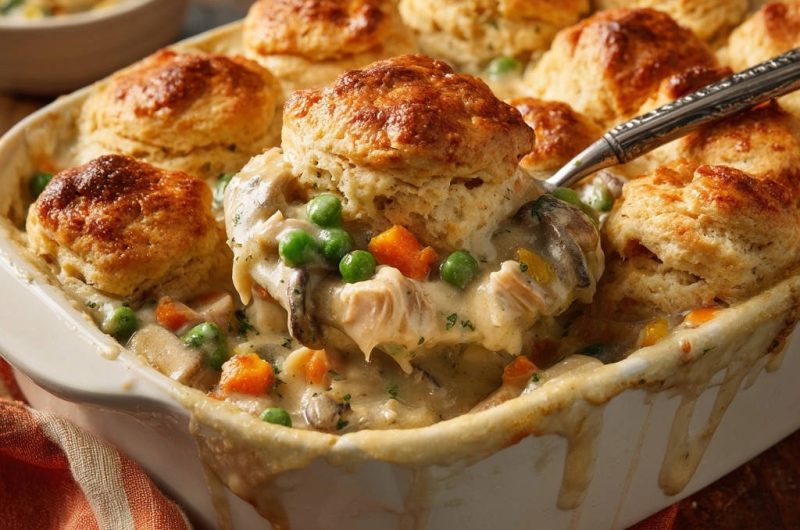
minutesThis comfort food classic features a simple technique—an extra-thick roux—to guarantee a creamy filling and light, fluffy biscuits all the way through, eliminating the dreaded soggy bottom. The rich chicken and vegetable filling is topped with golden buttermilk biscuits.
Ingredients
For the Filling:
2 tablespoons olive oil
1 cup diced carrots
1 cup sliced mushrooms
1 cup frozen peas
1 medium yellow onion, diced
1 pound cooked chicken, shredded or diced
1 teaspoon dried thyme
1/2 cup unsalted butter (for roux)
1/2 cup all-purpose flour (for roux)
3 cups chicken broth, low sodium
1 cup half and half or heavy cream
Salt and fresh black pepper to taste
For the Topping:
1 package (approx. 8 count) refrigerated buttermilk biscuit dough
1 tablespoon melted butter
Directions
- THE SOGGY BOTTOM FIX (Roux Technique): Preheat the oven to 400 degrees F. Lightly grease a 9×13 inch baking dish. This recipe relies on an extra-thick sauce to keep moisture away from the biscuits.
- Prepare the Vegetables: In a large Dutch oven or heavy pot, heat the olive oil over medium heat. Add the diced carrots and onions and cook until softened, about 5 to 7 minutes. Add the mushrooms and thyme and cook until the mushrooms have released their moisture and browned slightly, about 5 minutes. Stir in the frozen peas and the shredded cooked chicken.
- Build the Thick Roux: Push the chicken and vegetables to the side of the pot. Add the 1/2 cup of butter to the empty side and allow it to melt completely. Whisk in the 1/2 cup of flour immediately, stirring constantly for 1 minute until a smooth paste forms (this is the roux).
- Finish the Sauce: Gradually whisk in the chicken broth and the half and half or cream until the sauce is smooth. Bring the entire mixture to a full boil over medium-high heat, stirring frequently. Boil for 1 full minute. This rapid boil thickens and reduces the liquid significantly, locking in the consistency and preventing steam from turning the biscuit bases soggy later. Reduce the heat and season generously with salt and pepper.
- Assemble the Pot Pie: Pour the hot, thickened chicken filling into the prepared baking dish.
- Biscuit Placement: Separate the refrigerated biscuit dough. Arrange the biscuits evenly across the top of the hot filling, ensuring they are slightly touching but not fully overlapping. Brush the tops of the biscuits lightly with the melted butter.
- Bake to Fluffy Perfection: Place the dish in the preheated 400 degree F oven. Bake for 20 to 25 minutes, or until the filling is bubbling hot and the biscuits are deeply golden brown and cooked all the way through, meaning the center tops spring back when lightly touched. Serve immediately while the filling is piping hot.
Notes
- To ensure your biscuits get perfectly golden and fluffy, don’t overcrowd them on top of the filling; leave a little space for heat to circulate. For a richer flavor in your filling, consider using a combination of chicken broth and some of the reserved chicken cooking liquid if you have it.