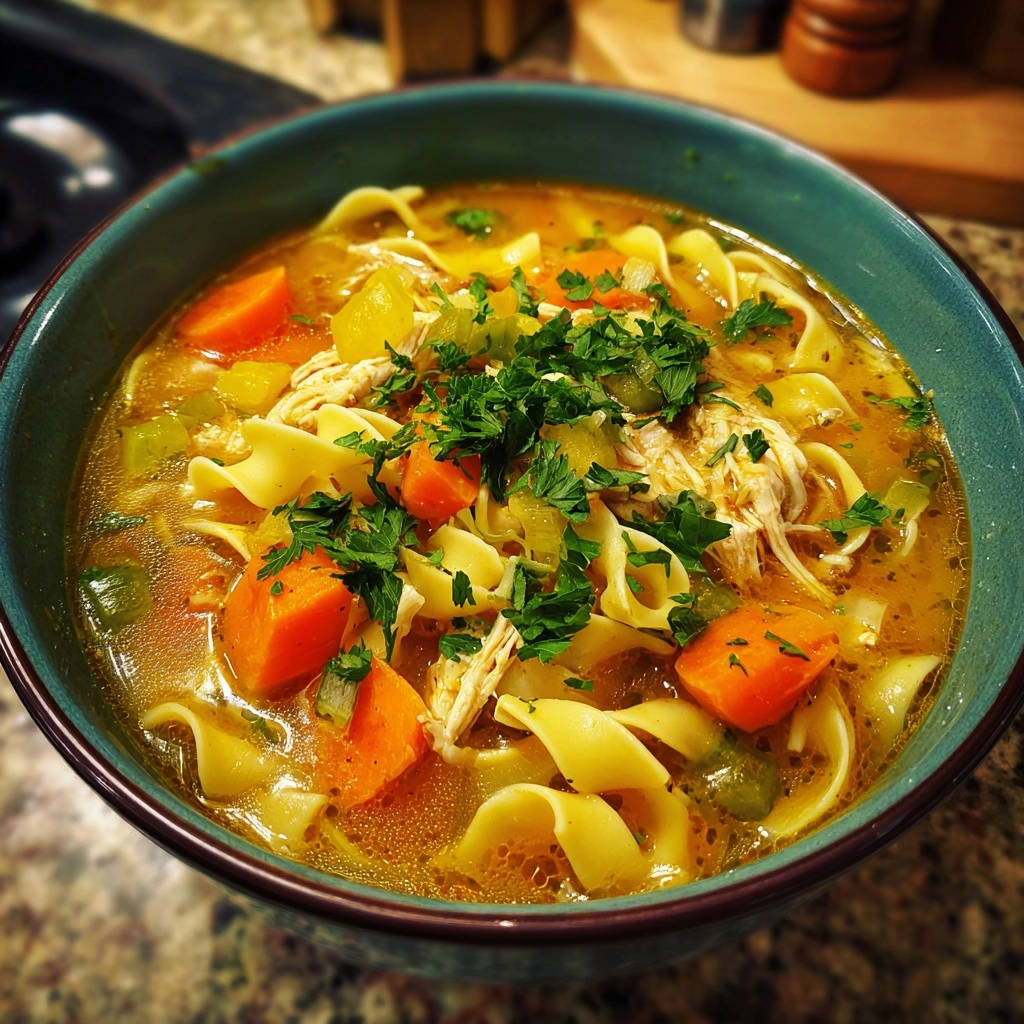
There’s nothing quite like a comforting bowl of Classic Chicken Noodle Soup, but the heartbreak of mushy noodles can ruin the experience. I’ve faced that disappointment countless times, and it inspired me to perfect a simple trick to ensure your noodles are always wonderfully tender, never soggy. This recipe delivers that perfect texture, making every spoonful a pure delight.
Why This Recipe is Your New Favorite Comfort Food
This isn’t just another soup recipe; it’s a meticulously crafted guide to a truly exceptional bowl of warmth.
The Magic of “Al Dente”: Say Goodbye to Mushy Noodles
Our secret lies in the precise timing of adding the noodles, ensuring they cook to a perfect al dente texture. This method guarantees a satisfying bite, preserving the integrity of every single noodle.
Speedy & Satisfying: Weeknight Warmth in Under an Hour
Crafted to be both quick and incredibly flavorful, this Classic Chicken Noodle Soup comes together in under an hour. It’s ideal for busy weeknights when you crave homemade comfort without the long wait.
Wholesome Goodness: Why This Soup Nourishes Body and Soul
Packed with fresh vegetables, lean chicken, and aromatic herbs, this soup is a nourishing meal that truly warms you from the inside out. It’s simple, honest food that feels like a hug in a bowl.
The Essential Pantry Staples for Unforgettable Flavor
Great soup starts with great ingredients, and this Classic Chicken Noodle Soup uses readily available staples.
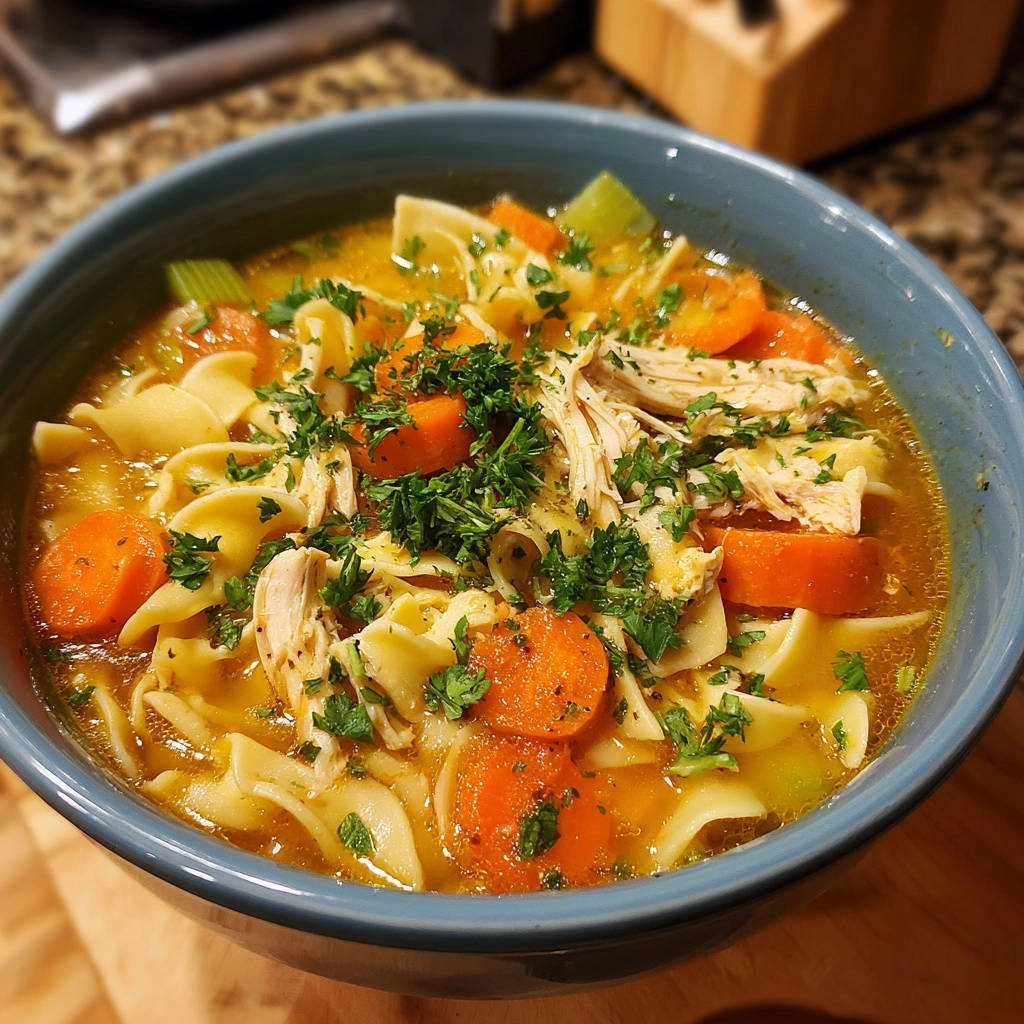
Crafting the Broth Base: Chicken & Liquid Gold
High-quality chicken broth is the foundation of this soup’s flavor; choose a low-sodium option to control seasoning. Cooked, shredded chicken provides a hearty, protein-rich element, perfect for using up leftovers or rotisserie chicken.
Aromatic Foundation: The Holy Trinity of Vegetables
Diced carrots, celery, and yellow onion, known as mirepoix, are sautéed to create a deep, savory base. Minced garlic adds a pungent, aromatic warmth that elevates the entire dish.
The Star Attraction: Choosing and Cooking Your Egg Noodles
Medium or wide egg noodles are ideal for their classic texture and ability to absorb the rich broth. Their quick cooking time is essential for achieving that desirable al dente bite.
Seasoning to Perfection: Herbs, Salt, and Pepper
Dried thyme and parsley flakes infuse the soup with traditional, earthy flavors. Salt and black pepper are crucial for seasoning the broth, bringing all the ingredients to life.
Tools for Your Chicken Noodle Soup Adventure
Gathering the right equipment ensures a smooth and enjoyable cooking experience.
Your Essential Cookware: The Pot That Does It All
A large pot or Dutch oven is perfect for this Classic Chicken Noodle Soup, providing ample space for sautéing and simmering. Its sturdy construction helps distribute heat evenly.
Basic Prep Gear: From Chopping to Stirring
You’ll need a reliable cutting board and a sharp knife for dicing vegetables. Measuring cups, spoons, and a sturdy ladle or spoon for stirring and serving will complete your setup.
Your Step-by-Step Journey to Perfect Classic Chicken Noodle Soup
Follow these steps closely for a truly satisfying and perfectly textured homemade soup.
-
Set the Stage: Sauté Your Aromatics
Heat olive oil in a large pot or Dutch oven over medium heat. Add diced carrots, celery, and onion. Cook for 5-7 minutes, stirring occasionally, until vegetables soften.
This initial sauté gently softens the vegetables and begins to build the complex flavor profile of your soup.
-
Awaken the Garlic: A Fragrant Addition
Add minced garlic to the pot and cook for 1 minute more until fragrant. Be careful not to let the garlic burn, as this can turn bitter.
The garlic’s fragrance signals it’s ready, releasing its pungent warmth into the developing broth.
-
Build the Broth: Liquid & Savory Elements
Pour in the chicken broth. Stir in the shredded chicken, dried thyme, dried parsley flakes, salt, and pepper. Bring the soup to a gentle simmer.
A gentle simmer allows the flavors to meld beautifully without overcooking the chicken, creating a harmonious base for your Classic Chicken Noodle Soup.
-
The “Never-Soggy” Secret: Perfectly Timed Noodles
Here’s the trick to perfectly tender, non-soggy noodles: Add the egg noodles to the simmering soup only during the last 5-7 minutes of cooking, or according to package directions for al dente.
Stir them in well to ensure they are fully submerged and cook evenly, preventing sticking and ensuring consistent texture.
-
Monitor & Master: Achieve Al Dente Perfection
Cook the noodles just until they are tender but still have a slight bite (al dente). Do not overcook.
This precise timing is crucial to prevent them from becoming mushy and losing their delightful, satisfying texture.
-
Final Adjustments: Season to Taste
Taste the soup and adjust seasonings if necessary. Add more salt, pepper, or herbs to suit your preference.
Adjusting at the end ensures the flavors are perfectly balanced to your liking before serving.
-
Serve Immediately: Garnish and Enjoy
Serve immediately, garnished generously with fresh chopped parsley.
What to Pair with Your Chicken Soup
Round out your meal with these comforting dishes that complement chicken noodle soup.
- For a shareable appetizer, consider these cheesy garlic pizza bombs, perfect for dipping.
- Add some greens to your table with these crispy garlic parmesan Brussels sprouts for a satisfying vegetable option.
For the best texture, enjoy the noodles in the soup right away, savoring their ideal consistency.
Unlock the Chef’s Secrets: Pro Tips for Next-Level Soup
Elevate your homemade Classic Chicken Noodle Soup with these expert insights.
If you appreciate the comforting heartiness of this soup, you might also enjoy the rich flavors of our creamy chicken and potato chowder.
The Noodle Nirvana Trick: Timing is Everything
The single most important tip for perfect Classic Chicken Noodle Soup is timing your noodles. Adding them only for the last 5-7 minutes ensures they cook to al dente perfection without turning into a starchy mush. Always follow package directions for optimal doneness, and taste frequently!
Boosting Broth Flavor: Beyond the Box
While store-bought broth works well, consider enhancing its flavor. You can add a Parmesan rind while simmering, a bay leaf, or even a splash of white grape juice for extra depth. Homemade broth, of course, always yields the best results.
Customizing Your Veggies: Freshness & Variety
Feel free to customize your vegetable blend! Peas, corn, or chopped spinach are excellent additions. Add quick-cooking vegetables like peas or spinach in the last few minutes of simmering to prevent them from overcooking and losing their vibrant color and nutrients.
Mastering the Seasoning Balance
Don’t be afraid to taste and adjust your seasonings. Salt brings out flavors, while pepper adds a gentle kick. A tiny pinch of sugar can balance acidity, and a squeeze of fresh lemon juice at the end can brighten the entire soup.
Enjoying Your Creation: Serving, Storage, and Leftovers
Maximizing the enjoyment and longevity of your delicious homemade soup.
The Grand Finale: Garnish and Serve Warm
A generous sprinkle of fresh chopped parsley not only adds a burst of color but also a fresh, herbaceous note that complements the rich soup. Serve your Classic Chicken Noodle Soup piping hot for the ultimate comforting experience.
Clever Storage: Keep Noodles Al Dente Even Later
To preserve the perfect al dente texture of your noodles for leftovers, consider cooking them separately and storing them in an airtight container. Add a handful of noodles to individual bowls of reheated broth and chicken as needed.
Make-Ahead Marvels: Prep for Future Cravings
The broth, chicken, and vegetable base can be prepared a day or two in advance and stored in the refrigerator. This makes weeknight soup assembly even faster – simply reheat the base and add fresh noodles when you’re ready to eat.
Troubleshooting Common Soup Snags
Don’t let minor issues derail your soup-making success; here are quick fixes for common problems.
“My Noodles are Mushy!” – The Fix
This is usually due to overcooking or adding them too early. For future batches, ensure you add noodles only for the last 5-7 minutes and cook just until al dente. For current mushy noodles, there’s no going back, but you can try scooping them out and replacing them with fresh, quickly cooked noodles if desired.
“Why is My Soup Bland?” – Flavor Rescue
Blandness often means insufficient seasoning. Taste and add more salt, pepper, or herbs. A splash of soy sauce or a bouillon cube can also provide a quick flavor boost. Don’t underestimate the power of a fresh squeeze of lemon juice at the end.
“Vegetables Are Too Hard/Mushy” – Texture Perfecting
If your vegetables are too hard, they likely need more cooking time during the initial sauté. If they’re mushy, they were cooked too long. Ensure you sauté them until just tender-crisp, adding heartier vegetables earlier and softer ones later.
Your Chicken Noodle Soup Questions Answered
Everything you need to know about perfecting your homemade Classic Chicken Noodle Soup.
Fresh vs. Cooked Chicken: What’s Best?
This recipe calls for cooked, shredded chicken for speed and convenience, making it perfect for using up leftovers or rotisserie chicken. If using raw chicken, you can cook boneless, skinless chicken breasts or thighs directly in the broth until done, then remove, shred, and return to the pot.
For more hearty chicken dishes, explore creamy shredded chicken and mushroom soup.
Picking the Perfect Pasta: Noodle Choices Explained
Egg noodles are traditional for Classic Chicken Noodle Soup due to their tender texture and ability to absorb flavor. Wide or medium egg noodles work best. You can also experiment with ditalini, small shells, or even broken spaghetti, adjusting cooking times as needed.
Can I Make This Soup Vegetarian or Gluten-Free?
Yes, absolutely! For a vegetarian version, swap chicken broth for vegetable broth and omit the chicken. You can add extra vegetables or plant-based protein like white beans. For gluten-free, use a certified gluten-free chicken broth and gluten-free egg noodles, which are widely available.
How Long Does Homemade Soup Last?
Homemade Classic Chicken Noodle Soup, when stored properly in an airtight container in the refrigerator, typically lasts for 3-4 days. Always ensure it’s cooled completely before refrigerating to maintain freshness and safety.
Freezing for Later: A Guide to Batch Cooking
You can freeze the soup base (broth, chicken, vegetables) without the noodles for up to 3 months. Thaw overnight in the refrigerator, reheat, and then cook fresh noodles just before serving to maintain the best texture. Freezing noodles in the soup will often result in a mushy texture upon reheating.
Armed with these expert tips and our “never-soggy” secret, you’re now ready to create the most comforting and perfectly textured Classic Chicken Noodle Soup. Gather your ingredients, embrace the warmth of your kitchen, and share your delightful creation with loved ones. I promise, it’s a dish that will bring smiles and satisfaction every single time!
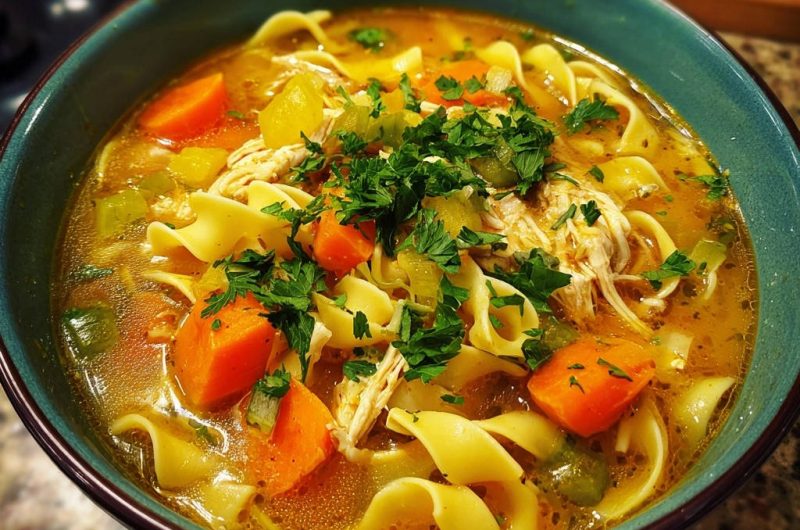
Chicken Noodle Soup
Course: Soups-StewsCuisine: AmericanDifficulty: easy6
servings15
minutes30
minutes240
kcal45
minutesThis classic chicken noodle soup recipe features a simple trick to ensure perfectly tender, non-soggy noodles. Enjoy a comforting bowl with savory broth, shredded chicken, and fresh vegetables, making it a perfect meal for any day.
Ingredients
2 tablespoons olive oil
1 cup diced carrots
1 cup diced celery
1 cup diced yellow onion
2 cloves garlic, minced
6 cups chicken broth
2 cups cooked shredded chicken
1 teaspoon dried thyme
1/2 teaspoon dried parsley flakes
Salt to taste
Black pepper to taste
4 ounces egg noodles (wide or medium)
Fresh parsley, chopped, for garnish
Directions
- Heat olive oil in a large pot or Dutch oven over medium heat. Add diced carrots, celery, and onion. Cook for 5-7 minutes, stirring occasionally, until vegetables soften.
- Add minced garlic to the pot and cook for 1 minute more until fragrant. Be careful not to let the garlic burn.
- Pour in the chicken broth. Stir in the shredded chicken, dried thyme, dried parsley flakes, salt, and pepper. Bring the soup to a gentle simmer.
- Here’s the trick to perfectly tender, non-soggy noodles: Add the egg noodles to the simmering soup only during the last 5-7 minutes of cooking, or according to package directions for al dente. Stir them in well to ensure they are fully submerged.
- Cook the noodles just until they are tender but still have a slight bite (al dente). Do not overcook. This timing is crucial to prevent them from becoming mushy.
- Taste the soup and adjust seasonings if necessary.
- Serve immediately, garnished generously with fresh chopped parsley. For best texture, enjoy the noodles in the soup right away. If storing leftovers, consider cooking noodles separately and adding to individual bowls as needed to maintain their perfect consistency.
Notes
- If storing leftovers, consider cooking noodles separately and adding to individual bowls as needed to maintain their perfect consistency.