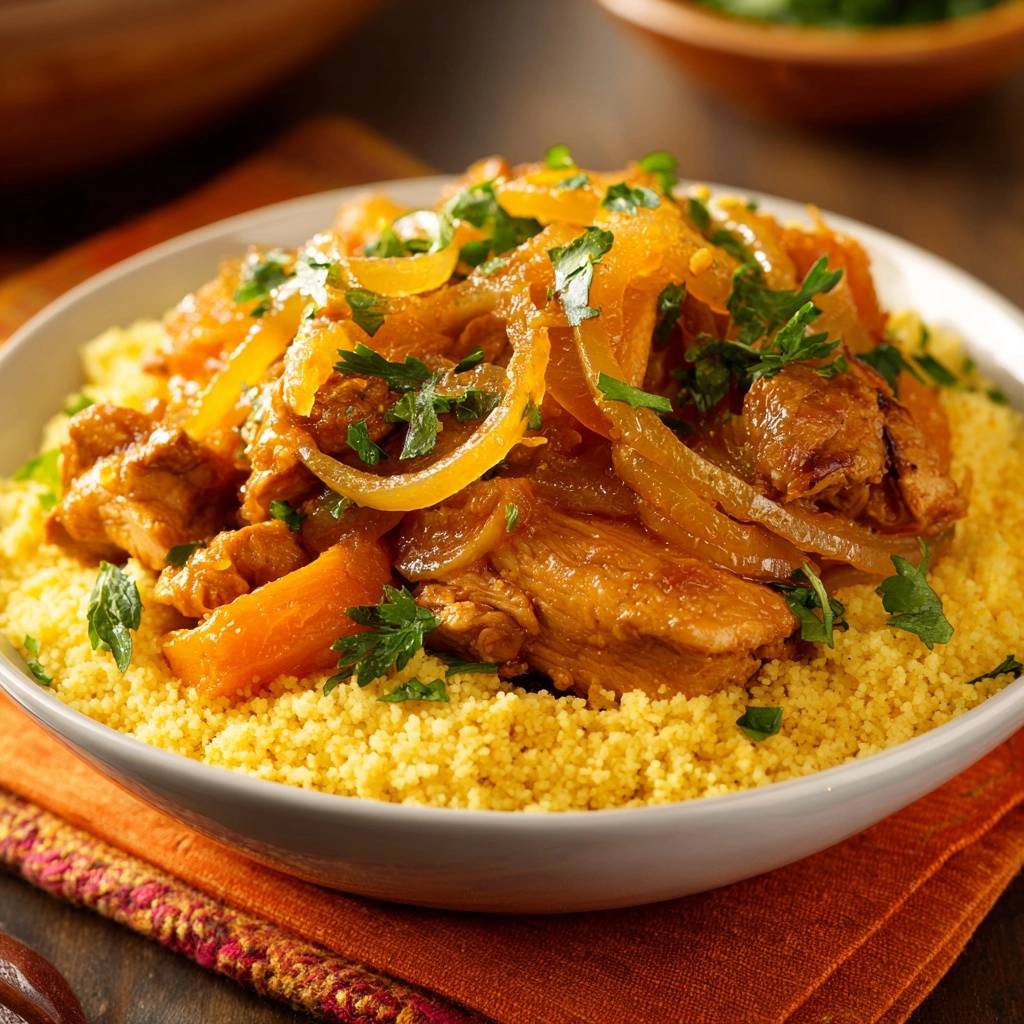
We’ve all been there: you sit down for a meal expecting a vibrant, exotic escape, but you end up chewing through dry, stringy chicken and bland, sandy grains. It’s a common frustration that turns a beautiful concept into a chore to eat. However, the secret to a truly memorable Moroccan-inspired dinner isn’t just about the spices; it’s about the moisture management.
This recipe solves the “dry chicken” dilemma by utilizing a classic sear-and-braise method. By locking in the juices with a high-heat sear and finishing the meat in a shallow, aromatic bath, you ensure every bite is tender. You’re not just boiling meat in sauce; you’re creating a succulent environment where the chicken stays plump while absorbing the deep, earthy flavors of the Mediterranean.
For similar tender results, explore the science behind creamy chicken and dumplings.
The real trick to this dish lies in the “fond”—those little browned bits stuck to the bottom of your pan after searing. When you deglaze the pan with chicken broth, those bits dissolve into a rich, savory liquid that coats the couscous. This technique provides a depth of flavor that you simply can’t get from a slow cooker or a standard boil, making your home kitchen feel like a high-end bistro.
The Science of Succulent Moroccan Chicken
Achieving that perfect texture starts with the Maillard reaction. When you sear the chicken chunks in hot olive oil, the proteins and sugars on the surface transform, creating a golden-brown crust and complex flavor compounds. This isn’t just for looks; that crust acts as a savory barrier that helps the meat stand up to the subsequent braising step without falling apart into mush.
Furthermore, choosing chicken thighs over breasts is a scientific win for your palate. Thighs contain more connective tissue and a higher fat content, which breaks down during the 15-minute simmer. While chicken breasts often turn rubbery when exposed to heat for too long, thighs actually become more tender as the collagen melts, resulting in a silky mouthfeel that pairs perfectly with the light grains of couscous.
For a similar poultry preparation, try this creamy chicken and wild rice skillet.
Essential Components for Moroccan Chicken and Couscous
Quality ingredients are the backbone of this dish. Start with a high-quality extra virgin olive oil, which provides a fruity base for the aromatics. In addition, the tablespoon of honey acts as a crucial pH balancer. It doesn’t make the dish “sweet” in a dessert sense; instead, it rounds out the sharp edges of the ginger and cumin, creating a mellow, balanced sauce that clings to the meat.
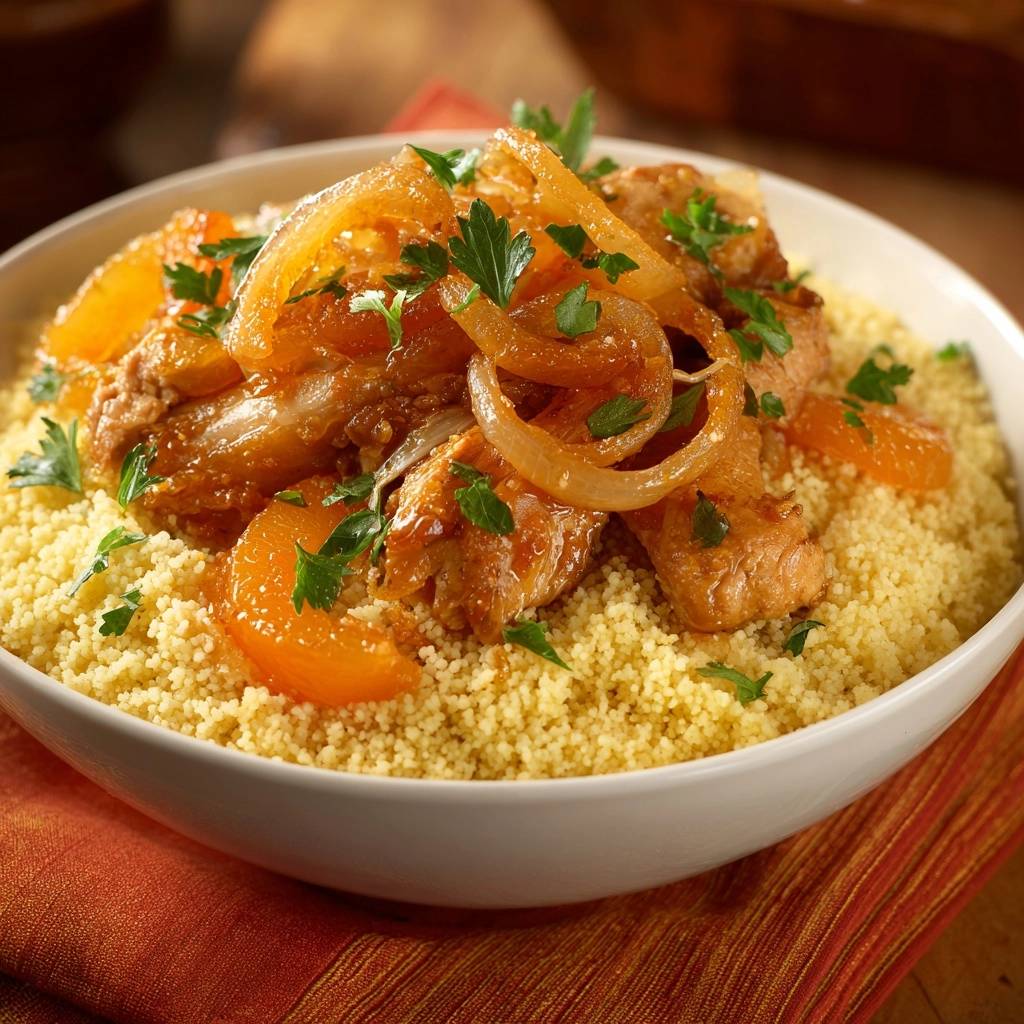
The choice of yellow onions is also intentional. Yellow onions have a higher sugar content than white or red varieties, which is essential for the caramelization process. As they cook down, they lose their pungent bite and transform into a jam-like consistency. This “onion jam” becomes the body of your sauce, providing a natural thickness and a savory-sweet foundation that defines the entire meal.
The Warm Spice Palette: Aromatic Foundations
The five-spice blend of cumin, ginger, turmeric, cinnamon, and paprika creates a “warm” profile rather than a “hot” one. Cumin provides earthiness, while ginger adds a subtle zing. Turmeric offers that iconic golden hue, and cinnamon brings a woody sweetness that is quintessential to North African cooking. Paprika ties it all together with a hint of smokiness.
To get the most out of these spices, you must “bloom” them in the fat. By stirring the spices into the hot oil and onions before adding the liquid, you release the fat-soluble flavor compounds. This step ensures the spices permeate the entire dish rather than just floating on top of the broth, resulting in a much more integrated and professional flavor profile.
Selecting the Right Couscous Texture
While pearl (Israeli) couscous is popular for its chewy, pasta-like texture, this recipe calls for traditional fine-grain couscous. These tiny grains have a massive surface area, which allows them to act like a sponge for the onion-heavy sauce. Therefore, the fine texture ensures that every forkful of grain is saturated with the braising liquid.
If you use the larger pearl variety, the sauce tends to slide off the grains rather than being absorbed. For a dish where the sauce is the star, the traditional fine grain is the superior choice. It creates a light, fluffy bed that provides a delicate contrast to the hearty chunks of seared chicken and thick-cut carrots.
Step-by-Step: Searing for Maximum Moisture Retention
When you begin the searing process, the most important rule is to avoid crowding the pan. If you dump all the chicken in at once, the temperature of the oil will drop, and the meat will release its juices and steam rather than sear. Work in batches if necessary to ensure each piece has enough space to develop a deep, mahogany-colored crust.
You are looking for a specific visual cue: the chicken should release easily from the pan when it’s ready to flip. If it sticks, it hasn’t formed that crust yet. Give it another minute. Remember, we aren’t cooking the chicken through at this stage; we are simply building a flavor foundation and locking in the internal moisture for the braise to follow.
Building the Base: Caramelizing Onions and Carrots
After removing the chicken, the onions and carrots go into the same pan to soak up the leftover fats. Sauté them for a full 8 to 10 minutes. You’ll notice the onions transition from translucent to a soft, golden brown. This slow cook is where the “jam-like” consistency happens, which is vital for a rich sauce that doesn’t feel watery.
The carrots should be sliced into thick batons so they maintain their structure. While the onions soften into the sauce, the carrots provide a necessary bite and a pop of color. If you slice them too thin, they will disappear into the sauce; keep them chunky so they can absorb the spices while remaining a distinct element on the plate.
The Braising Phase: Finishing the Chicken Gently
Braising is essentially a “shallow bath” cooking method. By returning the chicken to the pan and adding just enough broth to reach halfway up the meat, you create a dual-cooking environment. The bottom of the chicken simmers in the flavorful liquid, while the top steams under the tight-fitting lid. This recycling of moisture is why the chicken never gets dry.
For a different take on tender chicken, check out this chicken and potato curry.
During these 12 to 15 minutes, the honey and chicken fats emulsify with the broth. This creates a natural glaze that is glossy and thick. If you notice the liquid evaporating too quickly, drop the heat even further. You want a gentle bubble, not a violent boil, to keep the protein fibers from tightening up and becoming tough.
Preparing Fluffy Couscous Without Clumping
Couscous is incredibly simple to make, but it’s also easy to ruin. The golden ratio is 1 part couscous to 1 part liquid, but using boiling chicken broth instead of water is a major flavor upgrade. The broth seasons the grain from the inside out. Once you pour the liquid over the grains, cover the pot immediately to trap every bit of steam.
After five minutes, the grains will have absorbed the liquid and may look like a solid block. This is where the “fork-fluffing” technique is mandatory. Never use a spoon, as it will mash the grains together into a gummy paste. Use the tines of a fork to gently rake the surface, separating the grains into a light, airy pile that’s ready to soak up the chicken sauce.
Troubleshooting Common Texture Issues
If you find your sauce is too thin after the braising time is up, simply remove the lid and turn the heat up to medium-high for two minutes. This quick reduction will thicken the liquid without overcooking the chicken. Conversely, if the sauce is too thick or sticking to the pan, whisk in an extra splash of broth to loosen it back up.
For grains that feel under-seasoned, don’t just dump salt on top. Instead, stir a small knob of butter or a teaspoon of olive oil into the fluffed couscous. The fat helps carry the salt and the flavors of the chicken sauce more effectively across your palate. If the chicken was over-seared and feels a bit firm, let it sit in the sauce for an extra five minutes with the heat off to rehydrate.
Flavor Variations and Regional Swaps
While this recipe is a fantastic baseline, you can easily customize it. For a hit of acidity, stir in some chopped green olives or a bit of diced preserved lemon at the end of the braise. These salty, tangy elements cut through the richness of the chicken thighs and the sweetness of the caramelized onions beautifully.
If you want to add more bulk or fiber, a can of rinsed chickpeas is a traditional and delicious addition. You can also lean into the sweet-and-savory profile by adding a handful of dried apricots or raisins during the simmering stage. These fruits will plump up in the broth, releasing a concentrated sweetness that is very common in traditional Maghreb cuisine.
Optimal Side Dishes and Serving Suggestions
Because this dish is quite rich and spice-forward, it benefits from a cooling side. A simple cucumber and mint salad with a splash of lemon juice provides a refreshing crunch. Alternatively, a dollop of plain Greek yogurt on the side can help mellow out the spices if you find the ginger and cumin particularly potent.
When serving, don’t be shy with the fresh parsley. It isn’t just a garnish; the grassy, bright flavor of the herb lifts the heavy, earthy notes of the braise. You could also experiment with fresh cilantro or even a few torn mint leaves to add another layer of aromatic complexity to the final presentation.
What Else to Try
To complement your Moroccan chicken, consider these dishes that share warm spices or comforting textures.
- For a touch of home-style goodness, try this Golden Skillet Cornbread, known for its tender crumb.
- If you enjoy fragrant grains, the Jeweled Saffron Basmati Rice offers a lovely aromatic contrast.
Storage and Reheating for Meal Prep
This is one of those rare dishes that actually tastes better the next day. As it sits in the fridge, the spices continue to meld and the chicken absorbs even more of the sauce. Store the chicken and couscous in separate airtight containers to prevent the grains from becoming too soggy over time.
When reheating, the couscous can sometimes turn into a dry block. To fix this, add a tablespoon of water or broth before microwaving and cover it with a damp paper towel. For the chicken, reheat it gently on the stovetop with a splash of broth to loosen the sauce. This ensures the meat stays succulent and the sauce regains its silky, glossy texture.
Expert Tips for Moroccan Chicken and Couscous
Can I use chicken breasts instead of thighs?
You can, but you must be very careful. Breasts lack the fat and connective tissue of thighs, so they dry out quickly. If using breasts, reduce the simmering time to 8-10 minutes and ensure your sear is very fast. However, for the “Never Dry” promise, thighs are truly the best tool for the job.
How do I make this dish spicier?
This recipe focuses on warmth rather than heat. If you want a spicy kick, stir a teaspoon of Harissa paste into the onions along with the other spices. Harissa is a North African chili paste that adds a beautiful smoky heat without overwhelming the other aromatics in the dish.
Is there a gluten-free alternative to couscous?
Absolutely. While couscous is made from semolina wheat, you can easily swap it for quinoa or millet. Both grains have a similar size and will soak up the sauce well. Just be sure to cook the quinoa or millet according to their specific package directions before serving with the Moroccan chicken.
Why is my onion sauce bitter?
Bitterness usually comes from one of two things: burnt spices or burnt onions. When blooming your spices, only let them cook for 30-60 seconds until fragrant. If they turn dark brown or black, they will taste bitter. Similarly, ensure the onions are caramelized (golden) rather than charred (black) to keep the sauce sweet and savory.
Can this be made in a slow cooker?
You can, but you will lose the texture of the sear. If you must use a slow cooker, I still recommend searing the chicken and sautéing the onions in a pan first. Then, transfer everything to the slow cooker with half the amount of broth and cook on low for 4 hours. The stovetop method is faster and generally yields a better sauce consistency.
Moroccan Chicken
Course: Main CourseCuisine: MoroccanDifficulty: medium4
servings15
minutes35
minutes480
kcal50
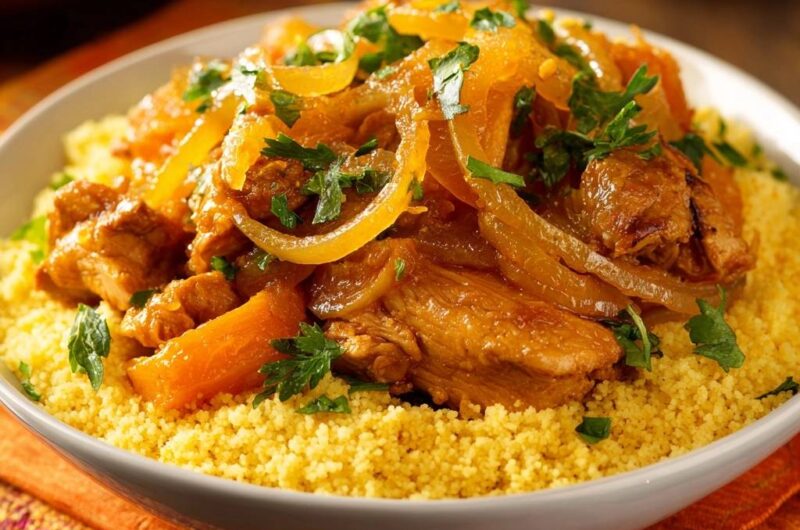
MinutesA flavorful dish that uses a searing and braising method to ensure chicken thighs remain tender and succulent. Served over fluffy couscous with a rich sauce of onions, carrots, honey, and warm spices.
Ingredients
1.5 lbs chicken thighs, cut into large chunks (thighs are preferred for the “Never Dry” promise)
2 large yellow onions, thinly sliced into half-moons
2 large carrots, peeled and sliced into thick batons
1.5 cups dry couscous
2.5 cups chicken broth, divided
2 tablespoons olive oil
1 tablespoon honey
1 teaspoon ground cumin
1 teaspoon ground ginger
1/2 teaspoon turmeric
1/2 teaspoon cinnamon
1/2 teaspoon paprika
Salt and black pepper to taste
1/2 cup fresh parsley, roughly chopped for garnish
Directions
- In a small bowl, combine the cumin, ginger, turmeric, cinnamon, and paprika. Season the chicken chunks generously with salt, pepper, and half of the spice blend. Ensure every piece is well coated.
- Heat olive oil in a large skillet or wide pot over medium-high heat. Sear the chicken for 3 minutes per side until deeply golden brown. Do not cook it through yet. Remove chicken from the pan and set aside. This initial sear is the key to locking in the juices.
- In the same pan, add the sliced onions and carrots. Sauté for 8 to 10 minutes over medium heat, stirring frequently, until the onions are soft, translucent, and starting to caramelize into a jam-like consistency.
- Stir in the remaining spice blend and the honey. Pour in 1 cup of the chicken broth, scraping the bottom of the pan with a wooden spoon to release all the flavorful browned bits (fond).
- Return the chicken and any accumulated juices to the skillet, nestling the pieces into the onions and carrots. Cover with a tight-fitting lid and reduce heat to low. Simmer for 12 to 15 minutes. This gentle braising technique ensures the chicken stays succulent and never reaches that dry, stringy stage. The chicken is done when it reaches 165°F (74°C) in the thickest part.
- While the chicken finishes, bring the remaining 1.5 cups of chicken broth to a boil in a separate small pot. Remove from heat, stir in the dry couscous, cover, and let sit for 5 minutes.
- Fluff the couscous with a fork and divide into wide bowls.
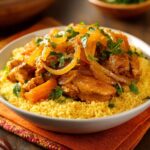
- Spoon a generous portion of the chicken, carrots, and the thick, aromatic onion sauce over the bed of couscous. Garnish heavily with fresh parsley to match the visual brightness of the dish and serve immediately.
Notes
- Chicken thighs are highly recommended over breasts to ensure the meat stays juicy. The key to the flavor is scraping the browned bits from the bottom of the pan after adding the broth.